FREE Leafbud Umbrella on Prepaid Orders Above INR 4,500/-
FREE Leafbud Umbrella on Prepaid Orders Above INR 4,500/-
FREE Leafbud Umbrella on Prepaid Orders Above INR 4,500/-
FREE Leafbud Umbrella on Prepaid Orders Above INR 4,500/-
FREE Leafbud Umbrella on Prepaid Orders Above INR 4,500/-
FREE Leafbud Umbrella on Prepaid Orders Above INR 4,500/-
FREE Leafbud Umbrella on Prepaid Orders Above INR 4,500/-
FREE Leafbud Umbrella on Prepaid Orders Above INR 4,500/-



Can Vinegar Be Stored in Ceramic Jars?

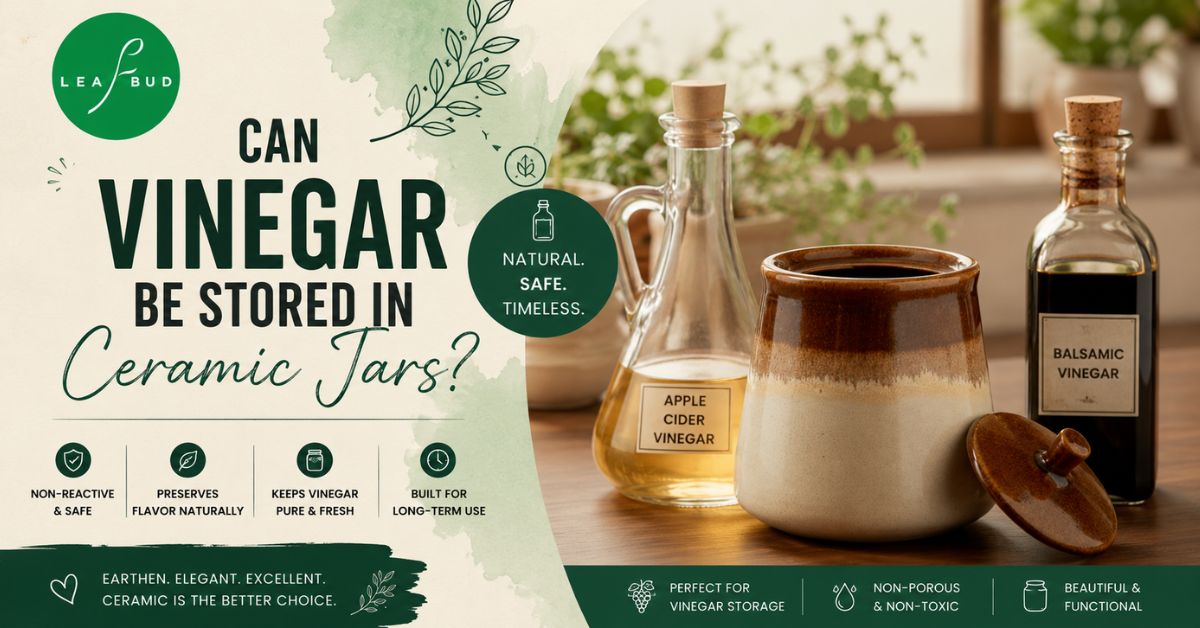
Almost every kitchen in India has vinegar. We use it in pickles, chutneys, marinades, and salad dressings. And vinegar is so common in everyday cooking, the question of how to best store it often comes up. Ceramic jars look beautiful on a kitchen shelf, and many people wonder if they are safe to store something as acidic as vinegar.
The short answer is it depends on what jar. Not all ceramic jars are equal, and storing vinegar in the wrong type can cause problems. Let’s break it down so you know what to look for.
Why Vinegar and Ceramics Need a Second Look
Vinegar has a low acidity. The active ingredient in vinegar is acetic acid, which is about 5% in the white distilled vinegar most of us buy at the store. It’s not a very powerful acid by any means, but it is acidic enough to react over time with some materials.
This is why this is important with ceramics. Most ceramic jars are glazed on the inside with a glass-like coating that is fired at high temperatures to produce a smooth, sealed surface. The glaze is what makes a ceramic jar safe for food, preventing the porous clay body underneath from absorbing liquids.
The problem is that some glazes contain heavy metals, such as lead or cadmium, which have been used historically to produce bright colours and a shiny finish. An acidic liquid, such as vinegar, can be a mild solvent and leach these metals into the liquid if the liquid is stored in a glazed jar for a long time. The acid-catalysis effect is a process in which acidic foods and liquids, like vinegar, accelerate the movement of metals through an unstable glaze surface.
That’s no reason to panic, but it is a reason to be picky about your ceramic jar.
The Role of Glaze Quality in Safe Vinegar Storage
Not all ceramic jars are dangerous. With vinegar in ceramic jars, safety depends almost entirely on the quality and composition of the glaze.
Ceramics that have a corroded glaze or a greyish film on their surface after washing are more likely to leach heavy metals into food. If a jar is looking worn, chipped, or has visible crazing (a network of fine cracks in the glaze), it’s best not to use it to store any acidic ingredient, including vinegar.
Let’s break it down into three important factors:
1. Lead-free glazes. Reputable modern manufacturers use lead-free glaze formulations. The U.S. Food and Drug Administration (FDA) strictly monitors trace amounts of lead and cadmium in crockery and requires manufacturers to ensure their products are never above a certain safety standard to be allowed to sell in regulated markets. If you buy from a brand that follows food safety regulations, the glaze will be tested and certified as safe for food contact.
2. Cam Firing Temperature: Safe contact with acidic food requires proper formulation, correct firing temperatures, and complete testing. Low-fired earthenware is not as stable as high-fired stoneware and porcelain glazes. If your earthenware pot is plain, unmarked, and of unknown origin, think twice before you use it to store vinegar for the long term.
3. Glaze application and coverage. Glazes that are applied smoothly and evenly and that cover the entire food-contact surface are generally more stable than decorative patterns applied over the glaze. If you find a jar with hand-painted designs on the inside, make sure the colours are food-safe.
How to Tell If a Ceramic Jar Is Safe for Acidic Storage
Here is a simple home test that potters and ceramic experts really use. Put a glazed container half full of vinegar and leave it for a few days. Yellowing of the vinegar indicates the leaching of lead from the glaze.
This is a simple, quick test to do before you decide whether to keep vinegar in a ceramic jar you are undecided about.
What to do next if you’re buying a new jar: Look for the words “food-safe” or “lead-free” on the product or packaging. If so, ask the seller or brand directly if the jars have been tested for leaching. Any reputable ceramics brand will provide a clear answer to that question.
Short-Term vs Long-Term Storage: A Practical Guide
Duration counts. Don’t leave food or drinks in ceramic containers for extended periods of time, especially acidic ones. A brief stay is quite different from keeping vinegar in a jar for weeks or months.
Here’s how to understand it:
- Vinegar in a ceramic jar at the table: Good. The contact time is short, and there is no accumulation risk.
- Food-safe ceramic jar for marinating ingredients overnight: Generally okay if the jar is food-safe and lead-free.
- Keeping vinegar or pickle brine in a ceramic jar for several weeks: Only if the jar is certified food-safe and the glaze is known to be stable with acidic liquids.
- Do not use old, inherited, or antique ceramic jars for the vinegar. Older ceramics were often made with lead glazes, which were the norm at the time.
What About Traditional Indian Pickle Jars?
Pickling has been part of Indian kitchens for centuries. Achaar ke martaban, traditional pickle jars, have been safely used for generations. Many of these were made of earthenware and had simple, minimal glazes, and because the jars were often sealed with cloth, oil floated on top and created a barrier between the pickle brine and air.
The vinegar-based pickles (sirka achar), which have become more popular in recent decades, are different. They are sitting in an acidic liquid, which means the brine is interacting with the inside of the jar.
If you are going to store your vinegar pickles in a ceramic jar, you should buy a jar from a company that makes food-safe jars for that purpose. The ceramic jar must be glazed on the interior, the glaze must be in good condition without chips or cracks, and the brand must be able to verify that the glaze is free of harmful heavy metals.
Choosing the Right Ceramic Jar for Vinegar-Based Storage
When buying a ceramic jar to store vinegar, pickles, or any other acidic ingredient, look for the following:
- Food-grade approval: The manufacturer needs to label the jar as food-safe.
- Lead-free glaze: Confirmed in writing, not just implied.
- Examine the glaze carefully before purchasing. No cracks or crazing:
- Interior glaze: The inside of the jar should be fully glazed, smooth, and level.
- Tight-fitting lid: Minimises exposure to air and slows the oxidation of the vinegar.
- High-fire ceramic: Stoneware or porcelain are safer options than low-fired earthenware.
Designed to be food safe and beautiful, Leafbud’s artisanal ceramic jars are the perfect addition to your home. Leafbud’s jars include ceramic pickle jars and storage jars made for everyday use in the kitchen, whether it’s for storing dry ingredients, condiments, or pickles. The glazes are applied by skilled artisans, and the jars are designed to be functional, not simply decorative.

Unglazed Ceramic Jars: A Different Story
Think terra cotta pots and some clay martabans. Some traditional jars are unglazed inside. They are porous. The vinegar will leach into the clay over time, affecting both the taste of the vinegar and the jar itself. Do not store vinegar or any other liquid in unglazed ceramic jars for extended periods of time.
If you do have unglazed ceramic pots and want to keep acidic pickles in them, the traditional approach is to oil the inside before use and never let vinegar sit in contact with the bare clay.
The Vinegar Test: A Quick Reference
Can you store vinegar in ceramic jars?
- Yes, if the jar has an intact, food-safe, lead-free glaze.
- Yes, for short-term use (serving, marinating for a couple of hours).
- No, if it has no glaze, a cracked or crazed glaze, or is antique/vintage.
- No, unless you know the glaze is lead-free and food safe.
- Long-term storage: With caution, always check the jar’s glaze certification.
A Note on Glass vs Ceramic for Vinegar Storage
The most common recommendation for long-term vinegar storage is glass jars, as glass is completely non-reactive. This is why vinegar manufacturers package and sell their product in glass. Glass is the best choice if you are storing large amounts of vinegar for months at a time.
Ceramic jars are ideal for short-term storage, serving, and condiment use at the table. They also make great containers for dry ingredients like spices, sugar, or tea, where the concern of acid interaction is non-existent.
How to Care for Your Ceramic Jars After Storing Vinegar
Use a ceramic jar for vinegar or vinegar-based pickles and wash thoroughly after each use. Wash in warm water with a mild dish soap. Do not use ceramic containers if there is a greyish residue on the glaze after washing, as this is indicative of glaze degradation.
Keep ceramic jars dry. Do not leave vinegar or brine in a jar not going to be used for weeks. Even if the jar is well-made, there can be surface interaction if the acid liquid is in more contact with any glaze.
FAQs
Q1. Is it safe to store vinegar in ceramic jars for long periods?
It is only safe if the ceramic jar has a completely intact, food-safe, lead-free glaze. Metals can leach into the liquid from vinegar stored for a long time in jars with unknown or poor quality glazes. Glass jars are your safest bet for long-term storage.
Q2. How do I know if my ceramic jar is food-safe for acidic foods?
Look for the manufacturer’s food-safe labelling. You can also try the vinegar test. Fill the jar with white vinegar to about half full and leave it for two to three days. If the vinegar turns yellow, the glaze may be leaching lead and should not be used to store food.
Q3. Can I store vinegar-based pickles (sirka achar) in a handmade ceramic pickle jar?
Yes, if the jar is high-fired stoneware or porcelain with a perfectly intact food-safe glaze. If you can’t confirm what the glaze is made of, don’t use handmade or antique jars. Leafbud’s ceramic pickle jars are handcrafted for everyday kitchen use.
Q4. Why does vinegar affect ceramic glaze more than other liquids?
Vinegar, which contains acetic acid, can, over time, act as a mild solvent on unstable glazes. This acid-catalysis effect accelerates any existing tendency of the glaze to give up its components. Well-fired lead-free glazes are resistant to this, but damaged or low-quality glazes are vulnerable.
Q5. Are unglazed terracotta jars suitable for vinegar storage?
No. Unglazed ceramic jars are porous and will soak up the vinegar. This changes the taste, and it also means that the clay body is in contact with an acid liquid, which deteriorates the jar over time. Only fully glazed, food-safe ceramic jars are suitable for vinegar or vinegar-based pickles.