FREE Leafbud Umbrella on Prepaid Orders Above INR 4,500/-
FREE Leafbud Umbrella on Prepaid Orders Above INR 4,500/-
FREE Leafbud Umbrella on Prepaid Orders Above INR 4,500/-
FREE Leafbud Umbrella on Prepaid Orders Above INR 4,500/-
FREE Leafbud Umbrella on Prepaid Orders Above INR 4,500/-
FREE Leafbud Umbrella on Prepaid Orders Above INR 4,500/-
FREE Leafbud Umbrella on Prepaid Orders Above INR 4,500/-
FREE Leafbud Umbrella on Prepaid Orders Above INR 4,500/-



Can Ceramic Plate Be Used on a Induction Cooktop?

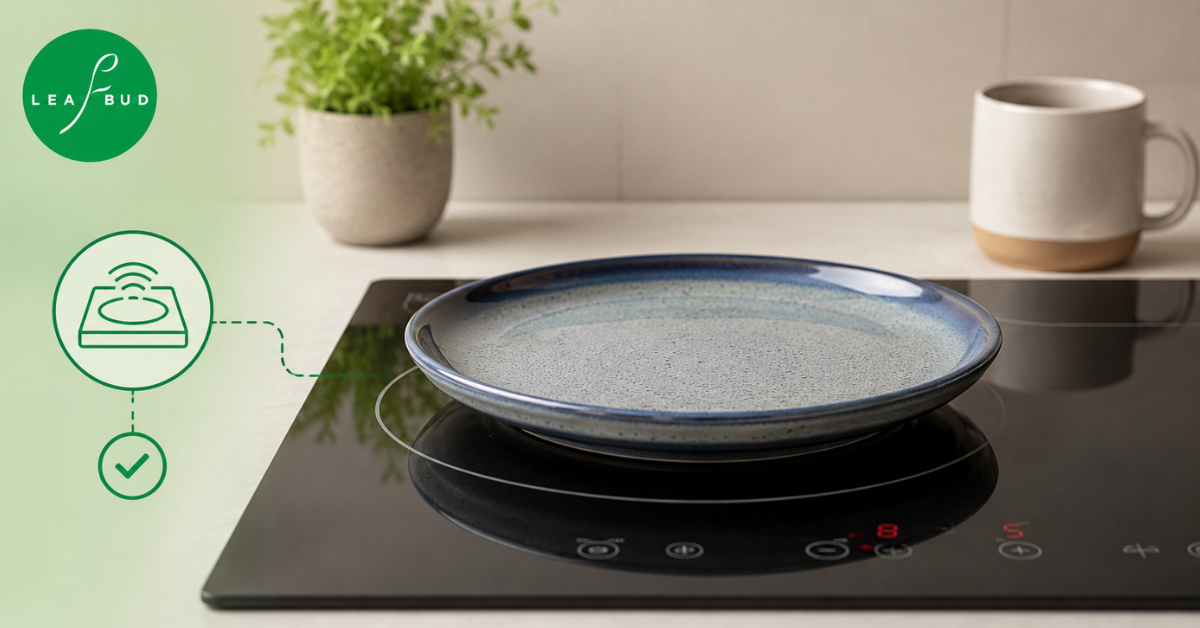
If you’ve recently made the switch to an induction cooktop, you may have looked at your favourite ceramic plate and wondered if it can go directly on the burner. That’s a fair question, particularly now when induction cooking is so widely adopted in Indian kitchens. Let’s get this straight. The short answer isn’t as simple as a plain yes or no.
The Quick Answer
No, you shouldn’t use a regular ceramic plate on an induction cooktop. The same goes for the ceramic plates, bowls, and platters you eat and serve from at home. These things are meant to be eaten off of, not to be put on a direct heat source. Induction just adds another layer of complication on top of that.
To understand why, it helps to understand how induction cooking really works.
How Induction Cooktops Actually Work
Unlike a gas or traditional electric stove, an induction cooktop doesn’t use flame or a heating coil. Instead, it has an electromagnetic coil under the glass surface that creates a magnetic field, which then induces an electric current directly in the cookware placed on top. This current creates heat, and it only happens with materials that respond to magnetism.
This means the vessel itself needs to contain iron or some other ferromagnetic material for the cooktop to work at all. If there is no magnetic reaction, the cooktop will simply not heat up, however long you leave the plate on it.
Why a Ceramic Plate Won’t Work on Induction
This is why it is directly related to the use of ceramic plates on an induction cooktop. Ceramic, in its pure form, has no iron and no steel. It’s made entirely of non-metallic, non-magnetic clay and mineral compounds. It can’t react with the magnetic field an induction cooktop creates. Put a plain ceramic plate on an induction burner and turn it on, and nothing happens. The cooktop will not even know that it has anything placed on it.
Here’s a simple test you can try at home: simply hold a regular fridge magnet against the bottom of the plate. The cooktop won’t recognize it if it is not firmly stuck in.
Some brands of ceramic cookware circumvent this by fusing a layer of magnetic steel to the bottom of pots and pans, usually a ferrite layer that is naturally magnetic and is attracted to the coil underneath the cooktop. But that is cookware, designed for cooking. Not dinnerware designed to serve food at the table.
Dinnerware vs Cookware: An Important Distinction
Here is where much of the confusion comes, and it is worth spelling out clearly.
- Dinnerware (plates, bowls, and platters) is meant to serve food, hold food, and look nice on your table. It is fired for finish, glaze, and everyday use, not for direct heat exposure.
- Cookware (pots, pans, and tawas) is designed to withstand direct flame or electromagnetic heat and often has reinforced bases and built-in special alloys.
- Ignoring the question of magnetism, dinnerware plates are simply not meant to sit on any active cooktop – gas, electric, or induction.
Direct heat on a serving piece can lead to cracking, glaze damage, or, worse, sudden breakage from thermal shock.
What Happens If You Try It Anyway
If you try to put a normal ceramic plate on an induction burner, a few things can go wrong.
- Nothing gets hot. Because ceramic is non-magnetic, the plate often won’t register with the cooktop at all, and most machines will either flash an error or just stay off.
- Crack potential. Any localised heat build-up in the vicinity of the coil can cause non-uniform expansion in the ceramic and result in hairline cracks.
- Glazing damage. Dinnerware’s decorative glaze is not designed to be exposed to direct heat repeatedly and can become dull, discoloured, or flaky over time if subjected to it.
- Warranty void. Most reputable dinnerware brands clearly state their pieces are for serving use only, not for cooking, and any damage resulting from misuse is usually not covered by warranty.
And none of it is worth the risk for something as easy as warming food.
What About Induction Diffuser Plates?
Maybe you’ve heard of the induction diffuser or converter plate – a flat metal disc that goes between a non-magnetic vessel and the cooktop. Technically, these plates can allow a non-magnetic item to pick up some heat, but manufacturers often consider this a stopgap solution, as it reduces efficiency and may cause hot spots. With a diffuser, this method is only for pure ceramic cookware and not for fragile dinnerware plates that were never intended for stove-top use in the first place.
So What Should You Actually Do?
If you want to reheat food that is already on the plate, here’s the safer way to do it.
- If the plate is labelled microwave safe, use a microwave to gently reheat food on the plate.
- First, cook or heat in the appropriate cookware, and then put the food on your ceramic plate for serving. Induction cooktops are meant for use with induction-rated cookware only.
- Let your dinnerware do what it does best: look good and hold your meal on the table.
This is really the easiest way to think of it. The ceramic plates are meant for the time the food gets to the table, not for the time it’s being cooked or reheated on a burner.
Caring for Your Ceramic Dinnerware
Ceramic plates aren’t meant for use on a cooktop, so a little care will keep them looking good for years.
- Never put a hot plate under cold running water, as the sudden change in temperature may crack it.
- For daily cleaning, warm soapy water and a soft sponge will suffice. Before using a piece in the microwave or dishwasher, make sure it is labelled ‘microwave safe’ or ‘dishwasher safe’; not all glaze finishes are made for both.
- If you are stacking several, put a soft layer between each plate to prevent surface scratches over time.
At Leafbud, we have hand-crafted ceramic plates, bowls, and platters designed for just this kind of everyday dining and gifting use, pieces that impart warmth and character to your table rather than pieces meant for the stove. If you’re looking to build out your dinnerware collection, looking through the Leafbud range of meal plates and side plates gives you a good sense of the glaze quality and craftsmanship involved. It’s also worth checking out the care instructions on the Leafbud website for each individual collection before use.
Frequently Asked Questions
1. Can I put my ceramic dinner plate directly on an induction stove to heat food?
No, regular ceramic dinnerware will not be magnetic, nor will it produce heat on an induction cooktop. It also shouldn’t be heated directly on the stovetop, so it’s best used for serving.
2. Why doesn’t my induction cooktop detect my ceramic plate?
Induction cooktops will only sense materials that are attracted to a magnetic field, such as iron or some types of stainless steel. Since pure ceramic has no magnetic material, the cooktop can’t detect it or generate any current.
3. Is there any way to make ceramic work on induction?
Some ceramic cookware brands glue a magnetic steel base to the bottom during manufacturing. Dinnerware plates generally do not have this and therefore cannot be made induction compatible without changing the product.
4. Will using my ceramic plate on the stove damage it?
Yes, it can. Dinnerware is fired and finished to be used for serving, not for repeated direct heat, so exposure to inconsistent heat can lead to cracking or glaze damage over time.
5. Is it safe to microwave ceramic plates instead?
Many ceramic plates are microwave safe, but it depends on the glaze and how they were made. Always read the product details or care label before microwaving any dinnerware.
Shop Ceramic Plates