FREE Leafbud Umbrella on Prepaid Orders Above INR 4,500/-
FREE Leafbud Umbrella on Prepaid Orders Above INR 4,500/-
FREE Leafbud Umbrella on Prepaid Orders Above INR 4,500/-
FREE Leafbud Umbrella on Prepaid Orders Above INR 4,500/-
FREE Leafbud Umbrella on Prepaid Orders Above INR 4,500/-
FREE Leafbud Umbrella on Prepaid Orders Above INR 4,500/-
FREE Leafbud Umbrella on Prepaid Orders Above INR 4,500/-
FREE Leafbud Umbrella on Prepaid Orders Above INR 4,500/-



Best Ceramic Pickle Jars in Bangalore 2026

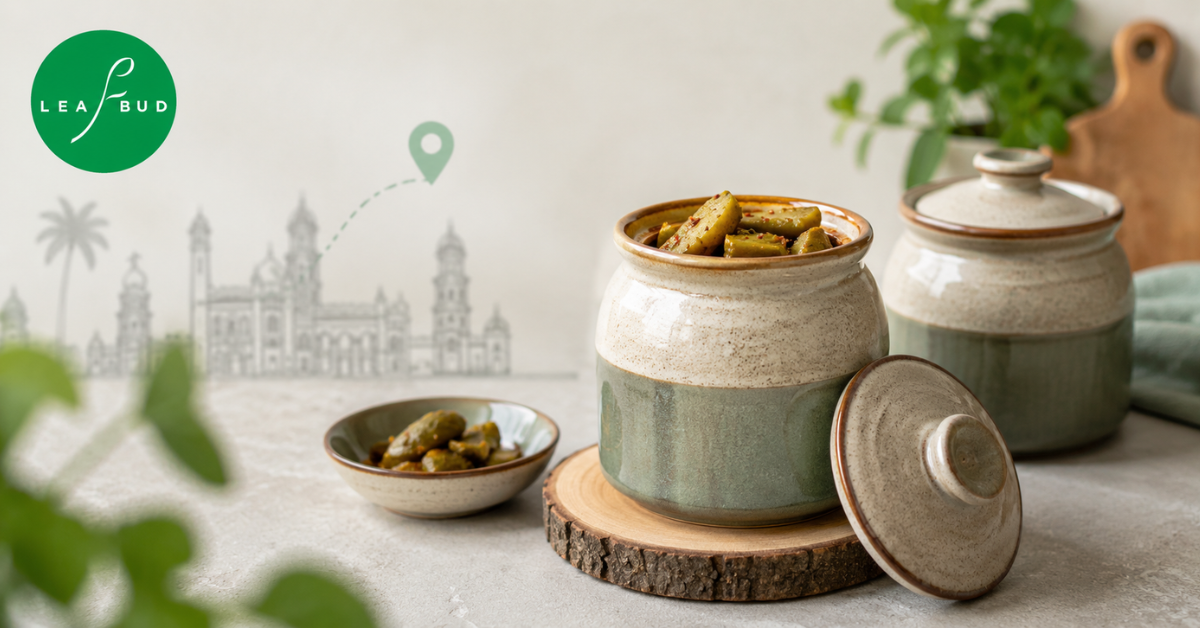
If you grew up seeing your mother or grandmother keeping achaar in a squat clay jar on the kitchen shelf, you already know why ceramic still beats plastic. Bangalore’s weather ranges from muggy monsoons to dry summer heat, and that combination is tough on food storage. Pickles made with mustard oil, lemon, vinegar, and salt need a container that can withstand acid and oil for months without breaking down.
This guide will help you know what really matters when you buy ceramic pickle jars in Bangalore, how they are better than plastic and glass, and how to maintain one in good shape for years.
Why Ceramic Pickle Jars in Bangalore Make Sense
Pickling ingredients are tough on the jars. Over time salt eats metal lids. In particular, plastic can release compounds when exposed to oil and acid repeatedly, especially in warmer temperatures. Glass is neutral but heats and cools fast, which is not good for something that needs a steady temperature.
Ceramic is a whole different class. Glass, stainless steel, and ceramic are non-reactive and non-toxic, easy to sanitise, and hold up well over time, says Iowa State University Extension and Outreach. That is the entire case for ceramic in a nutshell. It won’t react with the acid or oil in your pickle and can be scrubbed clean without worrying about scratches that trap bacteria.
There’s a practical side, too, and it has nothing to do with chemistry. If your pickles are sitting out on an open shelf and not in a sealed pantry, a glazed clay jar with a good lid will keep the dust and bugs out of them.
What to Check Before You Buy
Not every jar marked “ceramic” is put together the same way. This is what to look for.
- Quality of Glaze. A good food-safe glaze should be smooth, even, and free of cracks or pinholes. Over time, any rough or unglazed areas on the inside can absorb oil and odours, making cleaning more difficult and affecting the next batch of pickles you store.
- Cover and seal. A pickle jar without a tight lid is not doing its job. Find a lid that fits the container flush and keeps air and moisture out. Some traditional jars have a wide mouth and a loosely fitted lid for pickles that need a little air during fermentation, but others have a tighter seal for finished, ready-to-eat pickles.
- Size for your family. A small jar (around 250-500 ml) is enough for a family’s weekly use. If you make pickles in bulk for the year, look for something in the 1-2 litre range so you are not constantly transferring stock between containers.
- Weight and stability. Ceramic is heavier than plastic, which is really nice on a counter in the kitchen. A jar with a wide, stable bottom is less likely to be knocked over in normal use.
Ceramic vs Plastic vs Glass for Pickle Storage
If you’re trying to decide between materials, here’s a quick side-by-side.
- Ceramic: won’t react with acid and oil; is a steady temperature holder; is heavier and more breakable; and must be hand-washed.
- Glass: Also non-reactive, letting you see what’s inside. Can crack if suddenly heated or cooled, giving less insulation.
- Plastic. Cheap and light, but can absorb odour and colour from the pickle after repeated use. The quality of plastic varies a lot between brands.
In India, the Food Safety and Standards Authority of India’s packaging rules specify that any material that is in direct contact with food should be food-grade so that it is safe and suitable for its intended use and does not cause harm to health or alter the composition or taste of the food. Well-fired, well-glazed ceramic easily meets that bar. That’s why it has been a kitchen staple in Indian households for generations.
Traditional Indian Pickle Storage: Why Ceramic Has Lasted
Indian kitchens used clay and ceramic pots to store anything that needed to last, long before refrigerators and airtight plastic containers: pickles, ghee, curd, and grains. It wasn’t just tradition that made them do that. Clay containers remain cooler than metal or plastic during hot months, and a well-glazed surface won’t absorb odours from one batch to the next.
That’s why ceramic pickle jars continue to be a popular choice in Bangalore homes today, despite the many storage options available. People aren’t buying a container. They’re buying something that fits into a long-standing kitchen ritual, dressed up in a design that looks good sitting on a dining table or an open shelf.
How to Care for a Ceramic Pickle Jar
It’s not complicated to keep your jar in good shape.
For that:
- Wash by hand in warm water and mild soap. Avoid abrasive scouring pads that can scratch the glaze.
- “Dry it well before putting pickles in it.” Any residual moisture in the product will impact the shelf life.
- Fill only when the jar is completely dry and cool. Adding pickle to a warm or damp jar invites moisture buildup.
- Between uses, keep the lid tightly secured, and do not leave the jar in direct sunlight for long periods of time.
- Check the glaze every so often. If you see chips or cracks on the inside surface, it’s time to retire that jar from food use.
- Do this, and a good ceramic jar can easily last years, unlike plastic containers that tend to stain, warp, or smell after a season or two of pickle storage.
Where to Buy Ceramic Pickle Jars in Bangalore
Ceramic jars can be purchased at local pottery markets, home decor stores, and increasingly online, where you can compare glaze finish and size before ordering. If you are looking for handmade rather than mass-produced, you can browse through Leafbud’s jar collection. Leafbud’s pickle jars are made by independent Indian artisans, and each one is slightly different, having been shaped by hand rather than by a mould.
And shopping with a maker who works directly with artisans, as Leafbud does, means you’re also getting a piece with some character to it instead of a cookie-cutter factory copy. If you want something that doubles as a table piece when guests are around, that’s worth factoring into your decision alongside the practical points above.
Whatever route you take, Leafbud or not, the fundamentals are the same: check the glaze, check the lid, and choose a size that matches how much pickle you actually make.
FAQs
Are ceramic pickle jars safe for daily use?
“Yes. A ceramic jar, when properly glazed and fired, is a safe, non-reactive, easy-to-clean vessel for everyday storage of pickles, spices, or condiments. Only skip jars with cracked or chipped glaze, as damaged surfaces can trap bacteria and affect food safety over time.
Do ceramic pickle jars need any special care?
Hand wash with mild soap. Dry thoroughly before refilling. Keep the lid on when not in use. Don’t use abrasive scrubs. Properly cared for, a ceramic jar can last for years without loss of glaze or seal quality.
Can I store pickles in a ceramic jar for months?
Yeah, that’s actually one of the big pluses of ceramic. It has a constant temperature and doesn’t react with oil, salt, or acid, which helps the pickle stay fresh in storage for long periods compared to some plastic containers.
Is ceramic better than glass for pickle jars?
They are both inert and food safe. Ceramic is more likely to hold a more even temperature and is less likely to crack suddenly from temperature changes. Glass lets you see the contents. It often depends on personal preference and the style of your kitchen.
Where can I buy handmade ceramic pickle jars in Bangalore?
Online sellers that deal with artisans like Leafbud get their jars from independent Indian potters rather than the factory line, so there are handmade options available. You can also check out home decor stores and local pottery markets in the city.
Shop Ceramic Pickle Jars