FREE Leafbud Umbrella on Prepaid Orders Above INR 4,500/-
FREE Leafbud Umbrella on Prepaid Orders Above INR 4,500/-
FREE Leafbud Umbrella on Prepaid Orders Above INR 4,500/-
FREE Leafbud Umbrella on Prepaid Orders Above INR 4,500/-
FREE Leafbud Umbrella on Prepaid Orders Above INR 4,500/-
FREE Leafbud Umbrella on Prepaid Orders Above INR 4,500/-
FREE Leafbud Umbrella on Prepaid Orders Above INR 4,500/-
FREE Leafbud Umbrella on Prepaid Orders Above INR 4,500/-



Snacks, Spices, or Tea: What to Store in Ceramic Jars?

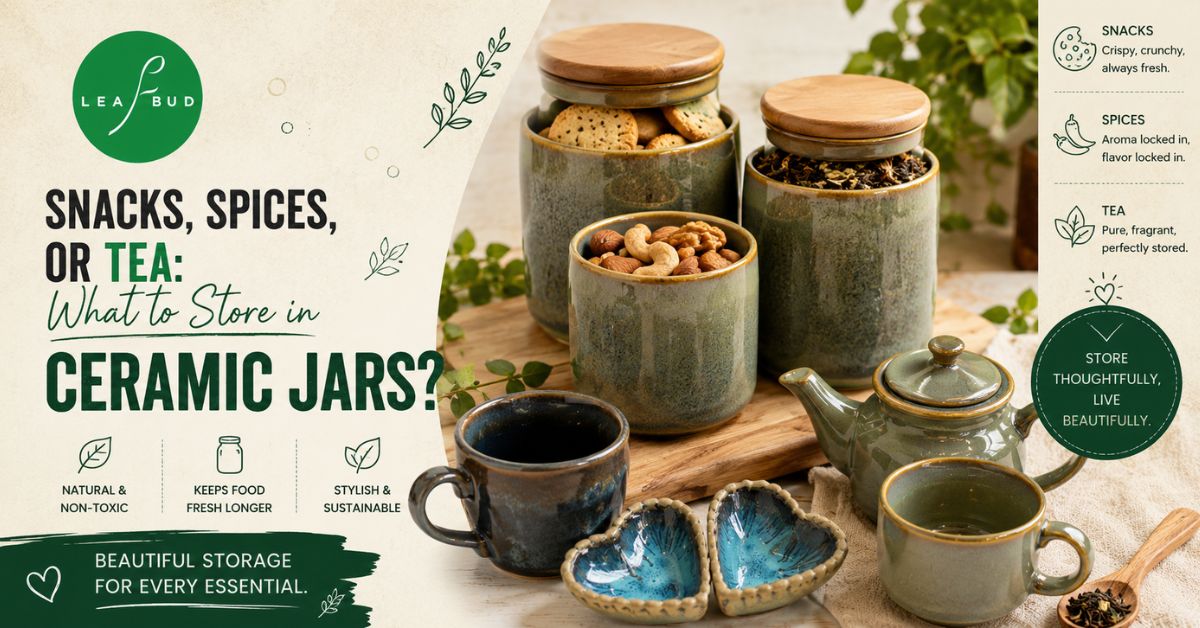
You’ve surely entered a kitchen with glass and plastic containers lined up on the counter, each a little faded or smelling of whatever it contained three months ago. It’s not a good look, and more importantly, it’s not the best way to keep your food fresh.
Indian kitchens have used ceramic jars for centuries, and there’s a good reason they haven’t gone anywhere. They don’t react, they naturally insulate, they block light, and they look really good on a shelf. If you’re making the switch from plastic or glass to ceramic in your kitchen storage, or you just want to know what really belongs in a ceramic jar, this is the guide for you.
Let’s go through it, food type by food type, and discuss why ceramic is such a great choice for each one.
Why Ceramic Jars Work Better Than Plastic or Glass
Before we get into what to store, here’s why ceramic is really worth choosing in the first place.
- Ceramic does not react. It does not absorb odours like plastic, and it does not leach chemicals into your food. Ceramic jars are considered the least reactive of storage materials and are good for many dry ingredients and also for ingredients containing moisture.
- Ceramic controls temperature. The insulator is made of ceramic, keeping the inside of the jar at a constant temperature. This helps to retain the aroma of coffee, the taste of spices, and the crispness of snacks for a longer time.
- Ceramic block light. A glass jar lets light through; a ceramic one will not. Over time, light breaks down the flavour compounds in spices, tea, and coffee. A sealed ceramic jar is at the same time protected from air and light.
- Ceramic is durable and ecological. Good-quality ceramic storage jars are scratch-proof and hard. They can be used for many years if treated well. They’re BPA-free and non-toxic and don’t leach harmful chemicals into your food.
Here’s what to put in them now.
What to Store in Ceramic Jars: A Room-by-Room Guide
1. Spices and Masalas
This is the most obvious use case, and for good reason. Spices such as turmeric, cumin, cinnamon, and cardamom lose their flavour when exposed to air and moisture. A ceramic jar with a tight-fitting lid seals in aroma and keeps out moisture.
In an Indian kitchen, the spices that gain the most from ceramic storage are:
- Turmeric (haldi) loses its colour and potency in light
- Cumin (jeera) – absorbs surrounding odours quickly in open containers
- Coriander powder (dhania) – moisture can cause it to clump
- Red chilli powder – goes stale fast in plastic containers
- Garam masala blends – these are the ones that go off the quickest in badly sealed containers.
If you have a masala shelf or a spice rack on the counter, moving them to ceramic jars will immediately change the look of the kitchen and extend the life of your spices.
- Size tip: Smaller ceramic jars for single spices. The bigger size is good for those pre-mixed masala powders that you use every day.
2. Pickles and Achar
Bharani is a traditional Indian ceramic jar used for storing pickles, chutneys, and other preserves. This is no accident. Indian grandmothers knew what they were doing.
Ceramic jars are especially good for keeping pickles, especially the following:
- Mango pickle (Aam ka Achaar)
- Lemon pickle (nimbu ka achar)
- Mixed vegetable pickle
- Green Chilli Pickles
- Garlic pickle –
A well-glazed interior and a snug lid are important. Leafbud’s Magikal Pickle Jar range is made just for these big, glazed ceramic jars meant for storing achar, available in red, blue, brown, and pink. These are not decorative pieces on a shelf; these are working kitchen jars made to hold and preserve.
3. Tea and Coffee
This is where the ceramic’s light-blocking properties are most effective. Tea leaves and coffee beans are sensitive to heat, air, and light. Ceramic jars keep out light and air to preserve freshness. Ceramic does not react with its contents, making it suitable for storing flour, sugar, coffee, tea, etc.
What this means in practice:
- Loose-leaf chai masala stays fragrant for months in a sealed ceramic jar
- Opaque, sealed storage is good for green tea, Darjeeling first flush, and oolong
- Ground coffee stays aromatic much longer in a ceramic than in an open pouch or plastic canister
- A ceramic jar with a good lid will keep instant coffee dry and lump-free
The Leafbud Sugarlandia Pot is in the Tea, Coffee, and Sugar Jars category. It is the kind of everyday storage that sits on the counter, and it’s about this kind of daily-use storage. Small, compact ceramic does its job without calling attention to itself.
4. Sugar, Salt, and Everyday Condiments
If it’s humid, salt and sugar can stick together. A ceramic jar for salt works well to prevent it from humidity and keeps it easily accessible. It has an airtight lid that does not allow moisture inside and thus ensures smooth usage every time.
This is equally true for:
- Sea salt (sendha namak, rock salt) – absorbs moisture fast
- Powdered sugar — lumps in a humid kitchen
- Jaggery (gud) – gets soft and sticky if not stored in an airtight container
- Honey — remains at the correct consistency when stored away from temperature fluctuations
- Dry coconut (copra) – moisture is the enemy
These are what other people put in cheap plastic or flimsy tin containers. Moving them to ceramic immediately reduces the clumping and spoilage that Indian kitchens face, especially through the monsoon months.
5. Dry Snacks and Namkeen
Ceramic storage jars keep snacks such as biscuits, nuts, and trail mix crisp and dry. Ceramic does not affect the texture of dry food like plastic does and helps to keep it fresh.
Indian Households: Snacks That Should Be Stored Properly:
- Chakli & Murukku
- Mathri and khakra
- Peanuts and cashews roasted
- Dried fruits: raisins, almonds, dates, apricots
- Dry roasted chana (chanachur)
- Papad and rice crisps
These are things that go limp or stale within days of opening their original packaging if left in a bowl or stored in flimsy plastic. Stored in a ceramic jar with a good seal, they keep much longer at their best.
6. Dry Pulses, Grains, and Flours
Smaller ceramic jars work well for dry goods that are used often.
- Semolina (rava), Rolled oats, Poha
- Besan (gram flour)
- Maida & rice flour
- Small quantity of urad dal and moong dal
- Sabudana (Pearls of Tapioca)
These don’t require big jars. A collection of mid-sized ceramic jars on the kitchen counter, one for each staple, will keep your counter organised, and you won’t have to dig into the back of a pantry shelf every time you cook.
What Not to Store in Ceramic Jars
Ceramics are good for almost everything, but there are a few exceptions worth knowing.
- Very fluid products without a lid seal – Ceramic jars without an airtight lid are not the best choice for oils or preparations with a high fluid content over long periods. The jar is good, but an unsecured lid means evaporation and spillage risk.
- Refrigerated foods — Ceramic is not a replacement for refrigeration. Yoghurt, fresh chutneys, and wet achar are yet to go into the fridge.
- Anything very reactive with unglazed surfaces. Always make sure that the interior of your ceramic jar is completely glazed. Unglazed ceramics can be porous. Leafbud’s jars are glazed and intended for kitchen use, so this doesn’t apply to their range but is worth knowing as a general rule.
Leafbud’s Ceramic Jars Collection
Leafbud has a small but well-curated collection of ceramic jars. All jars are handmade and crafted by Indian artisans. Available at the jar collection
What we have in stock at the moment are the following:
- Magical Pickle Jars: Red, Blue, Brown, Pink. Here are the highlights of the Leafbud jar collection. Large ceramic jar with lid, specially designed for pickle storage. The glazed interior keeps a jar fresh, and the colourful outside in a different glaze looks good on any kitchen shelf. Available in four colour variations, sold singly.
- Sugarlandia Pot: A smaller ceramic pot designed for tea, coffee, or sugar storage. If you have a chai or coffee corner at home, this works perfectly into that setup. compact, glazed, and designed for the kind of daily access that countertop storage requires.
The Magikal Pickle Jars and the Sugarlandia Pot are both good examples of Leafbud’s style; each piece is handcrafted in small batches by independent Indian artisans, so slight glaze variations are natural. Each jar is unique.

How to Care for Ceramic Jars
A few simple habits keep ceramic jars in good shape for years.
- Use mild soap and warm water. Do not use abrasive cleaners.
- Keep out of direct sunlight, especially if you have coloured glazes in your piece, as this can fade the finish over time.
- Be careful of the edges. Chips occur when jars are dropped on hard surfaces.
- Dry well before storing food, especially spices or dry goods
- Store in a cool, stable place. Ceramic is a natural insulator and works best away from heat sources like the stovetop or oven.
FAQs: Storing Food in Ceramic Jars
Q1. Are ceramic jars safe for storing food, including acidic items like pickles?
Yes, if the inside is glazed with a food-safe, lead-free glaze. Glazed ceramic is non-reactive, so it does not react chemically with acidic foods like achar or anything citrus-based. Always make sure that the jar you are buying is made from food-safe and lead-free materials. Designed for everyday food storage and made for kitchen use, Leafbud’s ceramic jars are made to last.
Q2. How long do spices stay fresh in a ceramic jar compared to plastic?
Spices stored in an opaque ceramic jar with a tight seal will stay fresh much longer than in plastic or glass, because ceramic blocks both light and air. Good ceramic storage can keep the aroma of whole spices such as cumin and cardamom for up to 2 years. If you keep your ground spices properly, they should last about six to twelve months.
Q3. Can I store tea leaves in ceramic jars? Will it affect the flavour?
Yes, ceramic is one of the best materials to store tea. It blocks light and destroys tea polyphenols and flavour compounds. It also doesn’t absorb or transfer odours as plastic does. Keep the jar out of the heat of the stove or direct heat, and keep the lid on. This type of storage is especially good for loose-leaf chai and Darjeeling teas.
Q4. Is it better to use ceramic jars or airtight steel containers for Indian kitchen storage?
Both are fine; it’s a matter of preference. Steel containers are fully opaque and very durable. Ceramic adds warmth and character to the kitchen, is non-reactive over a wider range of food types, and does not impart a metallic taste. Steel is used in most Indian kitchens for bulk storage, and ceramic is used for counter-level daily-use items such as spices, tea, coffee, salt, and sugar.
Q5. How do I know if a ceramic jar is food-safe?
Search for three things: a fully glazed interior (no raw, unglazed clay on the inside), a lead-free glaze, and a food-safe certification or description from the seller. Product descriptions from reputable Indian ceramic brands and artisan-led stores like Leafbud mention food-safe use. If food safety is not listed, contact the seller before using the jar for edibles.