FREE Leafbud Umbrella on Prepaid Orders Above INR 4,500/-
FREE Leafbud Umbrella on Prepaid Orders Above INR 4,500/-
FREE Leafbud Umbrella on Prepaid Orders Above INR 4,500/-
FREE Leafbud Umbrella on Prepaid Orders Above INR 4,500/-
FREE Leafbud Umbrella on Prepaid Orders Above INR 4,500/-
FREE Leafbud Umbrella on Prepaid Orders Above INR 4,500/-
FREE Leafbud Umbrella on Prepaid Orders Above INR 4,500/-
FREE Leafbud Umbrella on Prepaid Orders Above INR 4,500/-



Can We Store Tamarind in a Ceramic Jar?

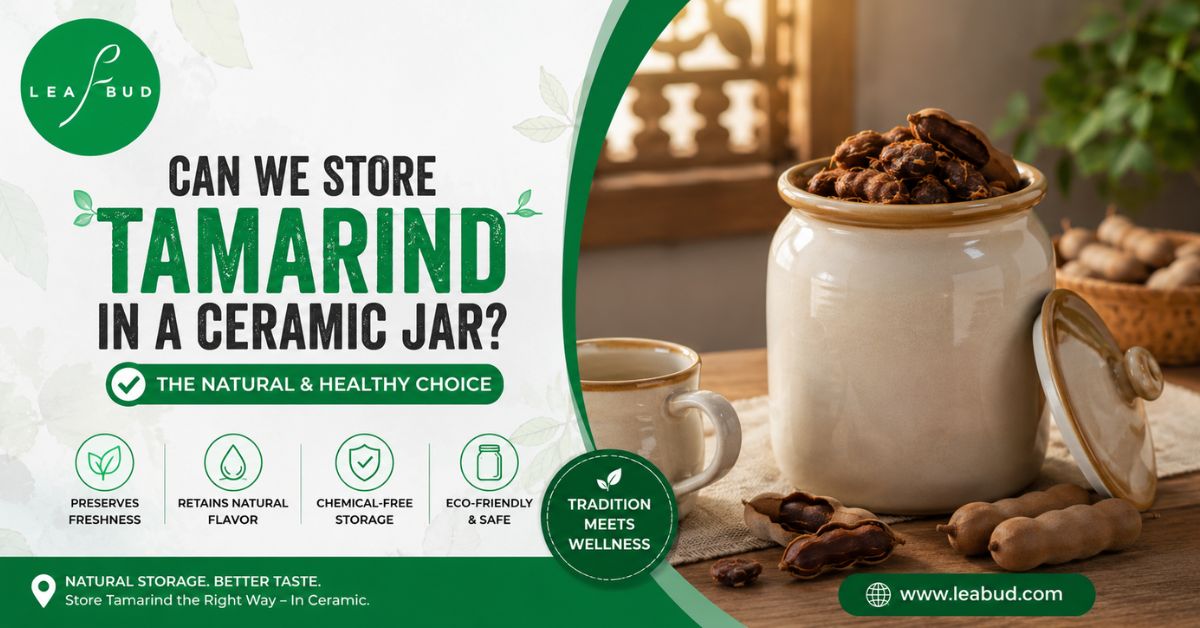
South Indian food revolves around tamarind. It is used for sambars, rasams, chutneys, rice preparations, and pickles. Most Indian households keep it in some form, whole pods, a pressed block, or ready-made paste, and the question of where to store it properly comes up every season when the summer haul arrives.
The short answer to whether you can store tamarind in a ceramic jar is yes. But the full story is a bit more interesting than a simple yes or no. Let’s break it down.
Why Tamarind’s Acidity Matters for Storage
Before you select a container for tamarind, you need to understand what makes it chemically active.
Tamarind is one of the most acidic fruits used in cooking. Its juice usually has a pH between 2.5 and 3.5, and the main acid responsible for this is tartaric acid, the same acid that is present in grapes in high concentrations. Tamarind’s total acidity ranges from 12.2 to 23.8 per cent as tartaric acid, which gives it a tang that no other common cooking ingredient in an Indian kitchen can quite match. Besides tartaric acid, tamarind has smaller quantities of citric and malic acids, adding to the sourness and complexity.
It’s that acidity that makes tamarind such a great natural preservative in recipes. Tartaric acid is important for bringing the pH down to a level where many undesirable spoilage bacteria cannot survive. But it’s this same acidity that makes the choice of the container important.
Why is this? Acids react with a lot of materials. Do not keep foods like tamarind or any food containing tartaric acid in metal containers. The presence of citric and tartaric acids in tamarind can erode a metal surface and give a bitter or altered taste. In some cases, especially if the metal is of low quality, it may even leach compounds into the food over time.
So the question becomes, if not metal, then what?
How Indian Households Have Traditionally Stored Tamarind
Two techniques used ceramic and earthenware, and generations of cooks before refrigerators devised ways to keep tamarind in their kitchens for months and even years.
The salt and ceramic method: In India, tamarind is traditionally stored in large pots made of ceramic or clay, layered with crystal salt. The seeds are removed from the tamarind pulp, rolled into balls, packed with salt, and stored in ceramic containers. This is an age-old method and is still followed in South Indian homes, especially in the summer season when tamarind is available aplenty. The tamarind gets darker with age, almost black, but the flavour and quality last for a year or more.
The earthenware pot method: In another study on tamarind storage, porcelain pots were tried with other packing materials like polyethylene, polypropylene, and aluminium foil. All materials showed some increase in acidity during the 45-day storage period at room temperature, although ceramic was found to be a practical alternative for short- to medium-term storage under ambient conditions.
These techniques work because the ceramic, especially glazed ceramic, does not react. It will not react with the acids in tamarind, so the flavour stays true, and there is no risk of metallic contamination.
Can You Store Tamarind in a Ceramic Jar Today?
Yes, and here’s exactly how and when it works.
For Dry Tamarind Block or Pulp
A whole block of tamarind, the kind sold in all Indian grocery stores, will keep almost indefinitely at room temperature as long as it is kept in a cool, dark, dry place and in an airtight container. A good-fitting lid is a great choice here, and a ceramic jar is a good option.
In a warm Indian kitchen, the ceramic must hold a steady temperature on the inside. The thick walls of the jar are a natural insulator, slowing down temperature changes from day to night. The food-safe ceramic jar is also coated with a non-porous glaze so that the strong sour smell of tamarind is not absorbed. And if the lid fits well, air and moisture won’t get in.
This is the simplest use of a ceramic jar for storing tamarind. It does the job, and it is also nice to look at on the kitchen shelf.
For Tamarind Paste
Homemade tamarind paste, on the other hand. When you remove the pulp and boil it down to a paste, it is much more susceptible to spoilage.
Store the tamarind paste in a clean, sterile, airtight container in the refrigerator. When stored properly in the fridge, it will keep for up to three months. Always use a clean, dry spoon when removing paste from the jar. Moisture or dirty utensils promote fungal growth.
A glazed ceramic jar with a tight lid is good for storing tamarind paste in the refrigerator. Because the surface is non-reactive, the paste’s flavour won’t be contaminated by any off-tastes from the container. Paste is also good in glass jars. If made properly, both materials are non-reactive and safe for food use.
One thing to look out for: if the jar is not well sealed or a wet spoon gets into the moisture, the tamarind paste can develop white spots or a film on the surface. If you see any visible mold, chuck the paste away. Wash and sterilise the jar before making a fresh batch.
For Tamarind Pulp with Salt (Traditional Method)
This is where ceramic jars really shine. Fresh tamarind pulp balls rolled in salt and stored in a ceramic jar can stay good for up to two years. The salt draws out moisture and acts as a preservative, and the ceramic environment, stable, cool, and non-reactive, supports long-term storage without introducing any off-flavours.
If you buy tamarind in bulk during the season, this is one of the most reliable methods to make it last through the year without refrigeration.
What Kind of Ceramic Jar Should You Use?
Not all ceramic jars are suitable for food storage, especially acidic foods such as tamarind. This is what you want to see.”
Food-safe glaze, lead-free: The inside of the jar must be completely glazed with a food-safe, lead-free glaze. Acid can also increase the release of heavy metals from unstable or poor-quality glazes. High-quality ceramic jars are glazed with food-contact-tested glazes, which will not react with acidic contents.
Glaze intact: Look at the inside of any ceramic jar you want to use for tamarind storage. Any chip, crack, or crazing (a network of fine cracks across the glaze) means the protective barrier between the clay and your food has been compromised. Do not store food in a damaged jar.
Tight-fitting lid. Moisture and air are the two things most likely to spoil tamarind in block, paste, or pulp form. A lid that seals properly is not optional; it is the most important functional feature.
High-fired stoneware or porcelain jars of high-fired ceramics are denser and less porous than low-fired earthenware. Basic earthenware is not good for storing acidic foods such as tamarind. Stoneware or porcelain jars are better. Higher firing temperatures lead to a harder, more stable ceramic body that is more durable in the long run.
Size to fit: Select a jar that will hold the amount of tamarind you normally use. The jar is too full of space above the tamarind, which means more air is inside, which means faster oxidation, which means a shorter shelf life.
The ceramic jars at Leafbud are made by expert artisans by hand and are for everyday kitchen use, from pickle storage to spices and dry ingredients. Theleafbud.com has a collection of food-safe glazed pickle jars, condiment jars, and storage jars with well-fitted lids to store acidic pantry staples like tamarind.
What Containers to Avoid for Tamarind
Let’s be clear. Let’s be direct.
Containers of metal: Avoid storing tamarind in metal containers, especially for a long time. The tartaric and citric acids in tamarind react with metal, which can make it taste bitter and may contaminate it. This is also true of untreated metal and lower grades of stainless steel.
Unglazed earthenware: A traditional Indian clay pot that is unglazed will absorb the tamarind’s moisture and acidity over time. This will damage the pot and may affect the flavour of the tamarind. In India, traditional storage in clay pots works in part because the tamarind is heavily salted and the contact is carefully managed; it is not the same as simply dropping a block of tamarind into a bare clay container.
Cracked or chipped ceramic: If the glaze on a ceramic jar is damaged, it’s no longer suitable for storing acidic foods. The exposed clay underneath can absorb the tamarind, which may be host to bacteria, and the acid can react with it in unpredictable ways.
Shelf Life of Tamarind in a Ceramic Jar: A Quick Reference
Here is a practical guide on how long tamarind will last in different conditions.
Dry tamarind block in a ceramic jar (cool, dark, dry place, room temperature, sealed): Up to a year or more.
Salted tamarind pulp in a ceramic jar (room temperature) – up to two years (traditional salt-packing method).
Tamarind paste in a clay jar (store in a cool place) Up to 3 months. The spoon must always be dry.
Tamarind paste in a ceramic jar (not in the fridge). Up to 1 month at room temperature. Refrigeration helps a lot in extending shelf life.
Fresh tamarind pods (unprocessed, any container): About one week at room temperature; up to three months in the refrigerator.
How to Care for Your Ceramic Jar After Storing Tamarind
The acidity and colour of tamarind can mark the inside of a jar over time. Here is how to keep the jar in good shape.
Wash the jar with warm water and mild dishwashing soap after each use. Don’t scrub the glaze with abrasive scrubbers. If the tamarind residue is stubborn, soak the jar in warm water for ten to fifteen minutes, then wash. Do not scrub hard.
Let the jar dry completely before adding new tamarind. The leading reason for mold in a storage jar is moisture left inside.
Check the glaze every few months. If there is any grey residue remaining on the glaze after washing or if the glaze is dull or crazed, do not use the jar for food.
FAQs
Q1. Is it safe to store tamarind in a ceramic jar for a long time?
Yes, as long as the ceramic jar has a fully intact, food-safe, lead-free glaze and a tight-fitting lid. Tamarind is highly acidic, so the glaze quality matters. A dry tamarind block or salt-packed pulp stored in a well-sealed ceramic jar at room temperature can stay good for a year or longer.
Q2. Can I keep tamarind paste in a ceramic jar in the fridge?
Yes. Store homemade or opened tamarind paste in a clean, glazed ceramic jar with a tight lid in the refrigerator. It will keep up to three months. Always use a clean, dry spoon to avoid introducing moisture or bacteria, which cause mould.
Q3. Why should tamarind not be stored in metal containers?
Tamarind has tartaric and citric acids, which react with the metal surfaces. This reaction results in a metallic or bitter taste to the tamarind and, in some cases, can cause leaching of metal compounds into the food. Store acidic ingredients in non-reactive containers such as ceramic or glass.
Q4. What is the traditional Indian method of storing tamarind in ceramic jars?
The traditional method is to remove the seeds from the tamarind pulp, roll it into balls, pack each ball with crystal salt, and layer them in a large ceramic or clay pot. This technique has been in use for hundreds of years in South Indian homes and can store tamarind for as long as two years without refrigeration.
Q5. Where can I find a good ceramic jar for storing tamarind and other kitchen staples?
Leafbud offers a wide assortment of handmade ceramic jars for Indian kitchen use, such as storage jars, pickle jars, and condiment jars. All are created using food-safe glazes by skilled craftsmen. You can check out the jars collection on the website.