Chat with us
FREE Leafbud Umbrella on Prepaid Orders Above INR 4,500/-
FREE Leafbud Umbrella on Prepaid Orders Above INR 4,500/-
FREE Leafbud Umbrella on Prepaid Orders Above INR 4,500/-
FREE Leafbud Umbrella on Prepaid Orders Above INR 4,500/-
FREE Leafbud Umbrella on Prepaid Orders Above INR 4,500/-
FREE Leafbud Umbrella on Prepaid Orders Above INR 4,500/-
FREE Leafbud Umbrella on Prepaid Orders Above INR 4,500/-
FREE Leafbud Umbrella on Prepaid Orders Above INR 4,500/-


Are Ceramic Mugs Safe to Drink From?

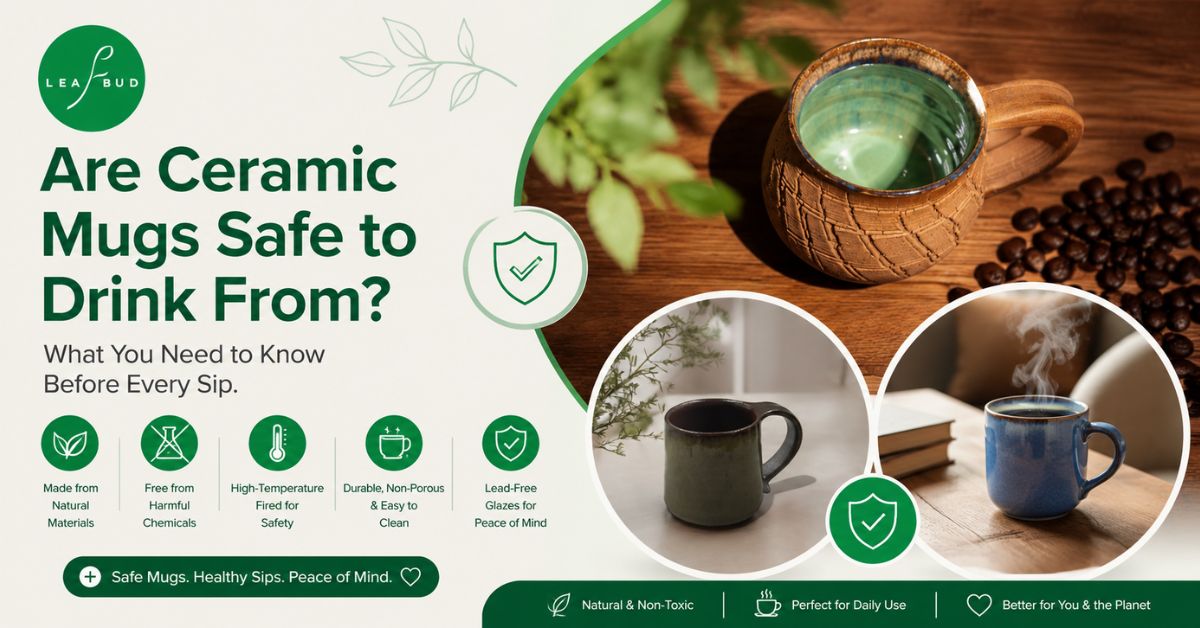
You love your morning cup of tea or coffee. And chances are pretty good that you pour it into a ceramic mug. But have you ever stopped to consider if that glossy cup is actually safe to use everyday?
The short answer: Most modern ceramic mugs are perfectly fine. But some are not. Here’s how to tell the difference between a food-safe mug and a toxic one.
What Makes a Ceramic Mug Food-Safe?
Ceramic mugs are crafted from clay that’s been fired at extremely high temperatures. Clay is typically inert, but when it comes to ceramic mugs, we have to worry about the glaze that coats the clay.
Glaze serves two purposes. First, it makes the mug liquid-proof. Second, it adds color and shine. The issue is that older or inexpensive glazes can contain lead and cadmium. Lead and cadmium are heavy metals that can, under some circumstances, leach into your coffee or tea.
Why does this matter? The U.S. Food and Drug Administration (FDA) dictates how much lead or cadmium can leach out of a ceramic glaze and into food/drink. The FDA’s maximum allowable level of lead that leaches into a liquid (action level) from the glaze on cups and mugs is 0.5 micrograms per milliliter (ug/mL). (This is much lower than what’s allowed to leach into food in contact with plates, which is 3.0 ug/mL). The FDA imposes stricter limits on lead leaching for cups and mugs because liquid is in contact with the glaze for much longer than the brief time that a meal will stay on your plate.
Remember: just because a product exceeds these FDA thresholds doesn’t make it safe. These are enforcement standards so a mug that “complies with FDA standards” is not the same thing as a mug that is 100% lead-free. For a ceramic to be considered lead-free (by FDA standards), it must have zero extractable lead as determined by their standard testing method.
The Real Risk: Lead and Cadmium in Ceramic Glazes
Research published in PubMed in 2018 tested bright colored glazed ceramic cups found they can leach lead as well as cadmium when placed in the microwave with water. In several cases the cups exceeded allowable action limits set by the FDA by orders of magnitude. Oddly enough, newer cups leached significantly more lead on average than older cups, something to keep an eye on.
Also keep an eye out for cadmium. Cadmium is a known carcinogen that is often found in glazes containing bright red, orange, or yellow pigments. Since California Proposition 65 standards are more stringent than federal standards (requiring leachable lead be under 0.226 PPM vs FDA tiered category highs), we used them.
The moral of the story: there is a risk, however it can easily be mitigated by purchasing from responsible companies that use food-safe glazes that adhere to current standards.
Stoneware vs. Porcelain vs. Earthenware: Which Is Safest?
Not all ceramic mugs are made the same way. Here is a quick look at the three main types:
Stoneware is fired at high temperatures, typically around 2,167°F (1,186°C). It has very low porosity, absorbing only about 2 to 3% water in the clay body even without glaze. This makes it dense, durable, and less likely to crack or harbor bacteria. Stoneware is the most common material used for everyday mugs.
Porcelain is fired even hotter and is essentially non-porous. It is lighter than stoneware and known for its smooth finish. Porcelain and high-fired stoneware both handle dishwashers and microwaves better than low-fired alternatives.
Earthenware is fired at lower temperatures, typically around 1,915°F (1,046°C), and can absorb up to 15 to 17% water. It is more porous, which means the glaze has to work harder to seal it. If the glaze is improperly applied or begins to degrade, earthenware poses a higher leaching risk. Many traditional pottery items from regions with less regulated manufacturing fall into this category.
At Leafbud, for example, their handcrafted ceramic mugs use artisan-made stoneware and are designed for daily use, which means they go through proper firing and glazing processes that make them suitable for food contact.
Are Ceramic Mugs Safe in the Microwave?
Most high-fired stoneware and porcelain mugs are microwave-safe. The glaze, when properly fired, forms a glass-like barrier that does not react with microwave energy.
There are a few exceptions to keep in mind:
- Metallic accents (gold, silver, bronze trim) should never go in the microwave. Metal arcs and sparks.
- Cracked or chipped mugs are a problem. If water has seeped into a crack, heating it can worsen the damage and may cause the mug to break suddenly.
- Low-fired or unglazed ceramics can absorb water into the clay body. When microwaved, that moisture heats up inside the walls of the mug, potentially causing it to overheat or crack.
A simple test: put a small amount of water in the mug and microwave it for 30 seconds. If the mug feels much hotter than the water, that is a warning sign.
Good Housekeeping tested ceramic mugs from leading brands and found that while new mugs did not leach toxins initially, some aged mugs (after months of dishwasher and microwave use) did show leaching. This reinforces the point that a mug’s safety can change over time, especially with heavy use and heat exposure.
How to Tell If Your Ceramic Mug Is Safe to Drink From
Here are clear, practical signs to watch for:
- Check the label. Look for terms like “lead-free,” “food-safe,” or “meets FDA standards.” A mug certified as lead-free under standard testing is your safest bet.
- Look at where it was made. Mugs from countries with strict manufacturing regulations (the US, EU, Japan) are more likely to meet food-safety standards. Some imported pottery, particularly certain traditional Mexican ceramics, has been found to contain unsafe lead levels even when labeled “lead-free.”
- Inspect the glaze. If the glaze looks uneven, rough, or has tiny cracks (called crazing), it may not be sealing the clay body properly. Avoid using crazed mugs for hot beverages.
- Avoid bright, over-decorated finishes. Heavy decorative glazes with vivid reds, oranges, and yellows are more likely to use cadmium-based pigments.
- Replace chipped or cracked mugs. Once a mug is chipped, the ceramic is no longer fully protected. The risk of leaching or bacterial buildup increases.
Are Handmade and Artisan Ceramic Mugs Safe?
This is a common concern. Handmade mugs from skilled potters can absolutely be food-safe, as long as they are:
- Fired to the correct temperature (cone 6 or higher for stoneware, which means at least 2,167°F)
- Glazed with food-safe, lead-free materials
- Properly tested or sourced from reputable suppliers
Leafbud’s handcrafted ceramic mugs are made with artisan quality and are intended for everyday use. When buying handmade ceramics, it is worth asking the maker directly about their clay body, firing temperature, and glaze materials. Reputable potters are happy to answer these questions.
The risk with artisan ceramics arises when makers use low-fire techniques or decorative glazes that were not designed for food contact. This is less common with established brands and experienced potters, but it is worth asking before you buy.
Caring for Your Ceramic Mug to Keep It Safe Long-Term
The way you use and clean your mug affects its safety over time. Here are straightforward care tips:
- Hand wash when possible. Repeated dishwasher cycles expose glazes to high heat, strong detergents, and water pressure. Over time, this can wear down the glaze layer, especially on mugs with matte or decorative finishes.
- Avoid acidic drinks in older or low-quality mugs. Coffee, citrus juices, and tomato-based drinks are mildly acidic. Acids accelerate glaze breakdown and leaching. The FDA’s own testing protocol uses a 4% acetic acid solution to simulate this exact effect.
- Do not use a chipped mug for hot drinks. Once the glaze is damaged, the protective barrier is compromised.
- Replace mugs showing visible glaze wear. If the inside of your mug has turned dull, rough, or shows discoloration, it is a sign the glaze has degraded.
FAQs: Are Ceramic Mugs Safe to Drink From?
Q1. Can ceramic mugs leach lead into coffee or tea?
Yes, some ceramic mugs can leach lead into hot beverages, particularly those with bright decorative glazes or those made using low-fire techniques. Modern mugs from reputable brands that use food-safe, lead-free glazes are generally safe. Always look for certified lead-free labeling or buy from established manufacturers.
Q2. Is it safe to use a ceramic mug with a cracked or crazed glaze?
No, a crazed or cracked glaze is a sign the protective barrier has broken down. This allows water, heat, and acidic liquids to reach the clay body and potentially leach metals or harbor bacteria. Replace any mug that shows visible crazing on the interior surface.
Q3. Are handmade ceramic mugs from artisan shops safe to drink from?
Yes, if the mug is made from stoneware or porcelain fired to the correct temperature and glazed with food-safe materials. Ask the maker about their clay type, firing cone, and glaze suppliers. Most experienced potters working with stoneware clays and commercial food-safe glazes produce completely safe drinkware.
Q4. Are ceramic mugs safe to use in the microwave every day?
Most stoneware and porcelain mugs are microwave-safe. Avoid mugs with metallic accents, cracks, or unglazed porous areas. Over time, repeated microwaving can degrade certain glaze types, so inspect your mug regularly. When in doubt, check the manufacturer’s guidance or look for an official microwave-safe label.
Q5. What is the difference between “meets FDA standards” and “lead-free” on a ceramic mug?
A mug that “meets FDA standards” has leachable lead below the FDA’s enforcement thresholds, which are not zero. A mug labeled “lead-free” has been tested and shown zero extractable lead under the standard protocol. If minimizing any possible exposure matters to you, choose mugs explicitly certified as lead-free.