Chat with us
FREE Leafbud Umbrella on Prepaid Orders Above INR 4,500/-
FREE Leafbud Umbrella on Prepaid Orders Above INR 4,500/-
FREE Leafbud Umbrella on Prepaid Orders Above INR 4,500/-
FREE Leafbud Umbrella on Prepaid Orders Above INR 4,500/-
FREE Leafbud Umbrella on Prepaid Orders Above INR 4,500/-
FREE Leafbud Umbrella on Prepaid Orders Above INR 4,500/-
FREE Leafbud Umbrella on Prepaid Orders Above INR 4,500/-
FREE Leafbud Umbrella on Prepaid Orders Above INR 4,500/-



Do Ceramic Cups Release Microplastics?

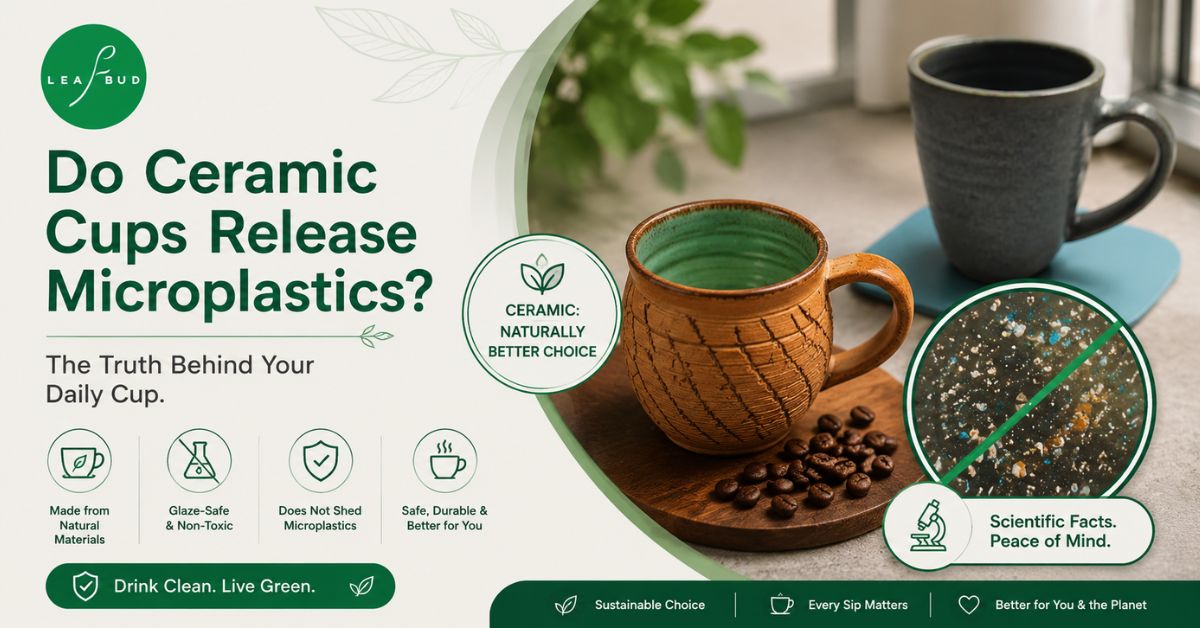
Microplastics have been found in human blood, lung tissue, and even the brain. It’s no wonder that people are starting to think twice about what they’re drinking out of. If you’ve upgraded to a ceramic mug or are in the market for one, you might be wondering: do ceramic mugs leach microplastics into your drinks?
The short answer is no. Ceramics aren’t made with polymers, and polymers are what microplastics come from. But there’s more to the story, as not all mugs marketed as “ceramic” are created equally, and some do contain plastic parts that could be worrisome.
Let’s dive in.
What Are Microplastics and Why Do They Matter?
Microplastics are pieces of plastic that are smaller than 5 millimeters in size. Plastic begins to fragment into microplastics when it’s subjected to heat, friction, UV radiation, and other environmental stressors. Plastic products continue to shed microplastics throughout their lifespan, sometimes ending up in your food or drink.
Research into the potential health effects of microplastics is ongoing, but early results haven’t painted the best picture. One review published in the World Economic Forum in 2025 reported associations between microplastics and cardiovascular disease risk, heart attack, and stroke. Another study published in 2025 discovered microplastics traveling through mouse brain tissue and clogging blood vessels. Scientists have now detected microplastics in human blood samples, placenta tissue samples, and gastrointestinal samples.
WHO initiated a specialized review of microplastics we consume through food or breathe in from the air. They found there were significant gaps in research around microplastics but urged that microplastic exposure be limited when possible.
Researchers at the Indian Institute of Technology Kharagpur estimate that if you regularly consume beverages from vendors that use single-use cups lined with plastic, you could ingest about 0.03 mg of plastic debris for every kilogram of body weight each day. That’s about 54 grams of microplastics over the course of a lifetime…just from cups.
Which is why what your drink really matters.
Do Ceramic Cups Release Microplastics?
No. Cups made from clay, fired at high temperatures, and coated with a glaze made from minerals do not have synthetic polymers in them. Microplastics originate from plastic. Ceramics are not plastic.
Let me explain why that matters. Clay fired in a kiln at 2,100°F (1,150°C) or higher causes the clay particles to fuse together through a process known as vitrification. Glaze is applied to the surface of the clay body, which is made of silica (silicon dioxide), alumina, flux minerals, and coloring agents. The silica in glaze melts when fired, creating a glass-like layer on top of the clay body. This sealed surface is what makes your mug liquid-resistant and food-safe.
Every step in that process is natural. There are no polymers. No polyethylene. No polypropylene. No polystyrene. Ceramic, once fired, does not break down at room temperature or release particles into your drink like plastic does. It’s just not possible.
Nutritionists and other materials experts have said this repeatedly. When Healthline quoted food safety expert Gropper on the subject, he told them stainless steel and ceramic were the best materials for hot drinks because they’re inert.
Where the Confusion Comes From: Not All “Ceramic” Cups Are Pure Ceramic
Here is where things get more complicated. The word “ceramic” gets used loosely on product packaging, and some cups that carry the label are not made entirely from fired clay.
Watch out for these situations:
Ceramic-coated travel mugs: Many travel mugs have a stainless steel body with a nano-ceramic coating on the interior. While these coatings are generally safer than bare plastic, they are a thin applied layer, not true vitrified ceramic. Some consumer health researchers have raised concerns about nano-ceramic coatings and their long-term durability under heat and wear.
Plastic lids on ceramic mugs: A fully ceramic mug with a plastic lid still exposes your drink to plastic when the hot liquid touches the lid. If the lid is made from standard polypropylene or polyethylene, heat can cause microplastic particles to shed into your beverage. Mamavation, a consumer product safety research organization, recommends avoiding any plastic or silicone touching a hot beverage.
Paper cups with ceramic marketing: Some single-use cups are marketed as having a “ceramic-like” interior coating. These are not the same as a fired ceramic mug. A 2024 study published in LabMed Discovery confirmed that when plastic-lined paper cups come into contact with hot water at 85°C, they release microplastics within minutes, along with chemicals like phthalates and endocrine disruptors.
The takeaway: check what the entire cup is made from, not just the body.
Ceramic Cups vs. Plastic, Paper, and Stainless Steel: A Comparison
Next steps: here is how ceramic stacks up against the other common materials in your cupboard.
Ceramic vs. plastic: Plastic cups and reusable plastic mugs shed microplastics when exposed to heat. Research in the Journal of Hazardous Materials found that single-use plastic cups release particles ranging from 1 to 500 micrometers in size, with more particles released at higher water temperatures. Ceramic cups produce none of this. Ceramic also does not contain BPA or BPS, two plasticizers linked to hormonal disruption.
Ceramic vs. paper cups: Standard paper cups from cafes are lined with a thin layer of polyethylene to prevent leaking. That lining is the problem, not the paper. When hot liquid touches it, plastic particles and chemical additives release into your drink. Switching to a reusable ceramic cup eliminates this entirely.
Ceramic vs. stainless steel: Both are safe from a microplastic standpoint. Stainless steel does not shed microplastics. It can, under some conditions, release trace amounts of nickel and chromium, though at levels generally considered too low to cause harm. The practical advantage of ceramic is that it does not affect the taste of your drink and does not react to coffee’s acidity or natural oils the way stainless steel sometimes can.
What Makes a Ceramic Cup Genuinely Safe: Glaze Matters
Ceramic cups do not release microplastics. But that does not mean every ceramic cup is completely free of concerns. The glaze is the part that requires attention.
Older or low-quality glazes can contain lead and cadmium. These are heavy metals, not microplastics, but they carry their own risks. The U.S. Food and Drug Administration sets action levels for leachable lead in mugs and cups at 0.5 micrograms per milliliter under its Compliance Policy Guide CPG 545.450. A cup certified as lead-free has been tested and shown zero extractable lead under the standard protocol.
Here is what to look for in a genuinely safe ceramic cup:
- Lead-free certification: Confirms zero extractable lead under ASTM C738 testing.
- High-fire construction: Stoneware fired at cone 6 (around 2,167°F / 1,186°C) or higher is dense, non-porous, and far more stable than low-fire earthenware.
- Smooth, intact glaze on the interior: Any crazing (fine cracks) or chips on the inside surface should be a reason to retire the mug.
- No metallic decorative accents: Gold, silver, and luster finishes contain actual metal. These can spark in a microwave and may not be food-safe.
- Known manufacturer: Mugs from brands with clear material standards are safer than unbranded imports from countries without consistent regulation.
At Leafbud, for example, every handcrafted ceramic cup goes through proper artisan firing and glazing. Buying from a reputable source that can speak to their materials is one of the most straightforward ways to protect yourself.
How to Reduce Your Microplastic Exposure When Drinking Tea or Coffee
Switching to a ceramic cup is one of the most practical steps you can take. Here are a few others worth adding:
- Use a ceramic or glass cup at home. Reserve travel mugs for when you actually need them.
- Skip the plastic lid. If you use a travel mug, opt for a stainless steel or glass lid over polypropylene.
- Avoid disposable paper cups. The polyethylene lining is where most microplastic exposure in coffee comes from.
- Do not use plastic tea bags. Many pyramid-shaped tea bags are made from nylon or polyethylene terephthalate (PET). Loose leaf tea in a ceramic cup avoids this entirely.
- Replace chipped or crazed ceramic mugs. A damaged glaze cannot do its job properly.
- Check the coffee pod and filter materials. Plastic coffee pods can shed microplastics during brewing, and some paper filters use plastic binders.
The pattern here is consistent: the fewer plastic surfaces your hot beverage touches, the lower your exposure.
FAQs: Do Ceramic Cups Release Microplastics?
Q1. Can a regular ceramic mug release microplastics into my coffee or tea?
No. Ceramic mugs made from fired clay and mineral-based glazes contain no synthetic polymers. Microplastics come from plastic materials. A properly made ceramic mug is inert and does not shed particles into hot beverages, making it one of the safest everyday drinkware options available.
Q2. Are “ceramic-coated” travel mugs the same as solid ceramic cups?
No. Ceramic-coated travel mugs have a thin coating applied to a metal or plastic body. While generally safer than bare plastic, they differ from a true fired ceramic mug. Also check lids: plastic lids on any mug, including ceramic ones, can still release microplastics when hot liquid touches them.
Q3. Does microwaving a ceramic cup cause it to release harmful particles?
No, as long as the cup has no metallic accents or damage. High-fired stoneware and porcelain are microwave-safe. The glass-like fired glaze is chemically stable at microwave temperatures. Avoid microwaving mugs with gold or silver trim, cracks, or unglazed areas, as these can cause uneven heating or glaze breakdown over time.
Q4. How do paper coffee cups compare to ceramic in terms of microplastics?
Much worse. Standard paper cups are lined with polyethylene plastic to prevent leaking. When hot water contacts this lining, microplastics and chemical additives like phthalates and endocrine disruptors release into your drink within minutes, according to a 2024 study published in LabMed Discovery. A ceramic cup produces none of this.
Q5. What should I look for when buying a ceramic cup to make sure it is truly safe?
Look for a lead-free certification, smooth glaze on the interior with no cracks or chips, and stoneware or porcelain fired at high temperatures (cone 6 or above). Buy from brands like Leafbud that are transparent about their materials and manufacturing. Avoid bright decorative glazes with heavy pigment work on the interior of the cup.