Chat with us
FREE Leafbud Umbrella on Prepaid Orders Above INR 4,500/-
FREE Leafbud Umbrella on Prepaid Orders Above INR 4,500/-
FREE Leafbud Umbrella on Prepaid Orders Above INR 4,500/-
FREE Leafbud Umbrella on Prepaid Orders Above INR 4,500/-
FREE Leafbud Umbrella on Prepaid Orders Above INR 4,500/-
FREE Leafbud Umbrella on Prepaid Orders Above INR 4,500/-
FREE Leafbud Umbrella on Prepaid Orders Above INR 4,500/-
FREE Leafbud Umbrella on Prepaid Orders Above INR 4,500/-



Can I Put Chamomile Tea in Ceramic Mug?

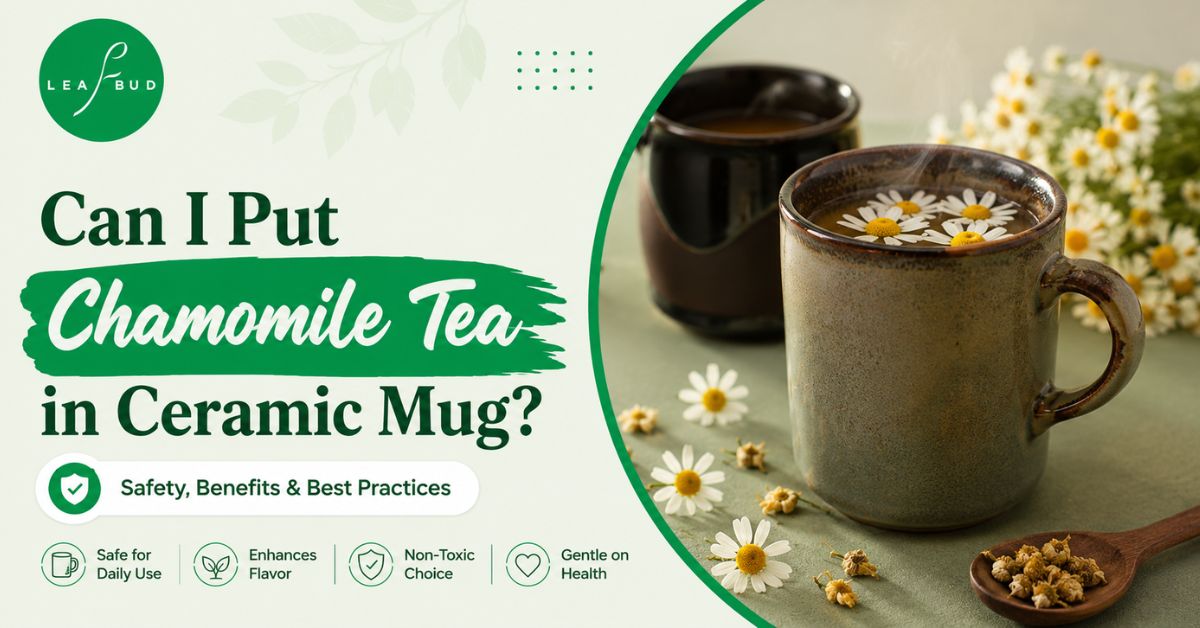
Yes! But why ceramic is the absolute best home for your chamomile is a story worth your time.
TLDR; Yes, You Can!
Chamomile tea in a ceramic mug is perfectly safe. In fact, it’s one of the best matches you can make. Ceramic doesn’t react to foods, holds heat well, and has no flavor of its own, which makes it ideal for gentle herbal steeping.
There’s a soothing formality to brewing chamomile tea. Watching the amber-colored flowers swirl color into the water. Breathing in the sweet, crisp scent. Taking that first calming sip while you slowly breathe out, cradling the mug with both hands. It’s one of those comforting rituals that never gets old. But for some reason, many tea drinkers hesitate. Poking their hand into the pause button as they think, “Can I put chamomile tea in ceramic?”
Maybe they’re used to treating their ceramic bowls and plates with kid gloves. Maybe they’re wondering if their teapot will leave the tea tasting…more porcelain-y. Either way, let’s set the record straight. You can (and should) put your chamomile tea in ceramic. Here’s why:
Why Ceramic Is Perfect for Chamomile Tea
Camomile tea is a light brew. It doesn’t have bold, overpowering notes like black tea or coffee. Its delicate hint of flowers and apple can be easily tampered with by your mug. Which is why your ceramic mug is king.
Chemically non-reactive, ceramic doesn’t interfere with the natural makeup of your tea. It won’t leach metallic flavors like some cheaper metals can. And it sure as heck won’t soak up leftover flavors from yesterday’s lunch.
Drink a cup of camomile tea from our ceramic mug and it’ll taste how it’s supposed to. Light. Clean. Perfect.
Leafbud’s ceramic mug was designed with a sense of wabi-sabi in mind. That beauty is found in the imperfect, the handmade, and the consciously simple. Our ceramic brew-ware is an extension of the ceremony itself.
5 Real Benefits of Using a Ceramic Mug for Chamomile Tea
Excellent Heat Retention
Ceramic holds warmth far longer than glass or thin porcelain, so your chamomile stays at the right drinking temperature through a slow, leisurely sip session.
Chemically Neutral
Ceramic doesn’t react with the antioxidants, flavonoids, or natural oils in chamomile. Your tea’s therapeutic profile remains completely intact.
Preserves Delicate Flavor
Because ceramic neither absorbs nor releases taste compounds, chamomile’s gentle floral and honey-apple notes come through clean and undiluted every single time.
Comfortable to Hold
The slightly porous, matte-finish exterior of many ceramic mugs creates a naturally warm and comfortable grip, an important detail for a slow, calming tea ritual.
Aesthetically Intentional
A handcrafted ceramic mug signals that this cup of tea is not an afterthought — it elevates a simple infusion into a mindful moment of self-care.
Durable & Sustainable
A quality ceramic mug is a lifelong companion. Unlike single-use or plastic-lined cups, it’s an investment that reduces waste and grows more beautiful with use.
Is It Safe? What to Look For in a Ceramic Mug
The safety of ceramic mugs for hot beverages, including herbal teas, is well-established but it does depend on the quality of the piece. Here is what to look for:
- Food-safe glaze: A high-quality ceramic mug uses a lead-free, food-grade glaze. This glaze seals the clay, making the surface non-porous and entirely safe for hot liquids. All reputable artisan-made and commercially certified mugs meet this standard.
- Kiln-fired at proper temperatures: Ceramic fired at the correct temperature (typically above 1200°C for stoneware) results in a durable, vitrified surface that won’t crack with everyday tea temperatures (around 80–90°C for chamomile).
- No cracks or crazing: If your ceramic mug has visible cracks or crazing (fine network cracks in the glaze), it’s time for a new one. Fine cracks can harbor bacteria and may slightly compromise the inert properties of the surface.
- Artisan provenance: Mugs made by skilled potters such as those in the Leafbud Brew Ware collection are crafted with deliberate attention to both beauty and food safety, giving you full peace of mind.
The bottom line: any ceramic mug you’d comfortably drink coffee from is equally safe and suitable for chamomile tea in a ceramic mug.
How to Brew the Perfect Chamomile Tea in a Ceramic Mug
Chamomile is one of the most forgiving herbal teas to brew, but a few details will take it from pleasant to genuinely lovely. Here is the method we recommend:
- Warm your ceramic mug first. Pour a little boiling water into the mug, swirl it, and tip it out. This prevents thermal shock to handcrafted ceramics and ensures your tea stays warm longer, a detail any tea lover will appreciate.
- Use water at 85–90°C. Chamomile doesn’t need a full rolling boil. Slightly cooled water preserves the delicate volatile oils that give the tea its calming fragrance. If you don’t have a temperature-controlled kettle, let boiled water sit for 2–3 minutes.
- Steep for 4–5 minutes. Cover your ceramic mug with a small plate or saucer during steeping to trap the aromatic steam and keep the heat in. This is an old trick that makes a genuine difference.
- Remove the bag or infuser promptly. Steeping chamomile beyond 6–7 minutes can introduce a mild bitterness. Remove and press gently don’t wring to capture the last of the flavor without extracting tannins.
- Sweeten mindfully. A small drizzle of raw honey stirred in at the end is the classic pairing. Add it after steeping, not before, to preserve the honey’s own delicate enzymes.
Find Your Perfect Chamomile Companion
Leafbud’s handcrafted ceramic mugs are made by skilled artisans who understand the ritual of a slow, mindful brew. Each piece is unique just like your tea ritual.
Explore Ceramic Mugs →
Caring for Your Ceramic Mug After Chamomile Tea
Chamomile is a gentle, light-colored infusion that is far less prone to staining than black tea or coffee. Still, a few mindful habits will keep your ceramic mug in beautiful condition for years.
Rinsing & Washing
Rinse your ceramic mug with warm water promptly after use. Chamomile’s natural pigments are mild, and a quick rinse is usually all that’s needed. For a thorough clean, warm water with a gentle dish soap and a soft sponge is ideal. Avoid abrasive scrubbers, which can damage the glaze over time.
Dealing with Residue
If you notice any light discoloration building up over time, a paste of baking soda and water applied gently with a soft cloth will lift it without harming the ceramic surface. Avoid bleach-based cleaners on handcrafted glazed ceramics.
Dishwasher Use
Most high-fired ceramic mugs are dishwasher-safe, but for handcrafted, artisan pieces, hand-washing is always the gentler and recommended choice. It preserves the integrity of the glaze and respects the craft that went into making it.
Thermal Care
Avoid moving a ceramic mug directly from a very cold environment to very hot liquid without a brief warm-up (the pre-warming step mentioned in the brewing guide is doubly useful here). Sudden temperature extremes, called thermal shock, can cause micro-cracks over time even in well-made ceramics.
Ceramic vs. Other Materials: The Honest Comparison
If you’re wondering whether chamomile tea in a ceramic mug is better than other options, here is a clear-eyed look at the alternatives:
Ceramic vs. Glass
Glass is also chemically neutral and beautiful for watching the color of your tea. However, it loses heat much faster than ceramic — a significant downside for a slow herbal tea ritual. Ceramic wins for warmth retention and tactile comfort.
Ceramic vs. Stainless Steel
Stainless steel excels at heat retention and durability, but some tea drinkers detect a slight metallic undertone especially noticeable with delicate herbal teas like chamomile. Ceramic remains the cleaner, more flavor-neutral choice.
Ceramic vs. Plastic
Plastic mugs or cups are best avoided entirely for hot teas. Even BPA-free plastics can leach trace compounds at high temperatures, and they often impart a faint chemical taste. This is a non-contest: ceramic is categorically better.
Ceramic vs. Porcelain
Porcelain is a refined subset of ceramic thinner, denser, and more translucent. It’s equally safe and neutral for chamomile tea. The choice between the two is largely aesthetic. Stoneware and earthenware ceramics offer a warmer, more rustic feel; porcelain offers elegance and delicacy.
In every meaningful comparison, chamomile tea in a ceramic mug comes out ahead on flavor neutrality, heat retention, tactile pleasure, and long-term value.
The Final Word on Chamomile Tea in a Ceramic Mug
Chamomile tea and a ceramic mug are a natural partnership one built on chemistry, craft, and the simple pleasure of slowing down. The ceramic vessel asks nothing of your tea except the chance to hold it gently and keep it warm. And your chamomile, in return, fills the mug and the room with its quiet, golden calm.
Whether you reach for a smooth, classic glazed mug or a richly textured handcrafted stoneware piece, you are making a good choice for your tea, for your moment, and for the long life of a well-made thing.
At Leafbud, every ceramic mug in our brew-ware collection is shaped by artisans who believe, as we do, that beautiful objects make beautiful habits. If you’re looking for a ceramic mug that honors your chamomile tea ritual and lasts a lifetime we’d love to be part of your table.
Frequently Asked Questions
Can I put chamomile tea in a ceramic mug?
Yes without hesitation. Ceramic is non-reactive, safe, and neutral in flavor, making it one of the best possible vessels for chamomile tea. There are no chemical interactions, no flavor contamination, and no safety concerns with any food-grade ceramic mug.
Does ceramic change the taste of chamomile tea?
No. Ceramic is chemically inert, which means it neither absorbs flavors from your tea nor releases any of its own. The delicate floral, honey-apple notes of chamomile come through exactly as intended — clean and undistorted. This is one of the primary reasons ceramic is the preferred material for herbal tea enthusiasts.
Is a glazed ceramic mug safe for hot herbal tea?
Yes, provided the mug uses a food-safe, lead-free glaze — which is standard for all certified and quality-made ceramic mugs, including handcrafted artisan pieces. The glaze creates a sealed, non-porous surface that is completely safe for all hot beverages including herbal infusions.
What temperature is chamomile tea, and will it damage a ceramic mug?
Chamomile tea is typically brewed at around 85–90°C (185–195°F), well within the safe range for any properly fired ceramic mug. Quality ceramics are kiln-fired at temperatures exceeding 1000°C and handle everyday tea temperatures with complete ease. There is no risk of damage.
Can chamomile tea stain a ceramic mug?
Chamomile tea is a very light infusion and rarely stains ceramic mugs in the way black tea or coffee can. A prompt rinse after use is generally sufficient. If faint discoloration does build up over time, a gentle baking soda paste removes it easily without harming the glaze.
Which is better for chamomile tea — ceramic or glass?
Both are chemically neutral and safe, but ceramic holds heat significantly better than glass, making it the preferred choice for a slow herbal tea ritual. Glass has the aesthetic advantage of showing the tea’s color, but if warmth and flavor are your priority, ceramic wins.
Should I preheat my ceramic mug before adding chamomile tea?
It’s a good practice especially for handcrafted ceramics. Filling the mug briefly with hot water before pouring in your tea prevents mild thermal shock, ensures your brew stays warmer for longer, and is a small ritual that makes the whole experience more intentional.