FREE Leafbud Umbrella on Prepaid Orders Above INR 4,500/-
FREE Leafbud Umbrella on Prepaid Orders Above INR 4,500/-
FREE Leafbud Umbrella on Prepaid Orders Above INR 4,500/-
FREE Leafbud Umbrella on Prepaid Orders Above INR 4,500/-
FREE Leafbud Umbrella on Prepaid Orders Above INR 4,500/-
FREE Leafbud Umbrella on Prepaid Orders Above INR 4,500/-
FREE Leafbud Umbrella on Prepaid Orders Above INR 4,500/-
FREE Leafbud Umbrella on Prepaid Orders Above INR 4,500/-



Are Ceramic Mugs Microwave Safe? What You Need to Know Before You Reheat

You grab your half-finished cup of tea, pop it in the microwave, and suddenly you hear crackling. Or the mug comes out scalding hot while the liquid is barely warm. Sound familiar?
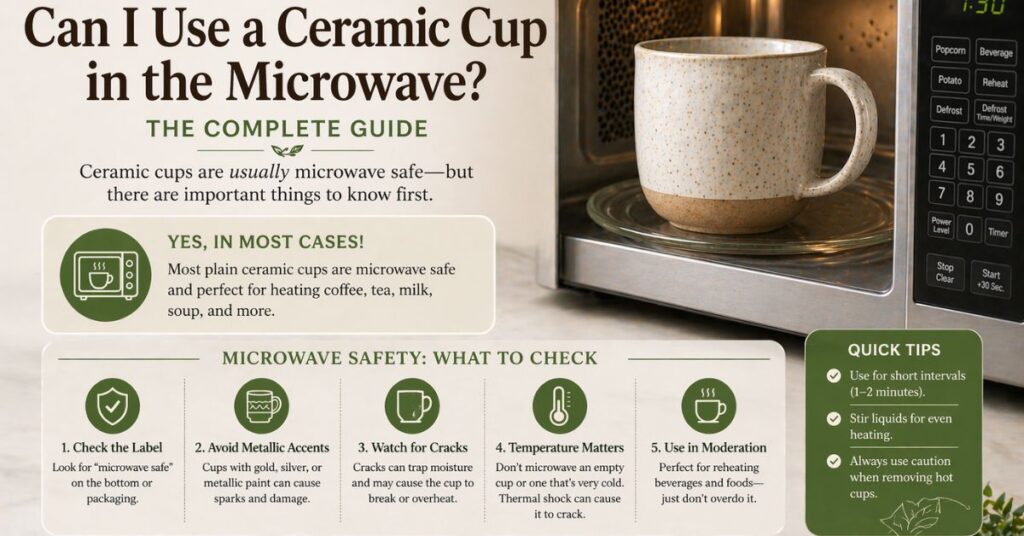
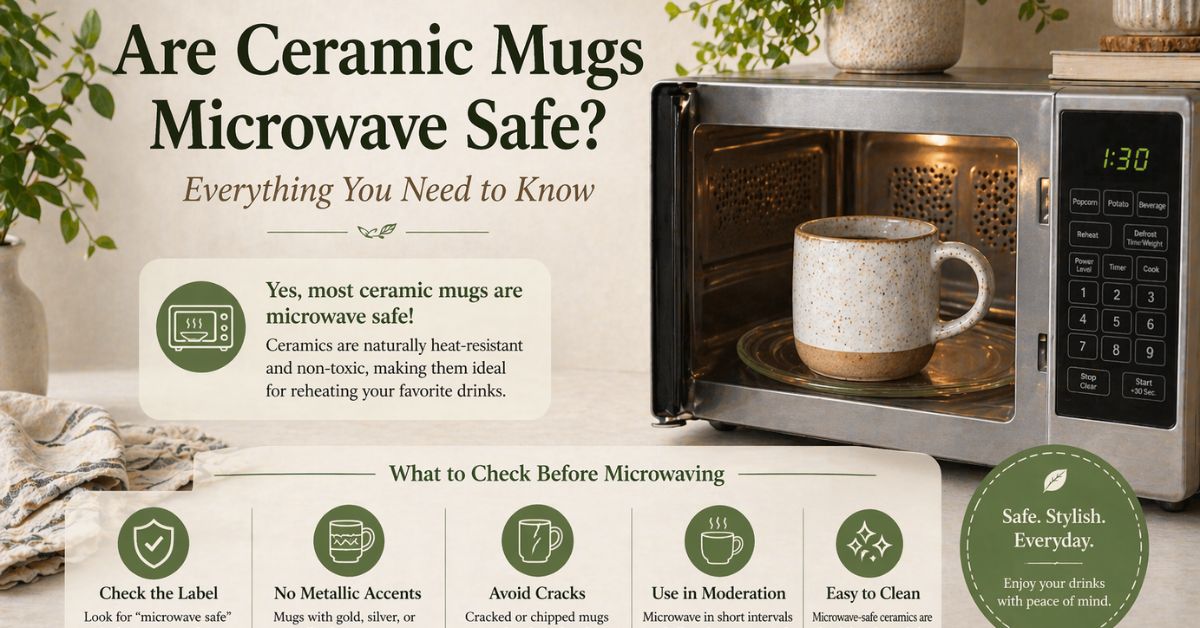
If you own a ceramic mug or are thinking about buying one, you probably have questions about microwave safety. The short answer is: most ceramic mugs are microwave safe, but not all. And the difference matters more than you might think.
Let’s break it down.
What Makes a Ceramic Mug Microwave Safe?
Microwave ovens work by producing electromagnetic waves at a frequency of 2.45 GHz. These waves excite water molecules in food and liquid, generating heat. A truly microwave-safe container does not absorb these waves;s it lets them pass through, heating only the contents inside.
Most plain ceramic mugs behave exactly this way. The clay body of a properly fired ceramic absorbs very little microwave energy. The result? Your drink heats up, and the mug stays relatively cool.
The trouble comes when a mug has any of the following:
- Metal content in the glaze: Some glazes contain metallic oxides or actual metallic flakes (gold, silver, platinum lusters) that reflect microwaves. This causes arcing, ng the sparking you sometimes see inside a microwave, and can crack the mug or damage your appliance.
- Air pockets or micro-cracks: Ceramics with internal voids or hairline cracks can trap moisture. When that moisture heats rapidly, it expands, and the mug can shatter.
- Low-fire or underfired clay: Mugs fired at lower temperatures may have a more porous body that absorbs water over time. When placed in a microwave, that trapped moisture heats up fast, making the mug dangerously hot.
- Certain decorative coatings: Some hand-painted designs or decals use metallic materials that are not microwave-compatible.

How to Tell If Your Ceramic Mug Is Microwave Safe
Here is a quick way to check any mug you already own.
The water test (30-second check):
- Fill the mug with about half a cup of cold water.
- Place it in the microwave alongside a separate microwave-safe glass of water.
- Run the microwave on high for 1 minute.
- After a minute, feel the mug carefully. If the water inside is warm but the mug itself is cool or only slightly warm, it is microwave safe. If the mug feels hotter than the water, do not use it in the microwave.
This test works because a mug that absorbs microwave energy will heat itself rather than the water.
Look for a label:
Manufacturers often mark the bottom of mugs with “Microwave Safe” text or a symbol (typically a microwave icon with wavy lines). If you see this, you are good to go. If there is no label and you are unsure, run the water test above.
Check for metallic decoration:
Hold the mug up to natural light and look for any shiny, metallic rim, handle trim, or painted detail. Gold and silver luster glazes are especially common on decorative mugs. These are rarely microwave-safe.
Are Handmade and Artisan Ceramic Mugs Microwave Safe?
This is where people get confused. Handmade mugs vary much more than mass-produced ones, so the answer depends on how the mug was made.
A well-crafted artisan ceramic mug fired to the right temperature with a food-safe, lead-free glaze and no metallic decoration is generally safe to microwave. The craftsmanship itself is not the issue. What matters is the materials, the firing temperature, and the glaze composition.
At Leafbud, all ceramic mugs are handcrafted by skilled artisans using quality materials. If you own one of their mugs and want to confirm microwave compatibility, the water test above takes less than two minutes and gives you a definitive answer. When in doubt, you can also reach out directly to the brand.
As a general rule, plain ceramic mugs with matte or solid-color glazes and no metallic decoration tend to be the safest bet for microwave use.
Ceramic vs. Other Materials in the Microwave
To understand why ceramic mugs are generally a good choice, it helps to compare them with other common materials.
Glass: Borosilicate glass (like Pyrex) is excellent for microwaves. Regular soda-lime glass can crack under thermal stress if it has internal defects, but most glass mugs handle microwaves fine.
Plastic: Many plastics are labeled microwave safe, but heating plastic can cause chemicals like BPA or phthalates to leach into food, especially with fatty or acidic contents. The FDA notes that consumers should look for plastics specifically rated for microwave use with food.
Stainless steel and other metals: Never microwave metal. Period. It reflects microwaves, causes arcing, and can start a fire.
Bone china: Generally safe if it has no metallic trim. Bone china is fired at high temperatures and tends to be non-porous.
Ceramic (standard): Safe when properly made with no metallic decoration and a good, non-porous glaze.
When Ceramic Mugs Can Crack in the Microwave
Even a microwave-safe mug can crack under certain conditions. Here is what to watch for.
Thermal shock: Moving a mug from the freezer or refrigerator directly into a hot microwave puts it under thermal stress. The outer surface heats faster than the inner body, which can cause hairline cracks or, in severe cases, a full break. Always let refrigerated mugs reach room temperature first.
Pre-existing cracks: A mug with even a hairline crack should not go in the microwave. Moisture seeps into the crack, and repeated heating cycles widen it until the mug splits.
Overheating liquids: Heating certain liquids, especially water, coffee with sugar, or thick beverages, past their normal boiling point without disturbance can cause them to “superheat.” When the mug is then moved, the liquid can erupt suddenly. Use a wooden stir stick in the mug while heating,g and avoid heating liquids for more than two minutes at a stretch.
Tips for Using Ceramic Mugs Safely in the Microwave
Follow these steps to get the most out of your ceramic mug without risking damage or injury.
- Start with room-temperature mugs. Never microwave a mug straight from the fridge or freezer.
- Heat in short intervals. Reheat liquids in 30-second to 1-minute bursts rather than one long session.
- Check for metallic details. If your mug has a gold or silver rim, do not put it in the microwave under any circumstances.
- Inspect for cracks before each use. A mug that looks fine externally might have internal stresses from previous thermal cycles.
- Use the water test for new or unfamiliar mugs. If there is no label, test before regular use.
- Do not overfill. Leave at least an inch of headspace so liquid does not boil over.
Does the Type of Ceramic Matter?
Yes. The term “ceramic” covers a broad range of materials. Here is a quick comparison.
Stoneware: Fired at high temperatures (around 1,200–1,300°C), stoneware is dense and non-porous. It is one of the most reliable types for microwave use. Most artisan mugs, including many in the Leafbud brewware collection, fall into this category.
Earthenware: Fired at lower temperatures, earthenware is more porous and can absorb moisture. It is generally less ideal for microwave use unless properly sealed with a high-quality glaze.
Porcelain: A refined form of ceramic fired at very high temperatures. Thin-walled, low absorption, generally excellent for microwaves unless it has metallic decoration.
Terracotta: An unglazed or lightly glazed earthenware. Not recommended for microwave use because it readily absorbs water.
A Word on Lead and Cadmium in Ceramic Glazes
Microwave safety is not the only thing worth considering with ceramic mugs. Older ceramics, particularly antiques, imported pieces from countries with less stringent regulations, or hand-painted items from informal makers,s may contain lead or cadmium in the glaze. These substances can leach into hot liquids.
The U.S. Food and Drug Administration (FDA) regulates allowable levels of lead and cadmium in ceramic food-contact surfaces under its Compliance Policy Guidance. When buying ceramic mugs, especially for hot beverages, choose from reputable makers who can confirm their glazes are food-safe and lead-free.
Artisan ceramic shops that are transparent about their materials and firing process, such as Leafbud, which works with skilled pottery artists across India, are generally a better bet than unbranded, low-cost imports with unknown production standards.
The Bottom Line
Most quality ceramic mugs are microwave safe as long as they have no metallic decoration, no cracks, and are fired properly. The key is knowing what to look for and doing a quick check when in doubt.
Treat your mugs well, check them before each use, and heat liquids in short intervals. That is really all it takes to stay safe and keep your mugs lasting for years.
FAQs
Q1: Can all ceramic mugs go in the microwave?
Not all ceramic mugs are microwave safe. Mugs with metallic decoration, low-fire clay, or internal cracks can be unsafe. Look for a “Microwave Safe” label on the bottom, or run a quick 1-minute water test to check before regular use.
Q2: Why does my ceramic mug get hotter than my drink in the microwave?
If the mug heats up more than the liquid inside, the clay or glaze is absorbing microwave energy. This typically means the mug has a porous body, trapped moisture, or certain glaze components that react to microwaves. Stop using that mug in the microwave.
Q3: Is it safe to microwave a ceramic mug with a gold or silver rim?
No. Metallic rims contain real metal compounds that reflect microwaves and cause arcing (sparking inside the microwave). This can crack the mug, damage your appliance, or create a fire hazard. Always keep mugs with metallic decoration out of the microwave.
Q4: Can a handmade ceramic mug be microwave safe?
Yes, absolutely. A handmade mug fired at a high temperature with a non-metallic, food-safe glaze can be perfectly safe for microwave use. The key factors are the clay body, glaze composition, and firing temperature, not whether the piece was made by hand or machine.
Q5: How do I know if my ceramic mug has lead in the glaze?
You generally cannot tell by looking. The safest approach is to buy from reputable makers who can confirm their glazes are lead-free and food-safe. Avoid very old ceramics, heavily discounted imports with no brand information, or pieces with bright orange, red, or yellow glazes, which historically were more likely to contain lead compounds.