FREE Leafbud Umbrella on Prepaid Orders Above INR 4,500/-
FREE Leafbud Umbrella on Prepaid Orders Above INR 4,500/-
FREE Leafbud Umbrella on Prepaid Orders Above INR 4,500/-
FREE Leafbud Umbrella on Prepaid Orders Above INR 4,500/-
FREE Leafbud Umbrella on Prepaid Orders Above INR 4,500/-
FREE Leafbud Umbrella on Prepaid Orders Above INR 4,500/-
FREE Leafbud Umbrella on Prepaid Orders Above INR 4,500/-
FREE Leafbud Umbrella on Prepaid Orders Above INR 4,500/-



Can I Use a Ceramic Cup in the Microwave? The Complete Guide

You’ve just brewed a cup of tea or coffee, got distracted, and now it’s cold. The microwave seems like the obvious fix, but then you glance at your ceramic cup and wonder: Is this actually safe?
It’s a fair question. Not all ceramics behave the same way in a microwave, and getting it wrong can mean a cracked cup, a burn, or worse, food that heats unevenly. Let’s break it down so you know exactly what to look for.
How Does a Microwave Heat Things?
Before we talk about ceramic cups specifically, it helps to understand what’s actually happening inside a microwave. A microwave oven emits electromagnetic radiation at a frequency of 2,450 MHz, according to the U.S. Food and Drug Administration. These waves cause water molecules in food and drinks to vibrate rapidly, which generates heat.
Materials that don’t contain water, like glass, most ceramics, and paper,r don’t absorb microwave energy well. In theory, that makes them ideal containers. But the devil is in the details of how a ceramic cup is made.
Is a Ceramic Cup Microwave-Safe?
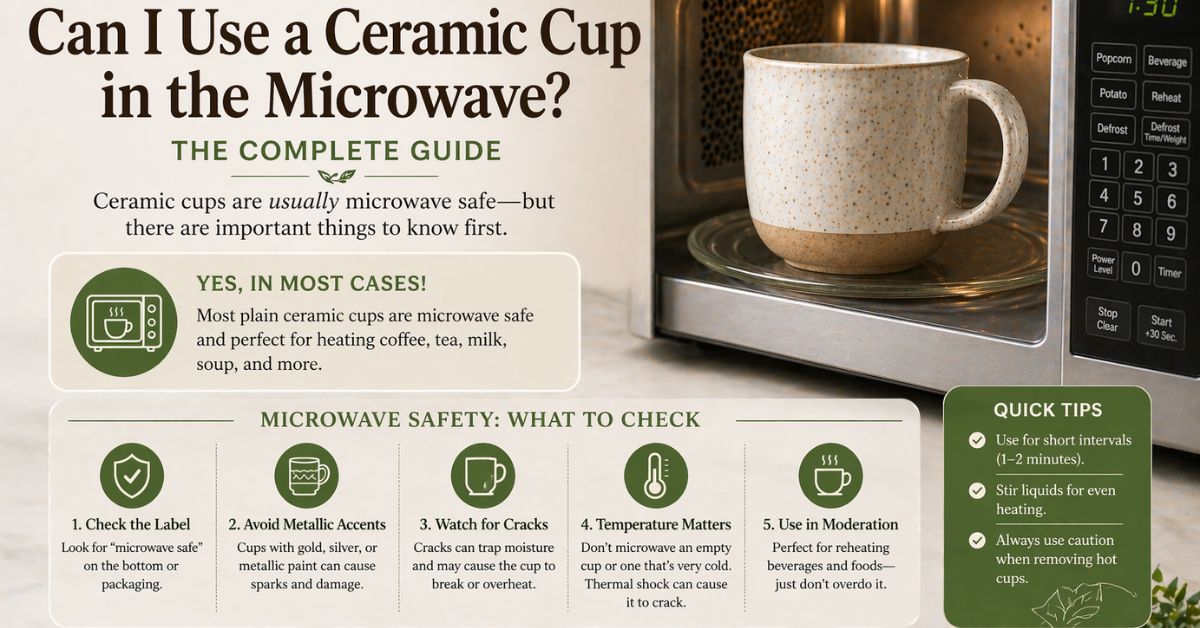
The short answer: most ceramic cups are microwave-safe, but not all of them.
Whether a ceramic cup in the microwave is a good idea depends on three things: the clay body, the glaze, and any decorative elements on the cup.
The Clay Body
Most ceramic cups are fired at high temperatures, typically between 1,000°C and 1,300°, C depending on whether they are earthenware, stoneware, or porcelain. This firing process makes the clay dense and largely non-porous.
Here’s the catch: if a ceramic cup has micro-cracks or is under-fired, moisture can get trapped inside the clay walls. When you microwave it, that trapped moisture heats up and can cause the cup to crack or even shatter.
The Glaze
Glazes are what give ceramic cups their glossy finish and make them food-safe. A well-applied, lead-free glaze is generally fine in the microwave. The problem arises with:
- Metallic glazes — gold, silver, or platinum lustre finishes contain metal particles. Metals reflect microwaves, which can cause sparking or arcing inside your oven.
- Old or cracked glazes — a glaze that has started to chip or craze can absorb moisture and heat unevenly.
- Lead-based glazes — older or imported ceramics may contain lead in the glaze, which is a separate health concern beyond just microwave safety.

Metallic Decorations
This is probably the most common hidden danger. A cup with a gold rim, silver lettering, or metallic painted design is not microwave-safe, even if everything else about it is fine. The metal trim will spark and can damage your microwave or start a fire.
How to Tell If Your Ceramic Cup Is Microwave-Safe
Here is a simple, step-by-step way to check before you heat anything.
Step 1: Look for the microwave-safe symbol. Check the bottom of the cup. Manufacturers print microwave-safe labels or symbols (often wavy lines or a microwave icon) if the product has been tested and cleared for microwave use. This is the most reliable indicator.
Step 2: Look for a “not microwave-safe” warning. Some cups explicitly warn against microwave use a crossed-out microwave symbol is a clear no.
Step 3: Inspect for metal. Look carefully at the rim, handle, and any painted designs. Even a thin gold or silver band disqualifies the cup.
Step 4: Do the water test. If you’re unsure and there’s no label, try this. Place the empty cup in the microwave next to a separate microwave-safe container filled with one cup of water. Run the microwave on high for one minute. After one minute:
- If the cup feels cool and only the water container is warm, the cup is safe to use.
- If the cup feels hot (and the water isn’t particularly warm), the cup is absorbing microwave energy. Don’t use it.
- If the cup is warm but the water is also warm, it’s borderline; use caution.
The U.S. Food and Drug Administration recommends this kind of practical testing when product labeling is unclear.
Types of Ceramic Cups and Their Microwave Suitability
| Type | Generally Safe? | Notes |
| Plain glazed stoneware | Yes | One of the safest options |
| Glazed porcelain | Yes | Fine unless it has metal trim |
| Earthenware | Usually | Check for cracks and glaze quality |
| Handmade/artisan ceramic | Usually | Depends on glaze; no metal trim |
| Ceramic with gold/silver rim | No | Metal causes sparking |
| Ceramic with metallic lustre | No | Risk of arcing |
| Cracked or crazed glazed cups | No | Traps moisture; may crack further |
Artisan and Handmade Ceramics: What You Should Know
If you own handmade ceramic cups from a studio or artisan brand, you might wonder if they’re held to the same standards as mass-produced products. The good news is that most quality artisan ceramics are made with food-safe, lead-free glazes and fired at appropriate temperatures.
At Leafbud, for example, every piece is handcrafted by skilled artisans using quality materials. The cups and mugs in the Brew Ware collection are made with care for both aesthetics and function. That said, if your artisan cup has any metallic decoration or lustre finish, the same rules apply; keep it out of the microwave regardless of how it’s made.
When buying handmade ceramics, don’t hesitate to ask the maker or brand whether their pieces are microwave-safe. A good ceramics maker will know exactly what went into the glaze and firing process and will tell you directly.
Common Mistakes People Make
Microwaving a cup with a metallic rim. This is probably the most frequent error. The gold rim on an heirloom teacup might look subtle, but it will sparkle in the microwave. Always check before you heat.
Assuming “ceramic” automatically means safe. Ceramic is a category, not a single material. The safety depends on the specific clay, glaze, and finishing used.
Heating an empty cup. Never microwave an empty ceramic cup. Without liquid inside to absorb the energy, the cup itself absorbs more heat and can crack or overheat.
Using a cup that’s been previously microwaved and cracked. Once a ceramic cup has cracked from microwave use, retire it. It won’t get safer with repeated use.
Ignoring cold spots after heating. Ceramic cups can heat unevenly. Stir your drink after microwaving to distribute heat, and always test the temperature before drinking.
Safe Alternatives to Microwaving in a Ceramic Cup
If your favorite ceramic cup isn’t microwave-safe, you don’t have to give up on warm drinks. A few simple workarounds work well:
- Transfer to a confirmed microwave-safe mug before reheating, then pour back.
- Use a small saucepan on the stovetop for soups or beverages.
- Preheat with boiling water. Pour boiling water into the cup first, wait 30 seconds, discard it, then add your hot drink. This keeps the cup warm without needing a microwave at all.
Caring for Ceramic Cups to Keep Them Safe Over Time
Microwave safety isn’t just about the initial design; it also depends on how you care for the cup over time.
- Avoid sudden temperature changes. Don’t take a cold cup straight from the fridge and microwave it. Let it come to room temperature first.
- Hand wash when possible. Repeated dishwasher cycles can degrade glaze over time, particularly on delicate or artisan pieces.
- Inspect glazes regularly. If you see crazing, chipping, or spider-web cracks in the glaze, it’s time to replace the cup.
- Store carefully. Stacking ceramic cups without protection can cause chips that compromise the glaze.
If you appreciate well-crafted ceramics that are built to last, it’s worth investing in pieces with quality glazes and construction from the start. Leafbud’s handcrafted ceramic mugs and cups are a good example of pieces where the materials and finishing are worth knowing about before putting them through daily use in a kitchen.
The Bottom Line
Most standard ceramic cups are perfectly fine in the microwave as long as they carry a microwave-safe label, have no metallic decoration, and are in good condition with no cracks or glaze damage. When in doubt, the water test takes about two minutes and gives you a reliable answer.
For those who love artisan and handmade ceramics, pieces from quality makers are generally built with food-safe materials and work well in everyday use. If you’re browsing for handcrafted ceramic mugs, cups, or brew ware that blend good craft with daily practicality, Leafbud is worth a look. Their collection is made by skilled artisans across India and covers everything from morning coffee mugs to ceramic tea cups.
The key takeaway: check the label, look for metal, and never microwave a cup you’re not sure about. Your cup (and your microwave) will thank you.
Frequently Asked Questions
Q: Can I microwave a ceramic cup that has no label on the bottom?
When there’s no label, do the water test described above. Place the empty cup next to a water-filled container in the microwave, run it on high for one minute, and check which one gets hot. If the cup stays cool, it’s generally safe to use.
Q: Why does my ceramic cup get hot in the microwave even when it’s empty?
If a ceramic cup gets hot during microwaving, especially without liquid inside, it is likely absorbing microwave energy rather than passing it through. This usually means the glaze contains materials that interact with microwaves, or the clay has trapped moisture. Stop using it in the microwave.
Q: Are handmade or artisan ceramic cups microwave-safe?
Many artisan ceramics are microwave-safe, but it depends on the glaze and whether there are any metallic decorations or finishes. Ask the maker directly, or do the water test. Avoid microwaving any cup with gold, silver, or lustred finishes, regardless of whether it’s handmade or mass-produced.
Q: How long can I safely microwave a ceramic cup with liquid in it?
For reheating drinks like coffee or tea, one to two minutes on medium power is generally sufficient and safe for most microwave-safe ceramic cups. Avoid running the microwave longer than needed, and always stir the liquid before drinking to avoid hot spots.
Q: Can I use a cracked ceramic cup in the microwave?
No. A cracked or crazed cup is not safe to microwave. Cracks and crazing in the glaze allow moisture to get trapped in the clay body. When microwaved, that moisture heats and expands, which can crack the cup further, cause it to break, or make it dangerously hot to handle.