FREE Leafbud Umbrella on Prepaid Orders Above INR 4,500/-
FREE Leafbud Umbrella on Prepaid Orders Above INR 4,500/-
FREE Leafbud Umbrella on Prepaid Orders Above INR 4,500/-
FREE Leafbud Umbrella on Prepaid Orders Above INR 4,500/-
FREE Leafbud Umbrella on Prepaid Orders Above INR 4,500/-
FREE Leafbud Umbrella on Prepaid Orders Above INR 4,500/-
FREE Leafbud Umbrella on Prepaid Orders Above INR 4,500/-
FREE Leafbud Umbrella on Prepaid Orders Above INR 4,500/-



Can You Bake a Cake in a Ceramic Bowl? Everything You Need to Know

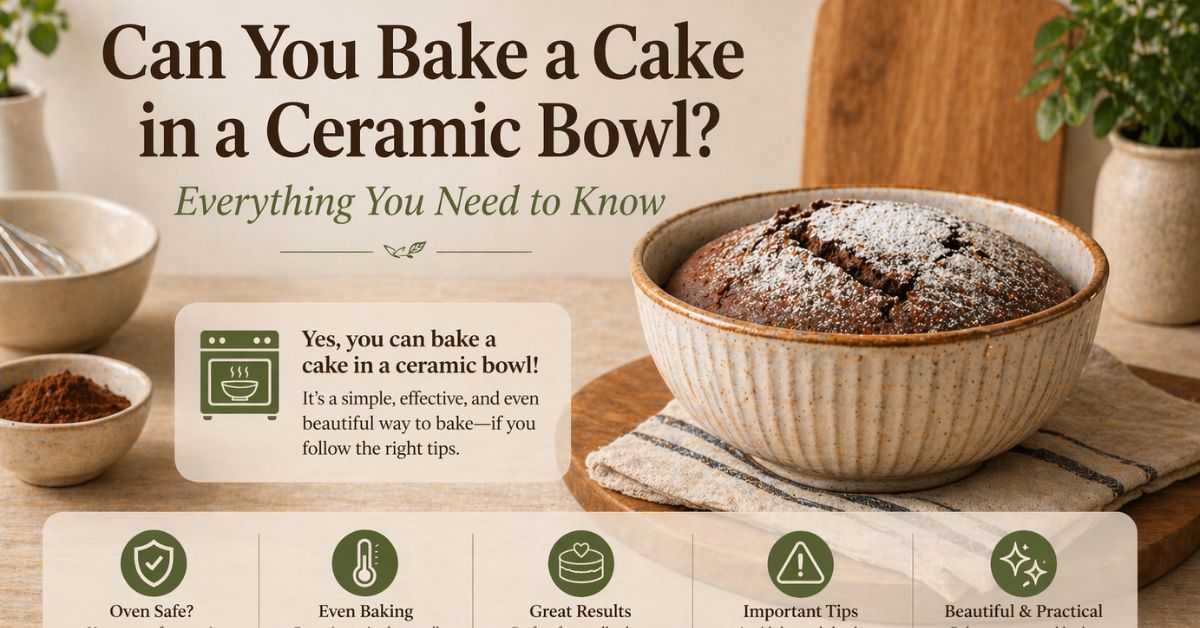
So you’re eyeing that beautiful ceramic bowl in your kitchen and wondering whether it can pull double duty as a baking vessel. Maybe you don’t own a round cake pan, or maybe you’re just curious whether your handcrafted bowl can handle oven heat. Either way, you’ve come to the right place.
The short answer is yes, you can bake a cake in a ceramic bowl, but with some important caveats. Let’s break it down.
Is It Safe to Bake a Cake in a Ceramic Bowl?
Safety is the first question worth answering here.
Most ceramic bowls that are labeled oven-safe can absolutely go into the oven. The key phrase is “oven-safe.” Not all ceramic is created equal. Some pieces are glazed and fired at high temperatures specifically for oven use. Others are decorative, meant only for serving, and can crack or shatter when exposed to prolonged heat.
Before you put any bowl in your oven, look for one of these:
- An “oven-safe” stamp or label on the bottom of the bowl
- Temperature ratings printed by the manufacturer
- A note in the product description confirming oven use
If the bowl has no markings and you’re unsure of its origin, it’s better to skip the experiment than risk a cracked bowl and a ruined cake.
Ceramics made for kitchen use,e like casserole dishes and baking bowls, ls are typically fired at temperatures between 2,000°F and 2,300°F during manufacturing, which makes them stable in a standard home oven. Decorative pieces, on the other hand, may be fired at lower temperatures and are far more vulnerable to thermal stress.

What Happens When You Bake a Cake in a Ceramic Bowl?
When you use a ceramic bowl to bake a cake, you’re working with a material that holds and distributes heat differently than metal pans. Here’s what that means in practice.
Heat Distribution in Ceramic vs. Metal Pans
Metal pans heat up fast and transfer heat quickly to the batter. Ceramic heats more slowly but retains that heat longer and distributes it more evenly across the surface. This means your cake baked in a ceramic bowl will likely:
- Take longer to bake than the recipe suggests
- Brown more gently on the outside
- Stay moist inside due to the slower, more even heat
This isn’t necessarily a bad thing. Many bakers actually prefer the results from ceramic because the slower heat reduces the risk of a dry, over-baked exterior. You do need to adjust your baking time and check for doneness more carefully.
Shape and Dome Effect
One of the most appealing things about baking a cake in a round ceramic bowl is the dome shape it creates. A standard mixing bowl produces a naturally rounded top, which is perfect for decorating a “ball” cake or any design that calls for a dome. Think planet cakes, pumpkin cakes, or a simple dome-shaped layer cake.
How to Bake a Cake in a Ceramic Bowl: Step-by-Step
Here’s a reliable method that works for most standard cake recipes.
What you need:
- An oven-safe ceramic bowl (check the label)
- Butter or non-stick spray
- All-purpose flour or cocoa powder (for dusting)
- Your cake batter
- A toothpick or skewer for testing doneness
Steps:
- Check your bowl. Confirm it’s oven-safe. If it has a flat or slightly rounded bottom, it’ll sit stably in the oven. If it’s very round, place it incast-ironron skillet or a ring made from foil to keep it stable.
- Preheat your oven. Set it to about 10–15°F lower than your recipe calls for. Because ceramic holds heat differently, going slightly lower prevents the outside from overcooking before the center is done.
- Grease the bowl thoroughly. Butter the inside, then dust with flour (or cocoa powder for a chocolate cake). Get into every curve of the bowl. Ceramic can be surprisingly sticky without proper greasing.
- Fill the bowl no more than two-thirds full. Cake batter rises as it bakes. Leave enough room so it doesn’t spill over.
- Place the bowl on a baking sheet before putting it in the oven. This makes it easier to remove and catches any drips.
- Start checking for doneness early. Depending on the size of your bowl, a standard cake recipe may take 15–25% longer than in a metal pan. Insert a skewer into the center; it should come out clean or with just a few dry crumbs.
- Let it cool in the bowl for at least 15 minutes before attempting to turn it out. Ceramic retains heat, so the cake continues cooking slightly after you remove it from the oven. Rushing this step increases the chance that the cake breaks when you flip it.
- Run a thin knife around the edges before unmolding. Turn the cake onto a cooling rack and let it come to room temperature.
Which Ceramic Bowls Work Best for Baking?
Not all ceramic bowls are the same. Here’s a quick breakdown:
Stoneware bowls are dense, durable, and excellent for oven use. They handle heat well and are less prone to cracking than other ceramics. These are the best choices for baking a cake.
Earthenware bowls (including some terracotta pieces) are more porous and fire at lower temperatures. They can be used in the oven, but they’re more likely to crack with sudden temperature changes. Avoid moving them straight from a cold counter to a hot oven.
Porcelain bowls are often oven-safe and handle heat well, though they tend to be thinner and should be checked for an oven-safe rating.
Decorative or handcrafted ceramic bowls without oven-safe labeling should not be used for baking. These may be glazed with decorative finishes that aren’t food-safe at high temperatures or may be structurally unsuitable for oven heat.
At Leafbud, the handcrafted ceramic pieces are designed with care for kitchen use,e but if you’re considering using any ceramic piece for oven baking, always verify the specific product’s heat tolerance before going ahead.
Common Mistakes to Avoid When Baking a Cake in a Ceramic Bowl
Thermal shock: Don’t place a cold ceramic bowl directly into a hot oven. Let it come closer to room temperature first, or place it in the oven while it preheats. Sudden temperature changes are the most common reason for ceramic cracks.
Skipping the grease: Ceramic bowls have a smoother interior than many metal pans, but they can still stick. Don’t skip the butter and flour step.
Using too small a bowl: The batter needs room to expand. A bowl that’s too small will overflow and make a mess.
Not adjusting bake time: Sticking rigidly to the original recipe time is the most common reason cakes baked in ceramic come out underdone in the center. Add time and check regularly.
Filling right to the top: Always leave a gap. Two-thirds full is the safe rule.
Can You Bake Other Desserts in a Ceramic Bowl?
Absolutely. Once you’re comfortable baking a cake in a ceramic bowl, you’ll find it works well for other baked goods too:
- Brownies and fudge bars — the even heat of ceramic produces a chewy, fudgy center
- Bread pudding — ceramic is nearly perfect for this, as it holds moisture well
- Clafoutis and custards — ceramic’s gentle heat is ideal for egg-based bakes that need to set slowly
- Fruit crumbles and cobblers — a ceramic bowl gives you a beautiful rustic look, perfect for serving straight to the table
Caring for Your Ceramic Bowl After Oven Use
After baking, let the bowl cool completely before washing it. Never plunge a hot ceramic bowl into cold water; that’s a guaranteed way to crack it.
Wash by hand with warm,m soapy water. Most ceramic bowls are technically dishwasher-safe, but repeated dishwasher cycles can dull the glaze over time, especially on handcrafted pieces. If you’ve invested in a beautiful artisan bowl like the kind you’d find at Leafb,ud hand washing keeps it looking great for longer.
Store your bowl where it won’t knock against other hard items. Ceramic can chip at the rim with hard impacts, even if it handles oven heat without issue.
Featured Snippet: Quick Answer
Can you bake a cake in a ceramic bowl?
Yes, if the bowl is labeled oven-safe. Use these steps for the best results:
- Confirm the bowl has an oven-safe label or temperature rating
- Preheat oven 10–15°F lower than the recipe recommends
- Grease the bowl with butter and dust with flour
- Fill no more than two-thirds full with batter
- Place the bowl on a baking sheet before putting it in the oven
- Add extra baking time and test with a skewer
- Cool in the bowl for 15 minutes before unmolding
Frequently Asked Questions
1. Can I bake a cake in a ceramic mixing bowl?
Yes, as long as the mixing bowl is oven-safe. Check the base of the bowl for a heat rating or oven-safe symbol. Standard ceramic mixing bowls without a rating should not be used in the oven, as they may crack under sustained heat. If it’s confirmed oven-safe, follow the same steps as you would with any ceramic baking vessel: grease well, fill two-thirds full, and bake at a slightly lower temperature than your recipe suggests.
2. How do I know if my ceramic bowl is oven-safe?
Look at the bottom of the bowl for markings. Most oven-safe ceramics display a symbol (an oven icon or the words “oven-safe”) along with a maximum temperature rating. If the bowl has no markings and you don’t know its origin, don’t risk it. Decorative bowls, in particular, are often not made to handle oven temperatures and can crack or release harmful chemicals from their glazes.
3. Does baking in a ceramic bowl take longer than in a metal pan?
Yes, typically it does. Ceramic heats more slowly than metal, so your cake will take longer to bake through. As a rule of thumb, add 15–20 minutes to the original recipe time and begin checking with a skewer at that point. The good news is that the slower, more even heat often produces a moist, tender crumb that many bakers consider the results worth the extra patience.
4. What size ceramic bowl should I use for a cake?
A bowl with a capacity of 1.5 to 2 quarts works well for most standard cake recipes. If you’re using a smaller bowl, halve your recipe so the batter doesn’t overflow. For a dome-shaped cake, a round mixing bowl around 8–9 inches in diameter at the top gives a nice dome height without requiring too long a bake time to cook through to the center.
5. Can handcrafted ceramic bowls go in the oven?
Not all handcrafted ceramics are oven-safe. Artisan pieces vary widely in how they’re made and fired, which affects their heat tolerance. Before using any handcrafted ceramic bowl for baking, check with the maker or the product description for oven-safe confirmation. At Leafbud, product descriptions provide material details. Always read these before putting any piece in the oven, and when in doubt, use the bowl for what it does best: serving and presenting food beautifully.