FREE Leafbud Umbrella on Prepaid Orders Above INR 4,500/-
FREE Leafbud Umbrella on Prepaid Orders Above INR 4,500/-
FREE Leafbud Umbrella on Prepaid Orders Above INR 4,500/-
FREE Leafbud Umbrella on Prepaid Orders Above INR 4,500/-
FREE Leafbud Umbrella on Prepaid Orders Above INR 4,500/-
FREE Leafbud Umbrella on Prepaid Orders Above INR 4,500/-
FREE Leafbud Umbrella on Prepaid Orders Above INR 4,500/-
FREE Leafbud Umbrella on Prepaid Orders Above INR 4,500/-



Can You Heat Water in a Ceramic Bowl? The Complete Guide

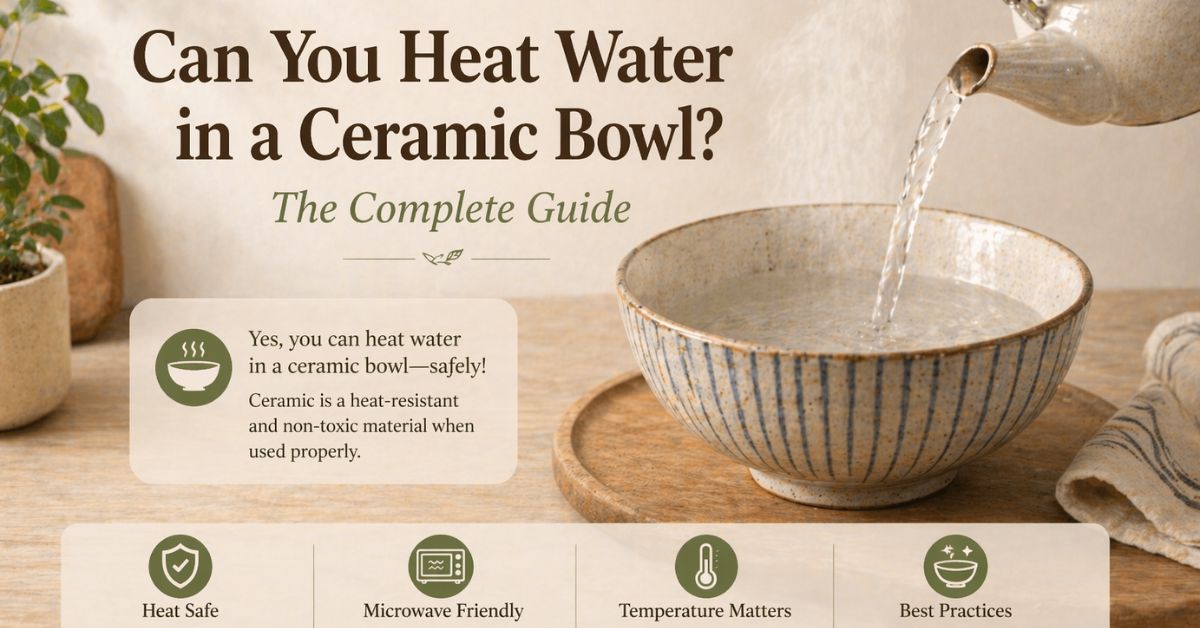
If you’ve ever held a beautiful handcrafted ceramic bowl and wondered whether you could pop it in the microwave or set it over a flame to heat water, you’re not alone. It’s one of those questions that seems simple but actually has a layered answer. The short version: it depends. The longer version is what this article is all about.
Let’s break it down from the material up.
What Ceramic Is Actually Made Of
Ceramic is made from natural clay that has been shaped and fired at high temperatures, typically between 1,000°C and 1,400°C (1,832°F and 2,552°F), depending on the type. The firing process fuses the clay particles into a hard, dense, and non-porous material. Most ceramic bowls you find in kitchens and on dining tables also have a glaze applied to them, which gives them their smooth, glossy finish and helps prevent liquids from soaking through.
There are different types of ceramics used in kitchenware, including earthenware, stoneware, and porcelain. Each has different heat tolerances, which directly affects whether you can safely heat water in them.
Here is why that matters: not all ceramics respond to heat the same way, and using the wrong one for the wrong purpose can lead to cracking, shattering, or even leaching from certain glazes.
Can You Heat Water in a Ceramic Bowl in the Microwave?
Yes, in most cases, you can heat water in a ceramic bowl in the microwave. Here is what to look for:
- Check for a microwave-safe label. Most modern ceramic bowls made for kitchen use are tested and labeled accordingly. If you see a microwave-safe symbol (usually wavy lines) on the bottom of the bowl, you are good to go.
- Avoid metallic glazes or decorations. Some ceramic bowls have metallic accents, gold rims, or silver detailing. These will spark in a microwave and can damage both the bowl and the appliance.
- Avoid hairline cracks. If your ceramic bowl has any cracks or chips, microwaving it can cause those weak points to expand rapidly, leading to breakage.
- Do the microwave test. Place the empty bowl in the microwave next to a cup of water. Run it on high for one minute. If the bowl stays cool (or slightly warm) and the water gets hot, the bowl is safe to use. If the bowl itself becomes very hot, it is absorbing microwave energy and should not be used for heating food or water.
One thing to watch: ceramic retains heat well, which means the bowl can get very hot even if the water is only warm. Always use a cloth or oven mitt when removing it.

Can You Heat Water in a Ceramic Bowl on a Stovetop?
This one is more complicated, and the honest answer is: generally, no, unless it is specifically designed for direct heat.
Standard ceramic bowls sold for table use are not made to handle direct flame or stovetop heat. Here is why:
- Thermal shock is the main risk. When you place a cool ceramic bowl on a hot burner, the part of the bowl in contact with the heat expands rapidly while the rest stays cool. This uneven expansion causes stress in the material, which leads to cracking or shattering.
- Earthenware is the most vulnerable. It is porous and relatively low-fired, making it the least tolerant of direct heat. Stoneware and porcelain are denser and can handle more, but they still are not meant for stovetop use unless labeled as flame-safe or suitable for direct heat.
- Induction cooktops are a separate issue. Ceramic is not magnetic, so a ceramic bowl will not work on an induction burner regardless of its heat tolerance.
If you need to heat water in a bowl format on the stovetop, look for bowls or pots specifically rated for direct heat, such as clay pots or certain types of casserole dishes made from high-fire stoneware.
Can You Heat Water in a Ceramic Bowl in the Oven?
Yes, oven-safe ceramic bowls are common and work well for this. Most stoneware and porcelain bowls handle oven temperatures comfortably. A few things to keep in mind:
- Check the temperature rating. Most oven-safe ceramic is rated up to around 230°C to 260°C (450°F to 500°F). Always check the manufacturer’s guidelines.
- Avoid sudden temperature changes. Do not take a cold ceramic bowl straight from the fridge and put it directly into a hot oven. Let it come closer to room temperature first. The same applies in reverse: do not place a hot ceramic bowl on a cold surface or run cold water over it.
- Broiler heat is a different story. The direct, intense radiant heat of a broiler can be more than most standard ceramic bowls can take. Unless the bowl is explicitly rated for broiler use, it is safer to skip it.
For soup bowls, ramen bowls, and deep serving bowls used in oven cooking, stoneware is usually the material of choice. Brands that make artisan tableware, like the handcrafted collections at Leafbud, produce stoneware bowls that are kiln-fired at high temperatures, which generally makes them more heat-tolerant than lower-fired earthenware.
The Role of Glaze in Heat Safety
Glaze is not just decorative. It forms a glass-like coating on the ceramic surface that affects how the bowl interacts with heat, water, and food. Here is what to know:
- Lead-free glazes are now the standard for reputable manufacturers. Older or low-quality ceramics may contain lead or cadmium in their glazes, which can leach into food or water when exposed to heat or acidic substances. Always buy from trusted makers who use food-safe, non-toxic glazes.
- Crazed glaze is a warning sign. If you notice a network of fine cracks on the glazed surface (called crazing), bacteria and moisture can get into those cracks. Heating water in a crazed ceramic bowl can make this worse.
- Unglazed surfaces absorb moisture. The unglazed bottom of many ceramic bowls is intentionally left that way, but this means that part of the bowl is more porous. This does not directly affect microwave safety, but is worth knowing for general care.
When you buy handcrafted ceramics from artisan workshops, the glaze formulas are often developed with care and tested for food safety. At Leafbud, the ceramic bowls are made by skilled artisans who fire their pieces at high temperatures, resulting in durable, food-safe finishes that hold up well in everyday use.
How to Safely Heat Water in a Ceramic Bowl: Step-by-Step
If you have confirmed your ceramic bowl is microwave-safe, here is the safe way to heat water in it:
- Start with room-temperature water. Avoid putting ice-cold water in a bowl and microwaving it immediately.
- Place the bowl in the center of the microwave on the rotating plate.
- Heat in short intervals of 30 to 60 seconds, rather than running a long cycle all at once.
- Stir the water between intervals. Water in a microwave can become superheated, meaning it reaches boiling temperature without actually bubbling. Stirring breaks this state and prevents a sudden, dangerous boil-over when you move or touch the bowl.
- Use oven mitts to remove the bowl. The ceramic retains heat and will be hot to the touch even after the water is only mildly warm.
- Place the bowl on a dry cloth or trivet, not directly on a cold countertop.
When You Should Not Heat Water in a Ceramic Bowl
Here is a quick checklist of situations where you should skip it:
- The bowl has no microwave-safe marking, and you are unsure of its composition
- It has gold, silver, or metallic painted designs
- It has visible cracks, chips, or heavily crazed glaze
- You are planning to use a gas flame or an electric coil stovetop
- It is an antique or decorative piece, not intended for food use
- It was purchased from an unverified source that may use non-food-safe materials
Ceramic Bowl Care Tips for Long-Term Use
A quality ceramic bowl can last for years if you treat it right. A few simple habits help:
- Wash by hand with mild dish soap when possible. While many ceramic bowls are technically dishwasher-safe, the repeated thermal cycling in a dishwasher can slowly weaken the glaze over time.
- Avoid stacking ceramic bowls with heavy items on top. Ceramic is strong, but concentrated pressure on the rim can chip it.
- Store away from direct sunlight for glazed pieces with hand-painted designs, as prolonged UV exposure can fade colors.
- Do not use metal utensils with ceramic bowls, as they can scratch the glaze.
Final Thoughts
Ceramic bowls are wonderfully versatile pieces of kitchenware. For microwave use with water or soup, most quality ceramic bowls handle the job without trouble. Stovetop use is where you need to be careful, since direct heat can crack even good-quality pieces that were not made for that purpose.
The best approach is to buy from makers who are transparent about their materials and firing processes. Handcrafted ceramics from artisan studios tend to use higher-quality clay and glazes compared to mass-produced alternatives. If you are looking for ceramic bowls that are built to last and designed for real kitchen use, exploring collections from makers like Leafbud is a great place to start.
Frequently Asked Questions
Q1: Is it safe to heat water in a ceramic bowl in the microwave?
Yes, as long as the bowl is labeled microwave-safe, has no metallic decoration, and has no visible cracks. Do a quick test by microwaving the empty bowl alongside a cup of water for one minute. If the bowl stays cool, it is safe to use.
Q2: Why does my ceramic bowl get hotter than the water inside it in the microwave?
This happens when the ceramic material absorbs microwave energy rather than allowing it to pass through to the water. Bowls that get disproportionately hot are not microwave-safe and should not be used for heating food or liquids.
Q3: Can I put a ceramic bowl on a gas stove to heat water?
Standard ceramic bowls are not designed for direct flame contact. Placing a regular ceramic bowl on a gas stove will likely cause it to crack or shatter due to thermal shock. Use only ceramics explicitly rated for stovetop use.
Q4: What type of ceramic bowl is best for heating water or soup?
Stoneware is generally the best option among ceramic types. It is fired at higher temperatures than earthenware, making it denser and more heat-tolerant. Look for pieces labeled oven-safe and microwave-safe, like the handcrafted stoneware bowls available at Leafbud.
Q5: Can thermal shock break a ceramic bowl when heating water?
Yes. Thermal shock occurs when part of the ceramic heats or cools faster than the rest, creating stress fractures. To avoid it, never transfer a ceramic bowl directly from the freezer to a hot oven, and do not pour boiling water into a cold ceramic bowl without letting it warm up gradually first.