FREE Leafbud Umbrella on Prepaid Orders Above INR 4,500/-
FREE Leafbud Umbrella on Prepaid Orders Above INR 4,500/-
FREE Leafbud Umbrella on Prepaid Orders Above INR 4,500/-
FREE Leafbud Umbrella on Prepaid Orders Above INR 4,500/-
FREE Leafbud Umbrella on Prepaid Orders Above INR 4,500/-
FREE Leafbud Umbrella on Prepaid Orders Above INR 4,500/-
FREE Leafbud Umbrella on Prepaid Orders Above INR 4,500/-
FREE Leafbud Umbrella on Prepaid Orders Above INR 4,500/-



What Is a Ceramic Bowl? Everything You Need to Know Before You Buy One

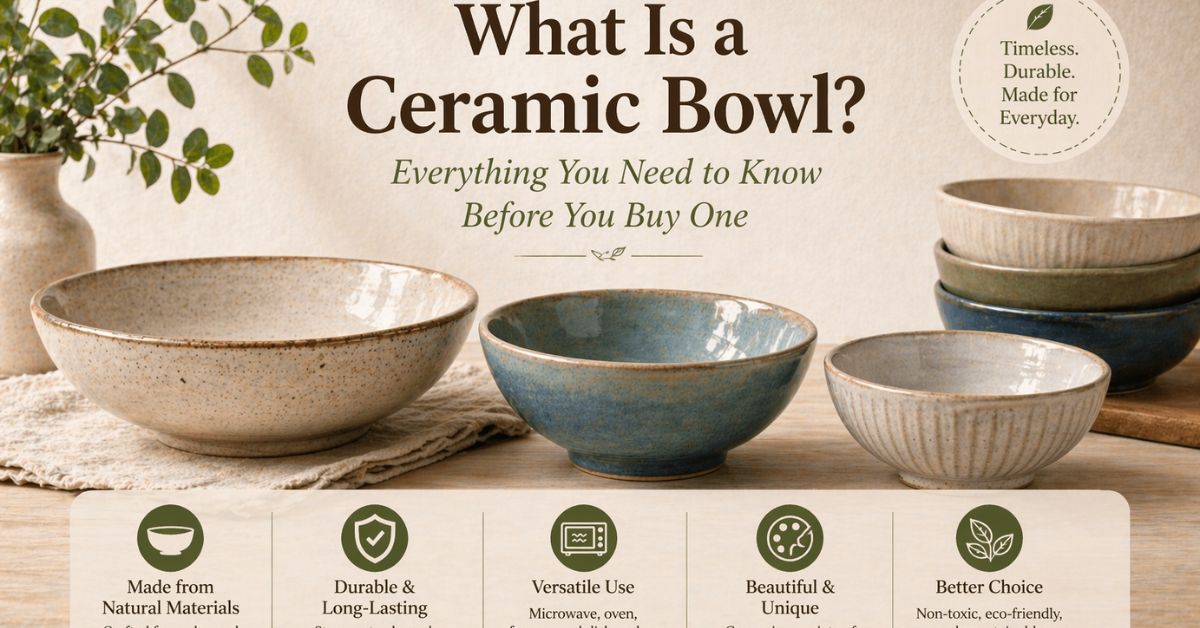
If you’ve ever eaten soup from a bowl that just felt right in your hands, the warmth it holds, the way it looks on the table, there’s a good chance it was a ceramic bowl. These bowls have been around for thousands of years, and they’re still the go-to choice for home cooks, food lovers, and anyone who cares about how their table looks.
But what exactly makes a bowl “ceramic”? What types are out there? And how do you pick the right one for your kitchen? Let’s break it down.
What Is a Ceramic Bowl?
A ceramic bowl is a bowl made from clay that has been shaped and then fired at high temperatures in a kiln. The heat causes the clay particles to bond together, creating a hard, dense material that can hold food, liquids, and heat.
Here’s the short version:
- Clay is shaped by hand or on a potter’s wheel
- The shaped piece is dried to remove moisture
- It goes into a kiln and is fired at temperatures ranging from around 1,000°C to over 1,300°C
- A glaze (a glass-like coating) is often applied to make the surface non-porous and food-safe
- The bowl is fired a second time to set the glaze
The result is a bowl that’s durable, heat-retentive, and often beautiful to look at.
How Is Ceramic Different from Pottery, Stoneware, and Porcelain?
This is where people often get confused. “Ceramic” is actually the broad category. Pottery, stoneware, earthenware, and porcelain are all types of ceramics, each made from different clay bodies and fired at different temperatures.
Here’s a quick guide:
| Type | Clay Body | Firing Temp | Characteristics |
| Earthenware | Red or brown clay | ~1,000°C | Porous, heavier, rustic look |
| Stoneware | Grey or brown clay | ~1,200°C | Dense, chip-resistant, great for everyday use |
| Porcelain | White kaolin clay | ~1,300°C+ | Smooth, refined, often translucent |
| Bone China | Kaolin + animal bone ash | ~1,250°C | Lightweight, very white, strong |
Most handmade ceramic bowls you find today are either stoneware or earthenware. Stoneware is particularly popular for everyday tableware because it strikes a good balance between durability and beauty.
A Brief History of the Ceramic Bowl
Ceramic bowls are one of humanity’s oldest tools. Archaeological evidence shows that people were firing clay vessels as far back as 20,000 years ago in China and Japan. Early civilizations across Mesopotamia, Egypt, Greece, and India all developed their own distinct ceramic traditions.
The potter’s wheel, invented around 3500 BCE in Mesopotamia, changed everything. It allowed potters to create symmetrical forms much faster and with more consistency. From there, ceramic production became a skilled craft passed down through generations.
In India, the tradition of pottery runs especially deep. Regional styles like blue pottery from Jaipur, Khavda pottery from Gujarat, and the black pottery of Manipur represent centuries of artisanal knowledge that continues to shape how bowls and vessels are made today.

Types of Ceramic Bowls and What They’re Used For
Not all ceramic bowls are built the same. The shape and size of a bowl affect how well it works for different dishes.
Soup Bowls
Deeper than most, with a wide opening to let steam escape. A good ceramic soup bowl holds heat well, which matters when you’re eating something hot. The weight of the bowl also adds to the experience; it feels substantial, not flimsy.
Ramen Bowls
Larger and deeper than standard soup bowls, ramen bowls are designed to hold broth, noodles, and toppings without spillage. A well-made ramen bowl keeps the broth warm longer than a plastic or metal alternative.
Serving Bowls
Wide and shallow, built for passing food around the table. Ceramic serving bowls are popular because they double as table decor — a well-glazed, handmade bowl sitting on a dining table adds visual interest that a stainless steel bowl simply can’t.
Portion Bowls
Smaller bowls are meant for individual servings of chutneys, dips, salads, or side dishes. These are practical, but in handmade ceramics, they’re also a great way to add colour and personality to a table.
Curd Bowls
Common in Indian households, curd bowls are typically rounded and deep enough to hold yogurt or dal. Ceramic is a good choice here because it doesn’t react with acidic foods the way metal can.
Wok Bowls
A style influenced by East Asian tableware, wok bowls have a slightly rounded base and curved walls that make them good for noodle dishes, rice, or stir-fries. The shape allows you to mix food easily without it falling out.
Snack Bowls
Small and light, these are made for nuts, chips, fruit, or condiments. In handcrafted ceramics, snack bowls often come in sets with varied designs, which makes them a popular gift option.
Why Choose a Ceramic Bowl Over Plastic, Metal, or Glass?
There are real, practical reasons why ceramic bowls have lasted thousands of years while other materials have come and gone.
Heat retention: Ceramic holds heat longer than glass or metal. Your soup stays warm while you eat it, not just while it’s in the pot.
No chemical leaching: Unlike plastic, properly glazed ceramic doesn’t leach chemicals into your food. The FDA and food safety bodies around the world recognise food-safe glazed ceramic as a safe material for food contact.
Non-reactive: Ceramic doesn’t react with acidic foods like tomatoes, citrus, or vinegar. Metal bowls can affect the taste of acidic dishes; ceramic doesn’t.
Durability: A quality stoneware ceramic bowl can last decades with normal care. It won’t rust, warp, or absorb odours like plastic does over time.
Aesthetics: This one’s simple. A handmade ceramic bowl looks good on a table. The texture, glaze variations, and slight imperfections that come from hand-forming a piece give it a character that machine-made items don’t have.
What Makes a Handmade Ceramic Bowl Different?
When you buy a handmade ceramic bowl, you’re getting something that no machine produced. Each piece is shaped individually, which means slight variations in form, glaze distribution, and surface texture are expected and valued.
Artisanal potters bring their own sensibility to each piece. The way glaze pools in the foot of a bowl, the subtle thumb marks left from throwing on a wheel, the way two bowls from the same batch might look similar but not identical, these are features, not flaws.
At Leafbud, handmade ceramic bowls are crafted by skilled Indian artisans, including potters like Nilesh Bendkhale and Mahesh Pandit, whose families have been working in ceramics for generations. Each bowl carries the maker’s touch, which is something you simply cannot replicate with industrial production.
How to Care for a Ceramic Bowl
Most quality ceramic bowls are low-maintenance, but a few habits will keep them looking their best for years.
- Hand wash when in doubt. Many glazed ceramic bowls are technically dishwasher-safe, but repeated dishwasher cycles can dull glazes over time. Hand washing with mild soap is the safer bet for handmade pieces.
- Avoid sudden temperature changes. Don’t take a cold ceramic bowl and put it directly in a very hot oven. Thermal shock can cause cracking. Let it adjust to room temperature first.
- Skip abrasive scrubbers. Steel wool or abrasive pads can scratch the glaze. A soft sponge works fine.
- Check for food-safe glaze. Any ceramic bowl sold for food use should use a glaze that’s been tested and certified food-safe. Reputable manufacturers and artisans use glazes that are free from lead and cadmium.
- Store carefully. Stacking heavy bowls without a cloth or felt between them can cause chipping. A small piece of fabric between stacked bowls goes a long way.
What to Look for When Buying a Ceramic Bowl
Before you buy, here’s what to pay attention to:
- Glaze quality: A good glaze should be smooth, even, and cover the entire interior surface. Any unglazed area on the inside of a bowl can be porous and hard to clean.
- Weight and balance: A well-made bowl feels substantial but not uncomfortably heavy. Pick it up and check that the foot (the base) is stable.
- Purpose: Match the bowl to its intended use. Deep bowls for liquids, wider ones for serving, smaller ones for condiments.
- Craftsmanship signals: For handmade bowls, slight asymmetry and glaze variation are normal. Cracks, sharp edges, or a rough, unfinished base are not.
If you’re shopping for handmade options, Leafbud carries a range of artisan ceramic bowls from ramen and soup bowls to wok bowls and snack bowls made by Indian potters whose craft spans generations.
Ceramic Bowls and Sustainability
There’s a growing conversation about sustainable kitchenware, and ceramic holds up well here. Ceramic is made from natural clay, which is a mineral resource. Unlike plastics, it doesn’t break down into microplastics. A ceramic bowl that’s well cared for doesn’t need to be replaced frequently, which reduces the waste cycle compared to cheaper, disposable alternatives.
Handmade ceramics go a step further, as they support traditional craft communities, rely on skilled human labour rather than factory machinery, and often use locally sourced materials. That’s a different kind of sustainability: economic and cultural, not just environmental.
A ceramic bowl is more than just a vessel. It connects your meal to a long tradition of craft, and when it’s made by hand, it carries a story that no mass-produced item can match. Whether you’re shopping for everyday use or looking for something that makes a table feel a little more considered, ceramic is a choice that holds up in every sense.
Frequently Asked Questions About Ceramic Bowls
1. Is a ceramic bowl safe for microwaving?
Most glazed ceramic bowls are microwave-safe, but check for a label or ask the manufacturer. Bowls with metallic glazes or decorative metal accents should never go in the microwave. Handmade artisan bowls are generally fine as long as they use standard food-safe glazes.
2. What is the difference between ceramic and stoneware bowls?
Stoneware is a type of ceramic. It’s made from a denser clay body and fired at higher temperatures than earthenware. Stoneware bowls tend to be heavier, more chip-resistant, and better at holding heat. When people say “ceramic bowl,” they often mean stoneware specifically.
3. Can I use a ceramic bowl in the oven?
Many ceramic bowls are oven-safe, but always check the product details. Stoneware is generally better suited for oven use than earthenware. Avoid sudden temperature change. Don’t’t go from the fridge directly into a hot oven. Gradual temperature changes keep the material from cracking.
4. How do I know if a ceramic bowl is food-safe?
Food-safe ceramic bowls use glazes that are free from lead and cadmium. Reputable brands and artisans test their glazes and should be able to confirm food safety. Avoid buying from unknown sources that can’t confirm glaze composition, especially if the price seems unusually low.
5. Why does a handmade ceramic bowl cost more than a factory-made one?
Handmade bowls take significantly more time and skill to produce. Each piece is shaped, trimmed, glazed, and fired individually. You’re paying for the maker’s time, skill, and the uniqueness of the object; no two handmade bowls are exactly alike. The durability and character of a well-made piece also tend to outlast cheaper factory alternatives.