FREE Leafbud Umbrella on Prepaid Orders Above INR 4,500/-
FREE Leafbud Umbrella on Prepaid Orders Above INR 4,500/-
FREE Leafbud Umbrella on Prepaid Orders Above INR 4,500/-
FREE Leafbud Umbrella on Prepaid Orders Above INR 4,500/-
FREE Leafbud Umbrella on Prepaid Orders Above INR 4,500/-
FREE Leafbud Umbrella on Prepaid Orders Above INR 4,500/-
FREE Leafbud Umbrella on Prepaid Orders Above INR 4,500/-
FREE Leafbud Umbrella on Prepaid Orders Above INR 4,500/-



Are All Ceramic Bowls Oven Safe? What You Need to Know Before You Bake

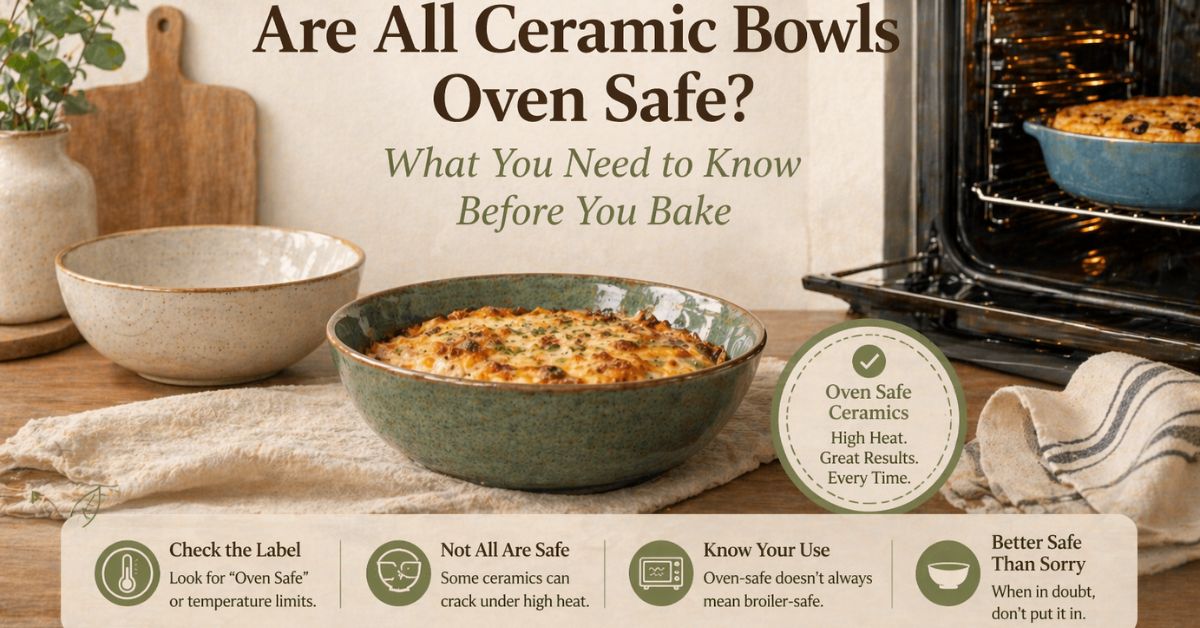
You pull out a beautiful ceramic bowl, fill it with a hearty casserole mix, and slide it into a preheated oven. Sounds perfectly fine, right? Not necessarily. Ceramic bowls look sturdy, but putting the wrong one in the oven can lead to cracked bowls, ruined meals, and even safety risks.
So, are all ceramic bowls oven safe? The short answer is no. Let’s break it down.
What Makes a Ceramic Bowl Oven Safe?
The word “ceramic” covers a wide range of materials. Not all ceramics go through the same firing process or use the same glazes, so their heat tolerance varies quite a bit.
Here is why it matters: when a bowl goes into a hot oven, it expands as it heats. If the clay body or glaze can’t handle that thermal stress, it cracks, chips, or shatters. The key factors that determine whether a ceramic bowl is oven safe come down to three things:
1. The type of clay and firing temperature
Stoneware and porcelain are the two most common oven-safe ceramics. Stoneware is fired at very high temperatures (between 1200°C and 1300°C), which makes it dense, non-porous, and resistant to thermal shock. Porcelain is similarly fired at high heat and is also generally safe for oven use.
Earthenware, on the other hand, is fired at lower temperatures. It stays more porous and is much more prone to cracking when exposed to oven heat. Most decorative pottery and terracotta pieces fall into this category.
2. The glaze
A properly fired, food-safe glaze seals the ceramic and adds some protection against heat. But not all glazes are equal. Decorative or purely ornamental glazes may not be designed for thermal cycling. They can crack, flake, or release compounds when heated.
3. Manufacturing intent
Some ceramic bowls are made specifically for serving, not baking. If a bowl is meant to sit on a table and look good, the maker probably didn’t engineer it to go into a 200°C oven.
How to Tell If a Ceramic Bowl Is Oven Safe
Before you put any ceramic bowl in the oven, check for these signs:
- Look for an oven-safe symbol. This is usually an icon on the base of the bowl showing an oven or wavy heat lines. It may also say “oven safe” in text.
- Check the manufacturer’s information. Product pages, packaging, and care guides will specify the maximum temperature and whether oven use is approved.
- Look at the clay type. If the product description says stoneware or porcelain, that’s a good sign. If it says earthenware, terracotta, or is described as decorative, assume it’s not for oven use.
- Check for metal accents or gold trim. Metallic decorations on ceramic bowls are almost never oven safe. The metal can spark, discolor, or damage the bowl when heated.
- When in doubt, don’t. If there’s no clear marking and you can’t find product information, skip the oven and use a different vessel.
Ceramic Bowl Oven Safe Temperature Limits
Even oven-safe ceramic bowls have limits. Most stoneware and porcelain pieces handle temperatures up to around 230°C to 260°C (450°F to 500°F). Some high-quality pieces can go higher. However, there are a few rules worth following regardless of the temperature rating:
Never go from cold to hot suddenly. Placing a cold ceramic bowl (especially one from the fridge or freezer) directly into a preheated hot oven is a reliable way to crack it. The sudden temperature change creates thermal shock. Always let the bowl come closer to room temperature before it goes in, or start it in a cold oven and let both heat together.
Avoid direct heat sources. Most ceramic bowls are designed for oven use, not stovetop use. Placing them directly over a gas flame or electric coil can cause uneven heating and breakage.
Don’t use broiler settings. The intense, direct heat from a broiler can exceed what most ceramic pieces are designed to handle.

Handmade and Artisan Ceramic Bowls: A Special Note
Handcrafted ceramic bowls add beauty and character to any kitchen, but they require a bit more care when it comes to oven use. Artisan potters fire their pieces at different temperatures depending on the clay and glaze they use, and not all handmade pieces are rated for oven use.
If you own or are considering buying handcrafted ceramics, the best approach is to ask directly. Reputable artisan brands will tell you exactly what their pieces can handle. At Leafbud, for example, you can browse their range of handcrafted ceramic bowls and reach out to their team with specific care questions. Their pieces are made by skilled artisans who take the craft seriously, so the information you get will be accurate and specific to the product.
When in doubt, use artisan bowls for what they do best: serving food beautifully at the table.
Types of Ceramic Bowls and Their Oven Safety
Here is a quick reference guide:
| Ceramic Type | Generally Oven Safe? | Notes |
| Stoneware | Yes | Best choice for oven use; handles high heat well |
| Porcelain | Usually yes | Check for temperature limits on the product |
| Earthenware | No | Porous and prone to cracking under heat |
| Terracotta | No | Decorative use only in most cases |
| Handmade/Artisan | Depends | Check with the maker; varies by clay and glaze |
| Bowls with metal trim | No | Metal can damage the piece and the oven |
What Happens If You Put a Non-Oven-Safe Ceramic in the Oven?
It won’t always shatter dramatically. Sometimes the damage is subtle: a hairline crack that weakens the bowl over time, or glaze that chips off into your food. In worse cases, the bowl breaks during or after baking, ruining both the dish and potentially your oven.
There’s also a food safety angle worth noting. Some older ceramics or those made without food-safe glazes can leach lead or cadmium when heated. This is a bigger concern with vintage pieces or cheaply made imports. Always use ceramics from reputable sources that meet food safety standards.
Tips for Using Oven-Safe Ceramic Bowls
Once you’ve confirmed a bowl is oven safe, a few good habits will help it last longer:
- Preheat with the bowl. Place the cold ceramic bowl in the oven before turning it on. Let them heat up together.
- Use moderate temperature increases. Go from room temperature to your target temperature rather than starting at high heat.
- Avoid putting a hot bowl on a cold or wet surface. After taking it out of the oven, set it on a dry towel, trivet, or wooden board. A cold countertop or wet surface can cause thermal shock even after the baking is done.
- Hand wash after oven use. While many stoneware pieces are dishwasher safe, repeated high-temperature dishwasher cycles can wear down glazes over time. Gentle hand washing extends the life of your bowls.
- Inspect regularly. Before each oven use, check for existing cracks or chips. A damaged bowl is more likely to fail under heat.
The Bottom Line
Not all ceramic bowls are oven safe, and assuming they are can lead to cracked bowls, contaminated food, or worse. The safest approach is simple: check the label, know your clay type, and follow the manufacturer’s guidance.
Stoneware is your most reliable option for oven use. Porcelain usually works well too. Earthenware, terracotta, and decorative pieces belong on the table, not in the oven.
If you’re building out a collection of ceramics that are both beautiful and functional, choosing pieces from makers who are transparent about materials and care instructions makes your life a lot easier. Leafbud works with skilled artisans across India to create handcrafted ceramics that bring both art and practicality to your kitchen and table. If you have questions about any of their pieces, their team is easy to reach and happy to help.
Good ceramics, treated well, last for years. Now you know what to ask before you preheat that oven.
Frequently Asked Questions
Can I use any ceramic bowl in the oven?
No. Only ceramic bowls specifically labelled as oven safe should go in the oven. Stoneware and porcelain are generally safe choices, but always confirm with the manufacturer. Earthenware, decorative pottery, and bowls with metallic trim should stay out of the oven entirely.
How do I know if my ceramic bowl is oven safe?
Check the bottom of the bowl for an oven-safe symbol or text. You can also look up the product information from the manufacturer. If the bowl is made from stoneware or porcelain and has no metallic decoration, it’s likely oven safe, but confirmation from the source is always the safest approach.
Can I put a cold ceramic bowl directly into a hot oven?
No, this is not a good idea. Moving a ceramic bowl from cold to hot too quickly causes thermal shock, which can crack or break the piece. Let the bowl come to room temperature first, or place it in a cold oven and let both heat up at the same time.
Are handmade ceramic bowls oven safe?
It depends on the clay and glaze used by the artisan. Some handcrafted stoneware pieces are fully oven safe, while others made from earthenware or with ornamental glazes are not. If you’re buying from a brand like Leafbud, ask their team for specific care information for the piece you’re interested in.
What temperature can ceramic bowls handle in the oven?
Most oven-safe stoneware and porcelain bowls can handle temperatures between 230°C and 260°C (450°F to 500°F). Some pieces are rated higher. The specific limit will be listed in the product information. Avoid using the broiler setting with ceramic bowls, even oven-safe ones, as the direct radiant heat can exceed their rated limits.