Chat with us
FREE Leafbud Umbrella on Prepaid Orders Above INR 4,500/-
FREE Leafbud Umbrella on Prepaid Orders Above INR 4,500/-
FREE Leafbud Umbrella on Prepaid Orders Above INR 4,500/-
FREE Leafbud Umbrella on Prepaid Orders Above INR 4,500/-
FREE Leafbud Umbrella on Prepaid Orders Above INR 4,500/-
FREE Leafbud Umbrella on Prepaid Orders Above INR 4,500/-
FREE Leafbud Umbrella on Prepaid Orders Above INR 4,500/-
FREE Leafbud Umbrella on Prepaid Orders Above INR 4,500/-



Ceramic Bowl Vs Glass Bowl: Know the Difference

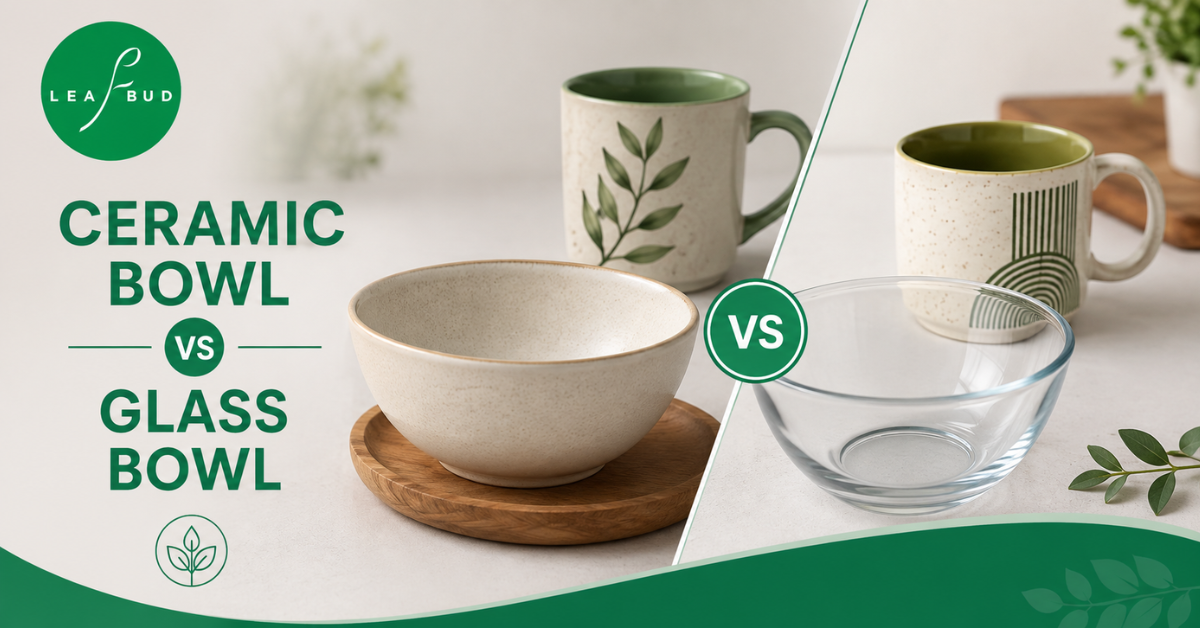
Walk into any Indian kitchen and you will find both sitting on the same shelf, a set of glass bowls for dal and salad, and a stack of ceramic ones for everyday serving. But when it is time to buy new dinnerware, the ceramic bowl vs glass bowl question comes up more often than you would expect. Let’s break down what actually separates the two, so you can pick what suits your kitchen best.
What Are Ceramic and Glass Bowls Made Of
Ceramic bowls start out as clay and natural minerals. This mixture is shaped and then fired at high temperatures in a kiln until it becomes solid, and once glazed, most ceramic bowls turn fully non-porous and safe for a wide range of Indian dishes. The earthy material gives ceramic its familiar warmth, both in look and feel.
Glass bowls, on the other hand, come from sand. The sand is heated to very high temperatures and then molded into shape, resulting in a bowl that is non-porous and does not react with food. This is why glass bowls stay completely clear and let you see exactly what’s inside, whether it is a colourful sabzi or a layered dessert.
Ceramic Bowl vs Glass Bowl: Heat Resistance
This is usually the first thing people want to know, especially with how often bowls go into the microwave or fridge in Indian homes.
Borosilicate glass bowls handle high heat well, which makes them a reliable choice for reheating food in the microwave or oven without worrying about cracks. If you often move a bowl of rajma or sambar straight from the fridge to the microwave, borosilicate glass is built for exactly that kind of quick temperature change.
Ceramic behaves a little differently. It tends to be more prone to thermal shock than glass, which means a sudden jump from cold to hot, or the reverse, can cause it to crack. That said, well-fired ceramic dinnerware handles regular reheating just fine as long as you avoid extreme, sudden shifts. We have covered this in more detail in our guide on <cite index=”16-1″>whether ceramic bowls are microwave safe, if you want to go deeper into the topic.
Quick summary:
- Glass (especially borosilicate): more resistant to sudden temperature swings
- Ceramic: handles regular heat well, but needs gentler transitions between hot and cold
Durability: Which One Survives Daily Kitchen Life Better
Here is where things even out a bit.Glass bowls are sturdy in daily use, but they can shatter if dropped, which is a real risk in a busy Indian kitchen.
Ceramic bowls are heavier and feel more solid in hand, but they are not indestructible either. Ceramic bowls are generally sturdy, though they remain more susceptible to chipping or cracking than metal if mishandled. So neither material is completely drop-proof, but ceramic tends to chip rather than shatter into sharp pieces, which many people find a little safer around children.
Everyday Use: Serving, Mixing, and Storage
Both bowls work well for different everyday jobs, but they are not always interchangeable.
- Glass bowls are great for storage, since you can see the contents without opening a lid, and they don’t hold on to smells or stains over time.
- Ceramic bowls bring a warmer, more traditional feel to the table, especially for serving dal, curd, or rajma, and many people simply prefer how food looks in a ceramic bowl versus a glass one.
Glass bowls generally resist odours and staining better over time, while ceramic can absorb smells and stains more easily with repeated use. If you regularly store strong smelling pickles or spice-heavy leftovers, glass may hold up a little better long term.
Microwave and Oven Safety
Both materials can be microwave safe, but this depends heavily on the specific product, not just the material category.
Ceramic bowls are generally microwave safe, dishwasher safe, and oven safe, which makes them a versatile choice for both cooking and reheating. Glass bowls are equally popular for the microwave thanks to their non-porous and heat-resistant nature, and work well for both hot and cold foods.
The one thing to actually check before using either in the microwave is the base of the bowl itself. Look out for cracks, and avoid any bowl with metal trim, since metallic decoration can cause sparks inside a microwave. This applies to glass just as much as ceramic, gold-rimmed or silver-rimmed bowls of either material should stay out of the microwave altogether.
Design and Aesthetic Appeal
If you care about how your table looks, this is where the two materials really diverge.
Ceramic bowls carry an earthy, traditional appeal that suits Indian aesthetics well, which is part of why they remain a popular choice for serving dals and rajma. Hand painted patterns, textured glazes, and warm colours give ceramic bowls a personality that is hard to replicate in glass.
Glass bowls lean more modern and minimal. They are transparent, sleek, and work beautifully when you want the food itself to be the visual centrepiece, layered desserts and colourful salads especially.
Neither look is “better.” It really comes down to whether your table setting leans traditional and warm, or clean and contemporary.
Weight and Handling
Tempered glass bowls tend to be a bit heavier than expected, though for everyday use like raita or salad, they remain easy enough to manage. Ceramic bowls are usually heavier still and give a more solid, grounded feel when you pick them up, something a lot of people associate with quality dinnerware.
If you are buying bowls for daily family use, including for kids, the lighter weight of glass can be easier to handle. For a formal dinner setting or gifting, the heft of a good ceramic piece often feels more premium.
So, Which One Should You Choose?
Honestly, there is no single winner in the ceramic bowl vs glass bowl debate. It depends on what you actually need the bowl for.
- Choose glass if you want something for storage, quick microwave reheating, or a clean, modern look on your table.
- Choose ceramic if you want a sturdy, traditional feel with more design character, especially for everyday serving and festive dinners.
Many Indian kitchens end up using both, glass for the fridge and quick reheats, ceramic for serving and the dinner table. That combination usually covers most day to day needs without any real trade off.
At Leafbud, our focus stays on handcrafted ceramic bowls made for exactly this kind of everyday and festive serving use. If you are exploring options, browsing the Leafbud collection of bowls gives you a sense of the glaze quality and finish that goes into each piece. It is always worth checking the specific care details for microwave and dishwasher use on the Leafbud website before daily use, since finishes can vary slightly across collections.
Frequently Asked Questions
1. Is ceramic or glass better for daily use in an Indian kitchen?
Both work well, but for different reasons. Glass suits storage and quick reheating, while ceramic offers a sturdier, more traditional feel for everyday serving of dal, curd, and rajma.
2. Can I put a ceramic bowl in the microwave like a glass one?
Yes, most ceramic bowls are microwave safe if they have no metallic trim or cracks. Always check for a manufacturer label confirming microwave safety before regular use.
3. Which bowl is more likely to break, ceramic or glass?
Glass can shatter if dropped, while ceramic is more likely to chip or crack. Neither is fully drop-proof, so handling both with care is the safest approach either way.
4. Does ceramic or glass retain smells and stains more?
Glass generally resists odours and stains better over time. Ceramic can absorb smells with repeated use, especially with strong spices, though good quality glazes reduce this significantly.
5. Which one looks better for festive dinner settings?
Ceramic tends to suit festive and traditional table settings due to its earthy tones and handcrafted designs. Glass works better for a clean, modern look, especially with colourful dishes.
Shop Ceramic Bowls