FREE Leafbud Umbrella on Prepaid Orders Above INR 4,500/-
FREE Leafbud Umbrella on Prepaid Orders Above INR 4,500/-
FREE Leafbud Umbrella on Prepaid Orders Above INR 4,500/-
FREE Leafbud Umbrella on Prepaid Orders Above INR 4,500/-
FREE Leafbud Umbrella on Prepaid Orders Above INR 4,500/-
FREE Leafbud Umbrella on Prepaid Orders Above INR 4,500/-
FREE Leafbud Umbrella on Prepaid Orders Above INR 4,500/-
FREE Leafbud Umbrella on Prepaid Orders Above INR 4,500/-



Handmade Scented Candles and Diffusers for Indian Homes: What to Buy for Each Room

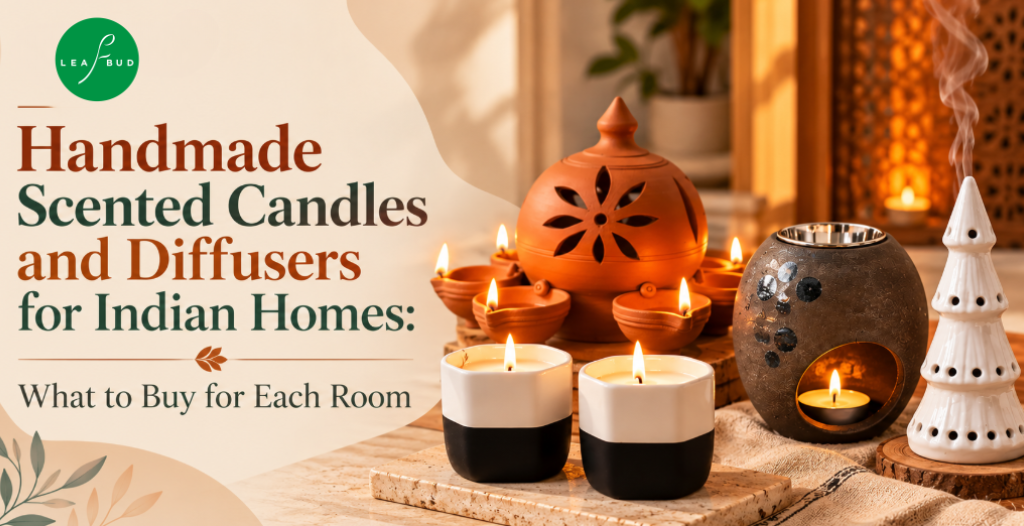
Most advice about home fragrance is written for closed, carpeted, centrally heated houses. Indian homes are none of those things.
We have ceiling fans running most of the year, windows that stay open, a kitchen that produces genuinely powerful smells twice a day, and three months of monsoon humidity that changes how everything behaves. A candle that would perfume an entire American living room can disappear in an Indian one in about four minutes.
So this is the room-by-room version, adjusted for how homes here actually work.
First, what kind of fragrance are you buying?
The word diffuser covers three different things, and it is worth knowing which one you are looking at.
A reed diffuser is a bottle of scented oil with sticks in it. No heat, no flame, continuous mild fragrance.
An electric or ultrasonic diffuser uses water and power to mist essential oil into the air.
A ceramic aroma diffuser, sometimes called an oil burner, holds a tealight underneath a small bowl. You add water and a few drops of oil to the bowl, and the flame warms it until the scent lifts. This is the traditional form, it needs no electricity, and it doubles as a light source.
Leafbud’s diffusers are the third kind. They are handmade ceramic pieces that take a tealight, so they give you both fragrance and a warm, patterned glow. Worth knowing before you buy, because if you specifically want reeds or a plug-in mist diffuser, this is not that.
Candles are simpler: wax, wick, scent, done.
What changes in an Indian home
Ceiling fans are the big one. A fan on medium or high will scatter fragrance faster than any candle can produce it, and it makes the flame flicker unevenly, which causes the wax to burn down crookedly. If you want a candle to actually scent a room, light it fifteen minutes before you want the room to smell of something, with the fan low or off. Then turn the fan up.
Air conditioning works the opposite way. A closed, cooled room holds fragrance and dries the air, so scent concentrates. Go lighter than you think in an AC bedroom. What smelled pleasant in the shop will feel heavy at 2 am.
Monsoon changes what feels right. Heavy sweet scents turn cloying in high humidity. Lighter citrus and green notes wear better from June to September. Candles also sweat in humid weather, which is a surface film rather than a fault.
Summer heat is a storage problem. Wax softens above roughly 35 degrees. A candle left on a windowsill in May will slump. Keep them out of direct sun and away from the hottest wall in the house.
Fragrance does not fix cooking smells. Nothing masks a tadka, and trying produces a worse result than either smell alone. Ventilation handles cooking. Fragrance is for afterwards.
Most Indian homes already have a signature scent. If agarbatti or dhoop burns daily, a strong floral candle will fight it. Either match the family, which usually means sandalwood, or keep fragrance in rooms where incense does not go.
The Leafbud pieces
All are handmade, so glaze and form vary between pieces. Check the product page for current pricing and availability.
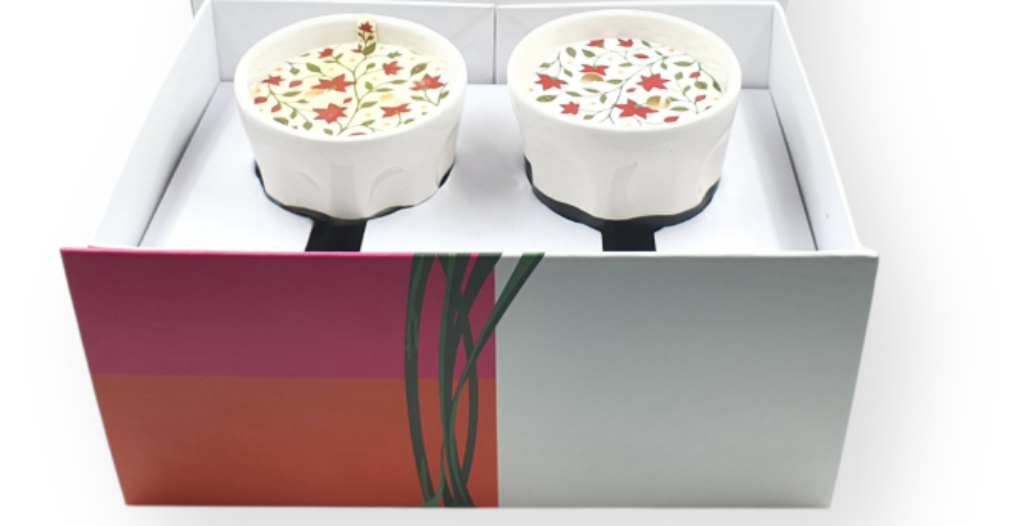
The most gift-ready item in the range, and a sensible living room choice because a set gives you more than one point of fragrance in a large space. Two smaller candles placed apart scent a room more evenly than one large one in a corner.
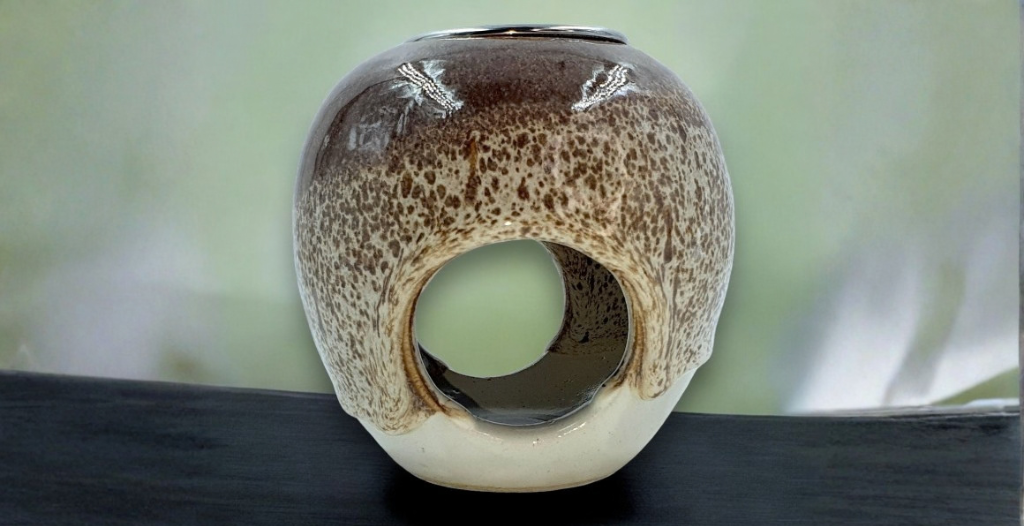
A brown ceramic aroma diffuser that takes a tealight and throws patterned light while it warms the oil. The dual function is the reason to pick this over a candle for a bedroom or an entryway: you get soft light on nights when you do not want fragrance, and fragrance when you do.
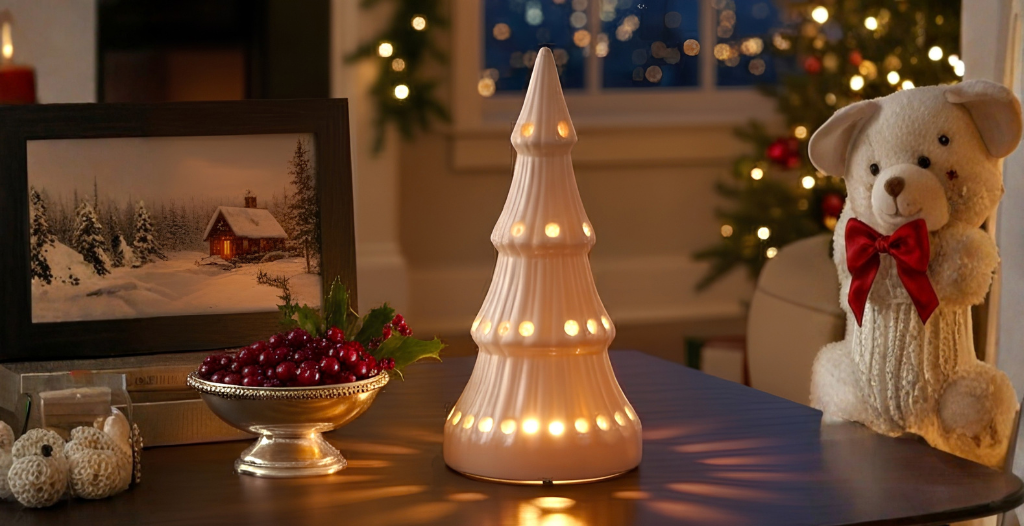
A white ceramic tree form with perforated tiers that scatter pinpricks of light across the surrounding surface. Unscented by design, which makes it the right piece for a dining table or a festive corner, where you want the glow without anything competing with the food.
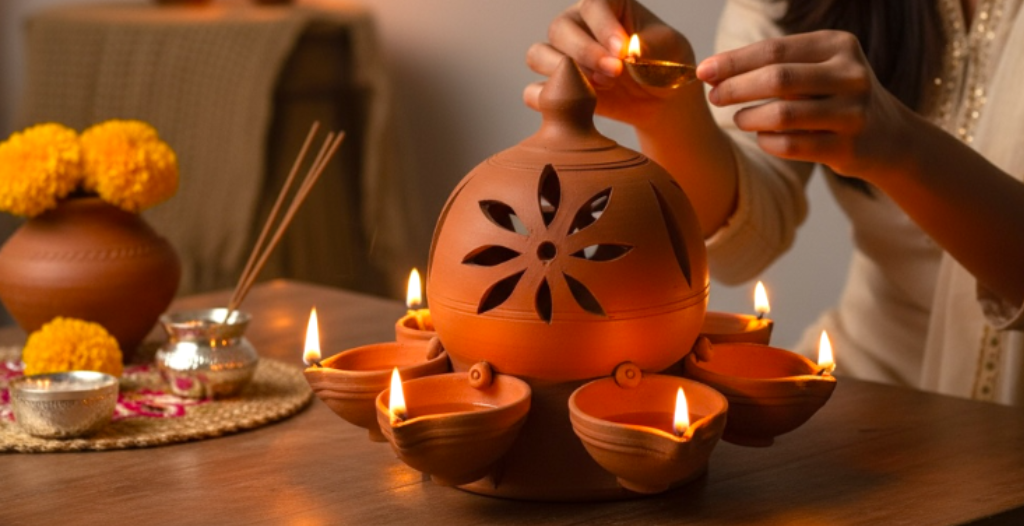
For festive corners and the puja space, where a diya is the form that belongs rather than a scented candle.
Browse the ranges: Candles | Diffusers | Incense Stick Holders | Lamps | Decor
Getting more from a candle
The first burn sets the pattern. Burn a new candle until the melted wax reaches the full width of the container, usually two to three hours. Blow it out early and it will tunnel down the middle for the rest of its life.
Trim the wick to about five millimetres before each burn. An untrimmed wick smokes and leaves soot on the vessel.
Three to four hours maximum per session. Longer than that and the scent flattens, because your nose adapts and the wax overheats.
Keep it away from the fan and the window. A draught makes wax burn unevenly and wastes the candle.
Reuse the vessel. A handmade ceramic candle holder outlives the wax. Clean out the remnant with hot water, and it becomes a small planter, a holder for rings and keys, or a home for tealights.
Frequently asked questions
What is a ceramic diffuser and how does it work?
A ceramic aroma diffuser holds a tealight beneath a small bowl. You add water and a few drops of essential oil to the bowl, and the flame gently warms it so the scent lifts into the room. It needs no electricity and also works as a soft light.
Which scented candle is best for a bedroom?
Something light, particularly in an air-conditioned room where fragrance concentrates. Lavender, soft vanilla and mild florals suit bedrooms. Heavy woody or sweet scents that work in a living room often feel overpowering overnight.
Do scented candles work with a ceiling fan on?
Not well. A fan disperses fragrance faster than the candle produces it and makes the flame burn unevenly. Light the candle with the fan low or off for fifteen minutes first, then turn the fan up.
Can scented candles cover cooking smells?
No. Fragrance layered over a strong cooking smell produces a worse result than either alone. Ventilate while cooking, and use fragrance afterwards.
Why does my candle burn down the middle?
Tunnelling, caused by blowing out the first burn too early. Let a new candle burn until the melted pool reaches the full width of the container, which usually takes two to three hours.
Is it safe to leave a ceramic diffuser burning?
Treat it like any open flame. Never leave it unattended, keep it away from curtains and fabric, and never let the bowl run dry, which can crack the ceramic.
Browse the range: Candles | Diffusers | Incense Stick Holders | Lamps | Vases | Gifting