 Chat with us
FREE Leafbud Umbrella on Prepaid Orders Above INR 4,500/-
FREE Leafbud Umbrella on Prepaid Orders Above INR 4,500/-
FREE Leafbud Umbrella on Prepaid Orders Above INR 4,500/-
FREE Leafbud Umbrella on Prepaid Orders Above INR 4,500/-
FREE Leafbud Umbrella on Prepaid Orders Above INR 4,500/-
FREE Leafbud Umbrella on Prepaid Orders Above INR 4,500/-
FREE Leafbud Umbrella on Prepaid Orders Above INR 4,500/-
FREE Leafbud Umbrella on Prepaid Orders Above INR 4,500/-



How to Choose a Mahjong Set: Tiles, Mats, Shufflers and What Beginners Actually Need

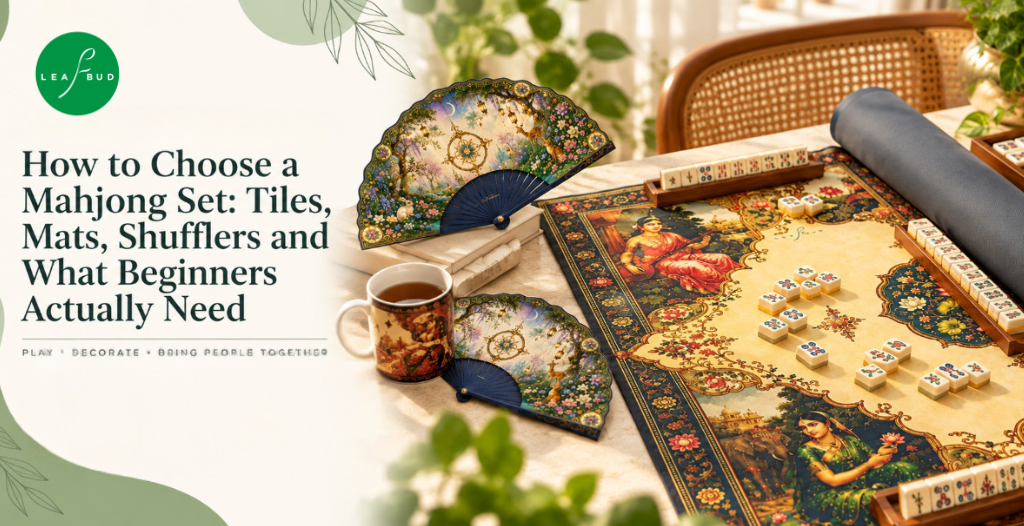
Mahjong has quietly become a fixture of weekend evenings in a lot of Indian homes. Somebody learns it on holiday, brings it back, teaches three friends, and within a month there is a standing game.
Then comes the part nobody warns you about: buying a set. You open a listing and it says 144 tiles. The next one says 166. A third mentions racks, pushers and a shuffler, and you have no idea whether those are essential or someone’s idea of an upsell.
Here is what actually matters, in the order it matters.
What a playable set needs
Strip away everything optional and you need three things: tiles, a surface to play on, and two dice.
Everything else, including racks, pushers, shufflers and storage cases, makes the game more comfortable. None of it makes the game possible. If you are buying your first set, get the tiles right and treat the rest as things you add once you know how your group plays.
The most common beginner mistake is the opposite: buying an elaborate bundle before anyone in the group is sure they will still be playing in six months.
Tiles: the number is telling you which game
Tile counts look confusing until you realise they are just describing different regional versions of the same game.
136 tiles is the base set. Three suits running one to nine, four copies each, plus the winds and dragons. This is what Japanese riichi mahjong uses.
144 tiles is the most widely sold count and the usual starting point. It is the 136 base plus eight bonus tiles, the flowers and seasons. Chinese and Hong Kong style play uses this, and it is the version most Indian groups end up learning.
148 tiles turn up in sets made for Singapore and Malaysia, which add animal tiles.
152 tiles is the American standard, adding eight jokers. Some American sets are sold as 166, which is the same game with spare and blank tiles included for replacements.
What to do with that: if your group has not committed to a specific style, buy 144. It plays Chinese and Hong Kong rules directly, and the eight bonus tiles can simply be set aside if you later switch to a version that does not use them. Buying 152 first, then discovering everyone around you plays Chinese style, is the more annoying mistake to make.
One practical note: a set sold as 144 should also include spare blank tiles. Tiles do occasionally chip or go missing, and a set without spares is a set you cannot fully repair.
Tile size: the specification people skip
Tile size is measured by the face height, and it changes the game more than colour or pattern ever will.
Small, roughly 26 to 28 mm. Travel sets. Light and compact, but harder to read across a table and fiddly for anyone with larger hands.
Standard, roughly 30 to 34 mm. The right default for most people and most tables.
Large, roughly 36 to 42 mm. Easier to see, pleasant to handle, genuinely better for older players or anyone with weaker eyesight. The trade-off is real though: large tiles need more table. Four walls of large tiles on a standard four-seater Indian dining table gets cramped fast.
Measure your table before you order. A comfortable game needs roughly a 90 cm square of clear surface for standard tiles. If your dining table is smaller than that, or is round, go for standard or small rather than large.
Weight matters too. Heavier tiles feel better and stay put when the table gets knocked, but a full case of large heavy tiles is genuinely heavy to carry to a friend’s house.
Mats: not decorative, actually functional
A mahjong mat is the single accessory worth buying early, and most beginners buy it last.
Noise. Tiles on bare wood, glass or granite are loud. Shuffling face-down tiles on a hard surface sounds like construction work and gets old quickly, especially in a flat with sleeping children.
Protection. This runs both ways. Tiles chip on hard surfaces, and heavy tiles scratch a table you care about.
Grip. A mat with some texture stops tiles sliding out of the wall when someone leans on the table.
Size. Most playing mats are square, somewhere between 75 and 90 cm. Check that the mat fits your table with a margin, not exactly. You want room at the edges for discarded tiles and for hands.
Material. Felt and velvet feel good but hold dust. Neoprene and rubber-backed mats grip better and wipe clean, which is the more practical choice in Indian homes where the table gets used for meals too.
Shufflers: what they are, and whether you need them
This is the accessory people most often ask about, usually because they have seen it listed and cannot tell what it does.
Shufflers are flat paddles, typically sold in pairs. You use them to mix tiles face-down at the start of a hand, sweeping them around the table without touching the faces. That is the whole function.
Why bother? Shuffling 144 tiles by hand is slower, noisier, and leaves everyone’s palms covered in whatever was on the table. With paddles it takes a fraction of the time and the tiles stay properly mixed. Groups that play weekly tend to buy them within a month or two of starting.
Do you need them to play? No. Hands work. But if your group has settled into a regular game, this is the cheapest upgrade that noticeably improves an evening.
Note that these are hand paddles, not the automatic shuffling tables used in mahjong parlours. Those are a different and considerably more expensive category.
The Leafbud Mahjong range
Leafbud stocks mahjong sets alongside the mats, shufflers and combination bundles that go with them.
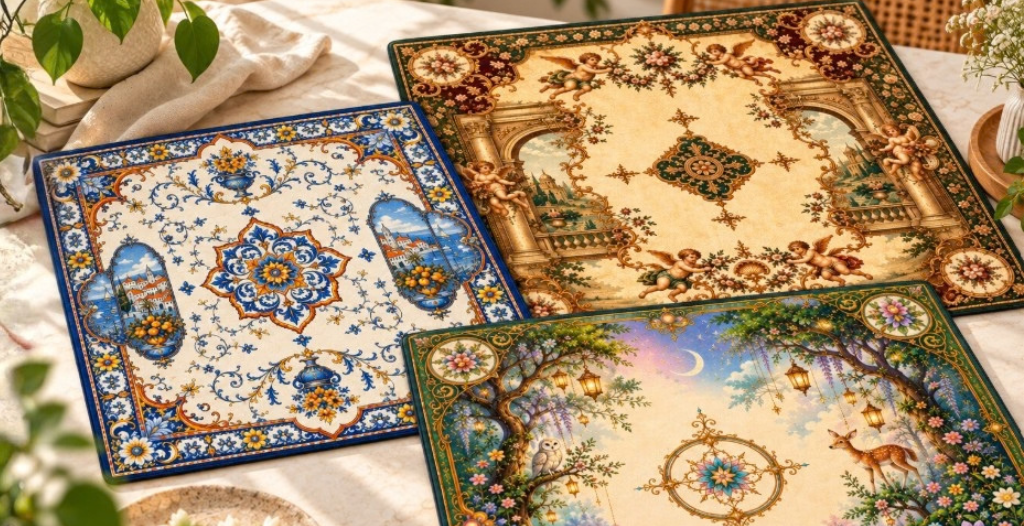
playing surfaces sized for a standard four-player game.
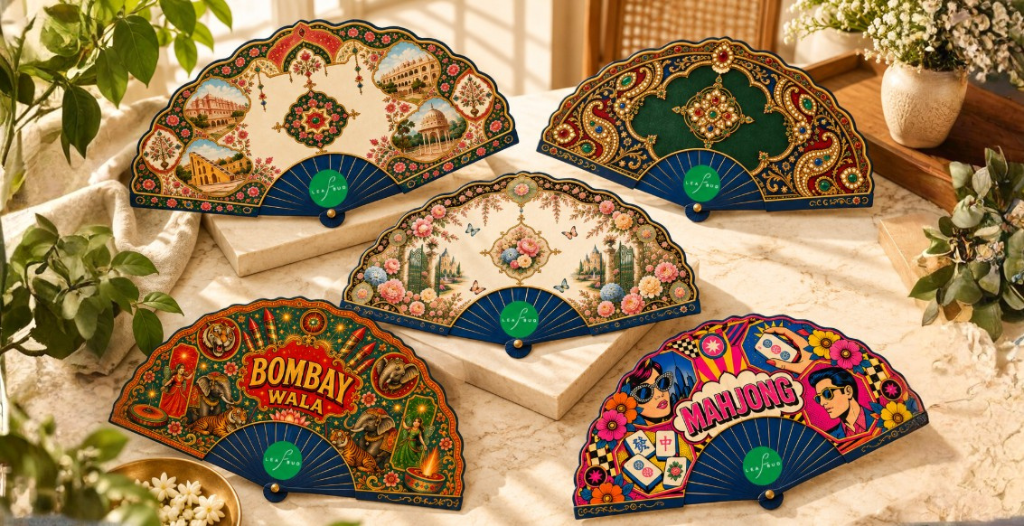
paddle pairs for mixing tiles face-down.
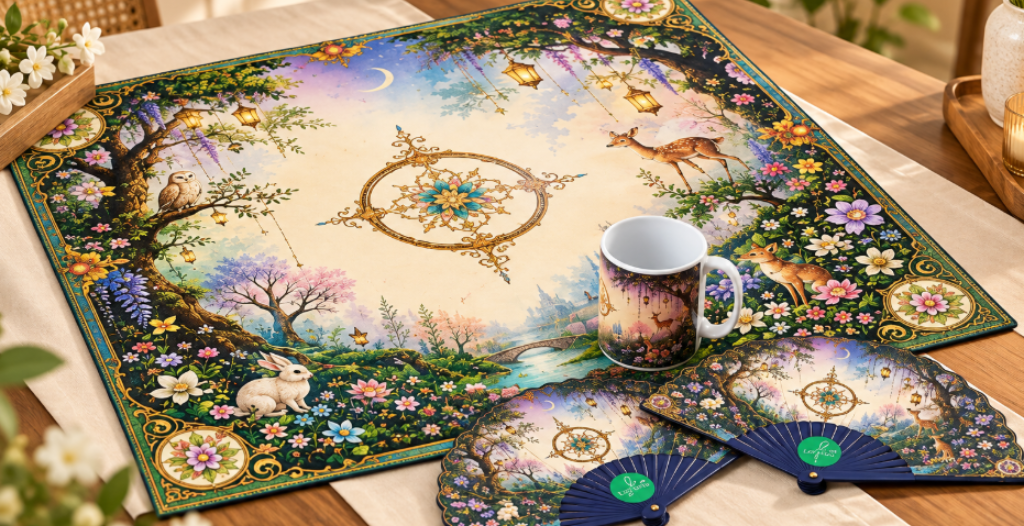
f you are choosing between a set on its own and a combo, the combo generally makes sense when it includes the mat. That is the accessory you will want by your second or third game anyway.
What to spend
Your first set, if you are not yet sure the group will stick with it: a straightforward 144-tile set in a standard tile size. Add the mat once you are two or three games in.
A regular game: set, mat and shufflers. At this point a combo is usually cheaper than assembling the same three separately.
A gift: go up a tier on tile size and case quality rather than adding accessories. A larger, heavier tile in a proper case is what makes a set feel like a present. Mahjong gifts well because it is a shared object rather than a personal one, which is also why it suits housewarmings and milestone birthdays.
Frequently asked questions
How many tiles are in a mahjong set?
Most sets have 144 tiles: a 136-tile base plus eight flower and season tiles. Japanese riichi uses 136, Singapore and Malaysian sets use 148, and American sets use 152 including jokers, sometimes sold as 166 with spares.
Which mahjong set should a beginner buy?
A standard 144-tile set in a mid-range tile size of roughly 30 to 34 mm. It plays Chinese and Hong Kong rules directly, which is the version most new groups learn, and the bonus tiles can be set aside for other variants.
What size should a mahjong mat be?
Most playing mats are square and between 75 and 90 cm. Choose one that leaves a margin on your table rather than one that fits exactly, since you need room at the edges for discarded tiles.
Are mahjong shufflers worth buying?
They are not essential, but they make shuffling faster, quieter and cleaner. Groups that play regularly usually buy a pair within a couple of months of starting.
How many people do you need to play mahjong?
Four is standard. Three-player variants exist and are common in some regions, but most sets and rule sets assume four.
Do I need racks and pushers?
Only if you play American mahjong, where they are part of standard equipment. Chinese and Hong Kong style play does not use them.
Where to start
If you take one thing from this: buy a 144-tile set in a standard tile size, measure your table before you choose, and add the mat early rather than late. That covers most of what a new group needs, and it leaves room to add pieces once you know how you actually play.
Browse the range: Mahjong | Mats | Shufflers | Combos | Decor | Gifting