FREE Leafbud Umbrella on Prepaid Orders Above INR 4,500/-
FREE Leafbud Umbrella on Prepaid Orders Above INR 4,500/-
FREE Leafbud Umbrella on Prepaid Orders Above INR 4,500/-
FREE Leafbud Umbrella on Prepaid Orders Above INR 4,500/-
FREE Leafbud Umbrella on Prepaid Orders Above INR 4,500/-
FREE Leafbud Umbrella on Prepaid Orders Above INR 4,500/-
FREE Leafbud Umbrella on Prepaid Orders Above INR 4,500/-
FREE Leafbud Umbrella on Prepaid Orders Above INR 4,500/-



Best Handmade Ceramic Coffee Mugs and Tea Cups – The Buyer’s Guide


Most people buy a ceramic mug because it looked good in a photograph, then discover it holds half a cup less than they wanted, or that the handle is too small for three fingers, or that the matte glaze turned brown after two weeks of chai.
None of that is bad luck. It is what happens when a mug is chosen on looks alone.
This guide covers what actually decides whether you enjoy a handmade ceramic mug or quietly stop reaching for it: capacity, glaze finish, handle shape, weight, and how it handles Indian drinks. Then it maps those to specific pieces from the Leafbud collection, with an honest note on who each one does not suit.
how to choose a handmade ceramic mug
Match the capacity to your drink, then check the glaze finish before anything else.
- Cutting chai or a small tea: 120 to 180 ml. A cup, not a mug.
- A regular cup of tea or filter coffee: 200 to 280 ml.
- A full morning coffee or hot chocolate: 300 to 400 ml.
- Espresso: 60 to 90 ml, in a demitasse cup.
Glossy glaze resists chai and turmeric staining far better than matte. Matte looks beautiful and is more porous, so it needs quicker rinsing.
Why handmade ceramic behaves differently from mass-produced mugs
A handmade mug is thrown or moulded individually and fired at high temperature, then glazed by hand. Three practical consequences follow, and no product photo will tell you about them.
Wall thickness varies, and thicker walls hold heat longer. A handmade stoneware mug typically keeps coffee drinkable for longer than a thin porcelain cup. If you are the kind of person who forgets a cup on the desk and returns to it fifteen minutes later, this matters more than any design feature.
No two pieces are identical. Glaze pools slightly differently, colours shift between firings, and a set of two will have small variations. This is the nature of the process, not a defect. If you want perfect uniformity across six pieces, machine-made is the honest answer.
The base is usually left unglazed. That unglazed foot ring is how the piece sits in the kiln. It is also a quick way to tell handmade from slip-cast: run a finger under the base and you will feel raw, slightly rough clay.
Leafbud works with a group of named studio artists, including Deeksha Gupta, Tripti Saxena, Shubha Samant, Mahesh Pandit and Nilesh Bendkhale, which is why pieces from the Artist Exclusive Edition carry more variation than the everyday range. That variation is the point of buying handmade.
Mug, cup or tumbler: which one do you actually want?
Typical capacity | Handle | Best for | |
Tea cup | 120 to 200 ml | Small or none | Chai, green tea, serving guests |
Coffee mug | 300 to 400 ml | Full grip | Morning coffee, hot chocolate, desk use |
Demitasse cup | 60 to 90 ml | Small | Espresso, strong South Indian coffee |
Tumbler | 150 to 250 ml | None | Filter coffee, cold drinks |
One point worth knowing: filter coffee is traditionally served in a tumbler and davara precisely because there is no handle. You hold the rim, the drink cools faster, and you pour between the two vessels to bring the temperature down. A tumbler is not a mug with a missing handle. It does a different job.
The Leafbud edit: which piece for which drink
Prices below are MRP as listed at the time of writing. Check the product page for current pricing and availability.
For a large morning coffee with a lid
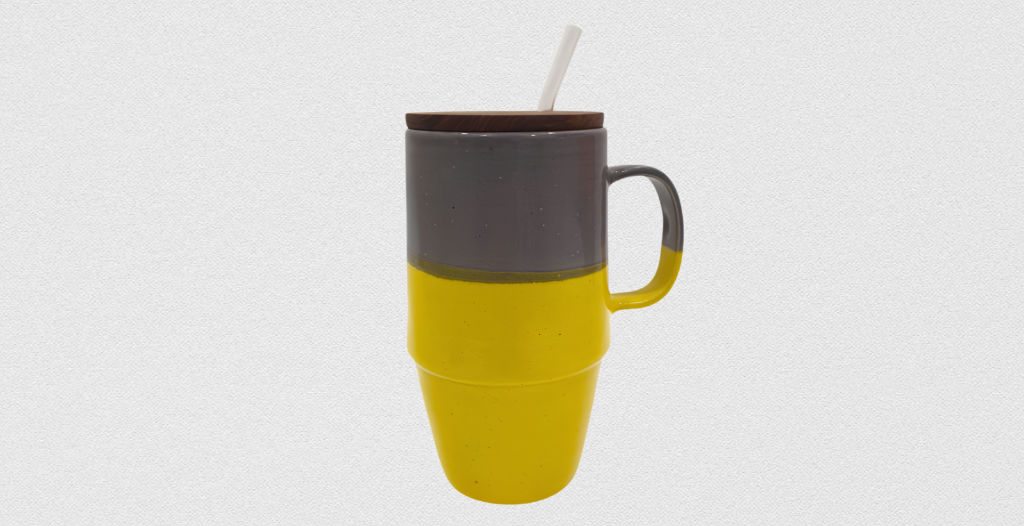
An Artist Exclusive Edition piece by Deeksha Gupta, and the only mug in the range that comes with a lid. The lid is the reason to buy it: if you work from home and your coffee routinely goes cold while you finish a call, this solves a real problem. It also doubles as a travel-style tumbler.
For a pair, or as a gift
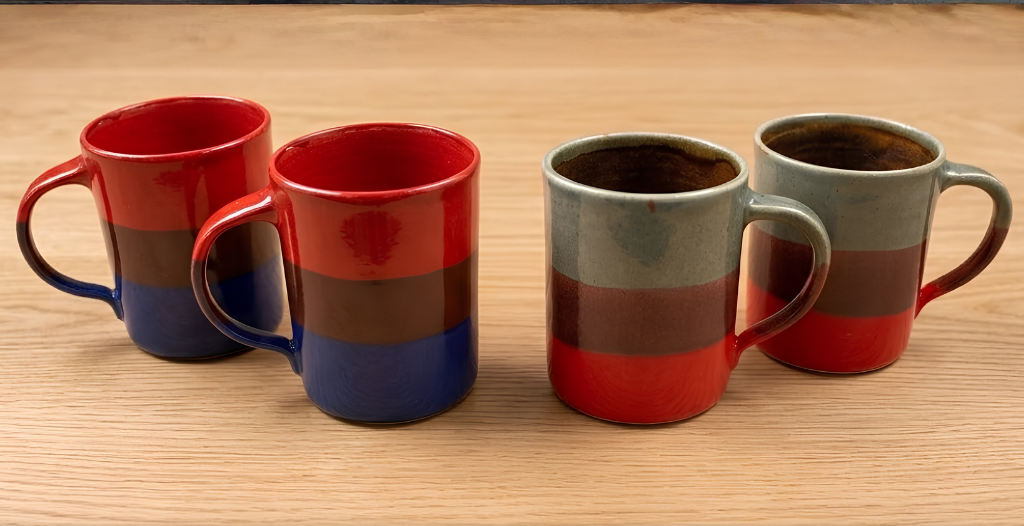
Both are sets of two, both from the Artist Exclusive Edition. A set of two is the most reliable gift in this category because it works for a couple, and because a single mug can read as an afterthought while a pair reads as intentional.
For everyday chai and coffee
Leafbud Amber Mugs (set of two) Leafbud Amber Mugs in Brown
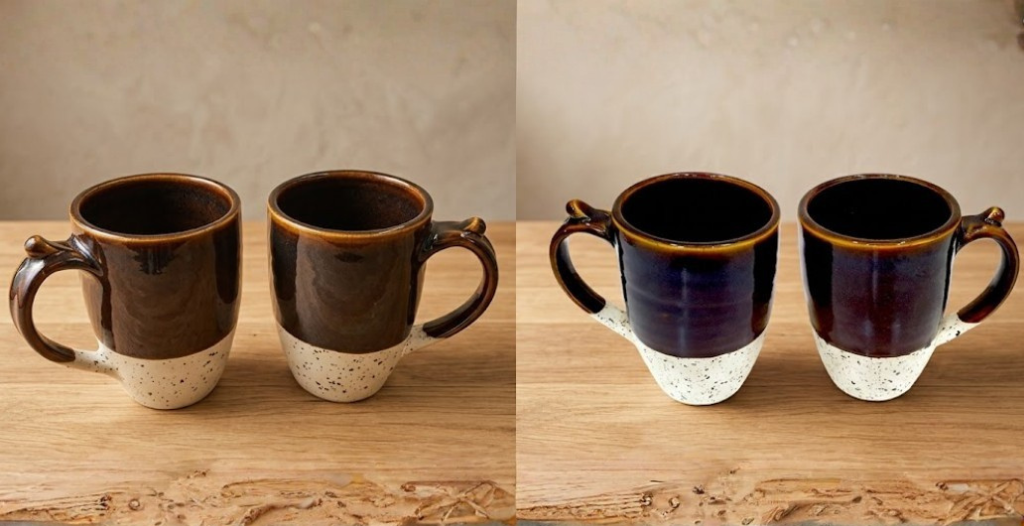
The warm brown stoneware glaze here is the practical choice for anyone drinking masala chai twice a day, because a mid-tone brown does not show tannin staining the way a white or pastel interior does. This is the range to buy if the mug is going to be used hard.
For cutting chai and serving guests
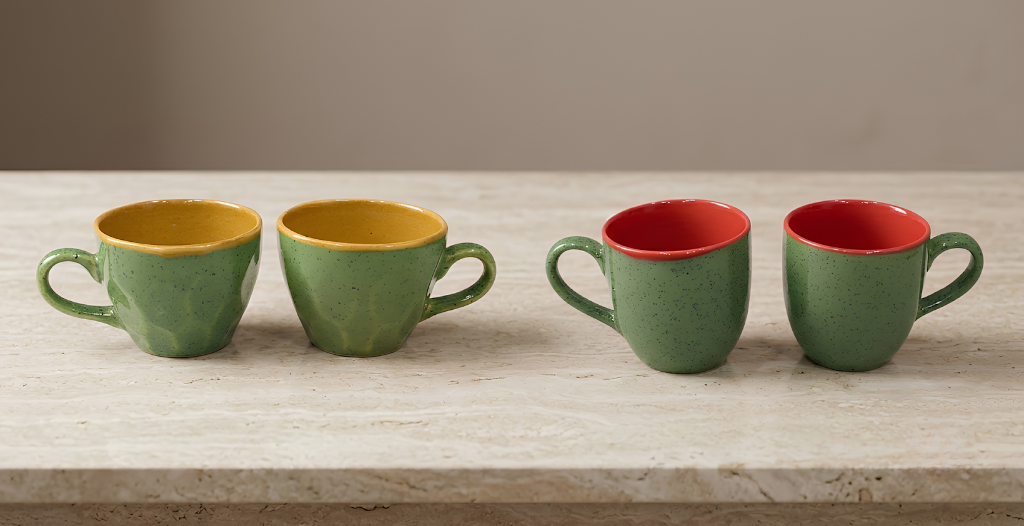
Smaller cups suit the way most Indian households actually drink tea: a modest quantity, refilled, rather than one large mug. Both sit under the ₹1,000 mark, which makes them the sensible entry point into handmade ceramics if you have not bought any before.
For espresso and strong coffee
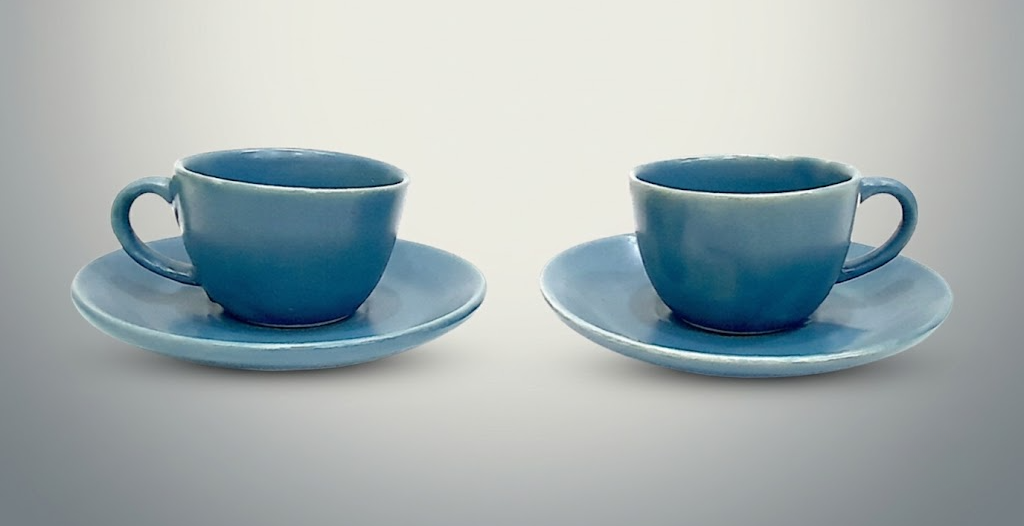
A demitasse holds a small volume, which is the whole point: espresso poured into a large mug loses heat and aroma within a minute. The saucer is genuinely useful here rather than decorative, because it gives you somewhere to rest the spoon.
For tea service and hosting
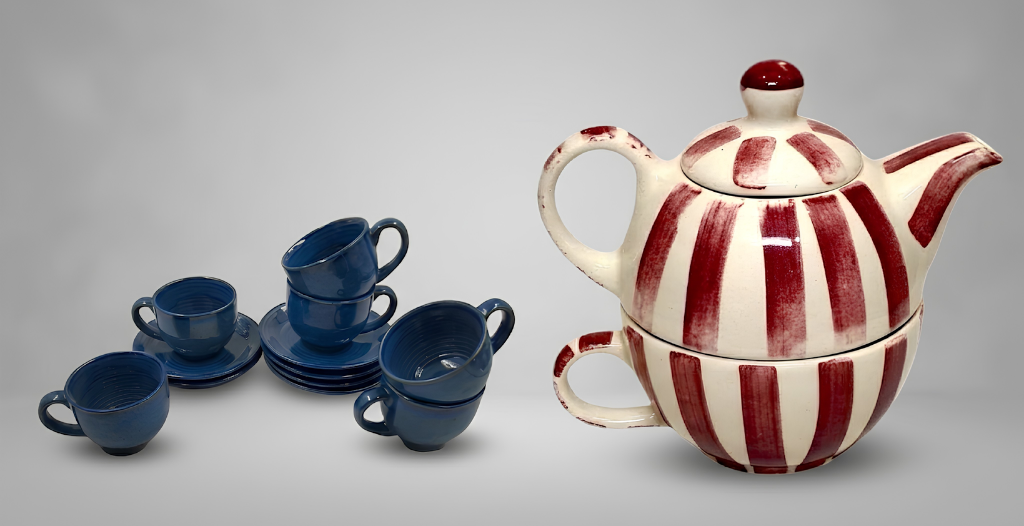
The six-piece set is the one to buy if guests are the reason you are shopping. On the kettle set, one honest note: in most Indian homes chai is boiled in a pan, so a ceramic kettle is for serving at the table rather than brewing. Bought with that expectation, it does the job well.
Care: what actually keeps a handmade mug looking new
Chai and turmeric staining. Rinse within an hour rather than letting the cup sit overnight. For a stain that has set, a paste of bicarbonate of soda and a little water, left for ten minutes and wiped off with a soft cloth, lifts most tannin marks. Do not use a steel scourer on glazed ceramic. It scratches the glaze, and a scratched glaze stains faster from then on.
Microwave. Most high-fired glazed ceramic is microwave safe, but the real risk is not the microwave, it is thermal shock. Taking a mug from the fridge straight into a hot microwave, or pouring boiling water into a cold mug on a winter morning, is what cracks ceramic. Let it come to room temperature first, or rinse it with warm water before pouring.
Dishwasher. Glazed stoneware generally handles a dishwasher fine on a normal cycle. Avoid the intensive or high-heat setting, and avoid stacking pieces so their rims knock together, which is where chips start.
Storage. Do not stack handmade mugs inside one another. The unglazed foot ring of the upper mug will scuff the glaze of the lower one over time.
What to check before you buy any handmade ceramic mug
- Capacity in ml, not a photograph. Photos flatten scale badly.
- Handle clearance. Three fingers should fit comfortably.
- Glaze finish. Glossy for daily chai and coffee, matte if you prefer the look and will rinse promptly.
- Base weight. A mug that is too light tips easily on an uneven table.
- Rim thickness. A thinner rim feels better to drink from. A thicker rim survives longer.
- Whether it is a set or a single. Set-of-two listings are usually better value per piece.
Browse the full range: Ceramic Mugs | Ceramic Tea Cups | Tumblers | Tea Sets | Artist Exclusive Edition | Gifts Under ₹500
Related reading: The Perfect Ceramic Mugs for Your Monsoon Chai and Coffee and Handcrafted vs Machine Made Ceramic Brewware