Chat with us
FREE Leafbud Umbrella on Prepaid Orders Above INR 4,500/-
FREE Leafbud Umbrella on Prepaid Orders Above INR 4,500/-
FREE Leafbud Umbrella on Prepaid Orders Above INR 4,500/-
FREE Leafbud Umbrella on Prepaid Orders Above INR 4,500/-
FREE Leafbud Umbrella on Prepaid Orders Above INR 4,500/-
FREE Leafbud Umbrella on Prepaid Orders Above INR 4,500/-
FREE Leafbud Umbrella on Prepaid Orders Above INR 4,500/-
FREE Leafbud Umbrella on Prepaid Orders Above INR 4,500/-



Ceramic Vs Porcelain Crockery: Which Is Better to Use

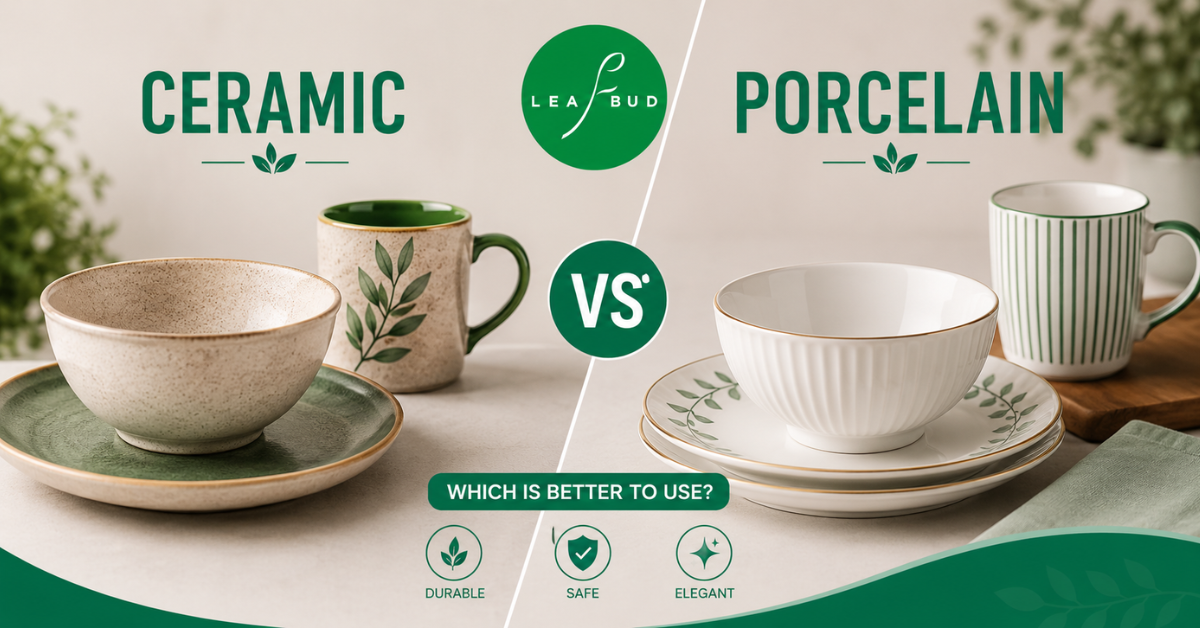
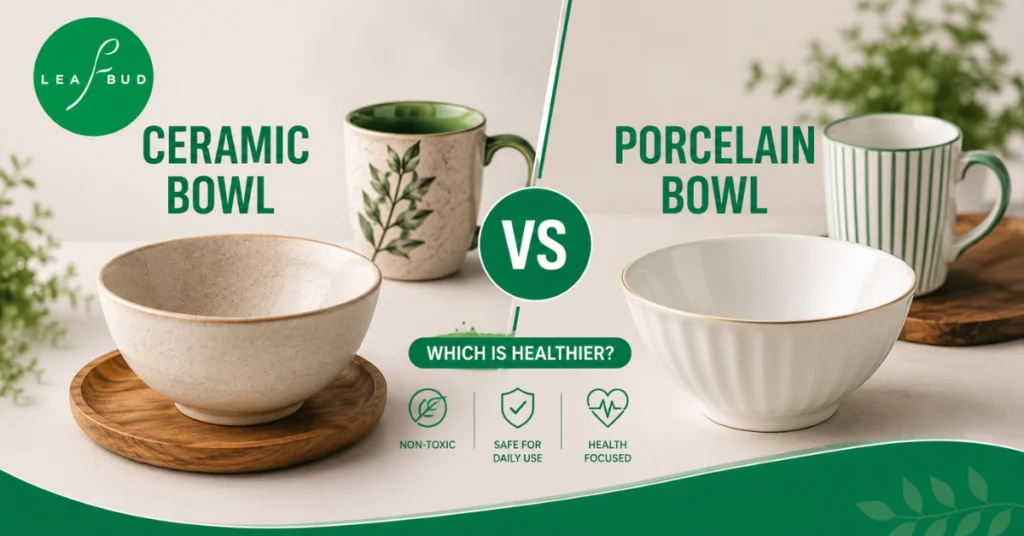
Buying a new crockery set sounds simple until you actually stand in front of the shelf. Ceramic and porcelain both look elegant, both promise durability, and both come in every price range you can imagine. So how do you actually choose between them?
The truth is, Ceramic Vs Porcelain Crockery is not a question with one right answer. It depends on how you cook, how often you host, and whether you want your bowls to survive a toddler’s dinner table or shine at a Diwali get-together. Let’s break this down so you can pick what actually works for your home.
Ceramic and Porcelain Are Not Two Different Things
Here is something that surprises a lot of people. Porcelain is technically a type of ceramic. The word “ceramic” covers a whole family of clay-based materials fired in a kiln, and porcelain sits at the refined end of that family, made from purer clay and fired at far higher temperatures, according to Lenox Corporation’s dinnerware guide.
So when people compare ceramic vs porcelain, they usually mean everyday stoneware or earthenware ceramic against fine, high-fired porcelain. That distinction matters because it explains why porcelain feels smoother, looks whiter, and often costs more.
How They’re Made: The Firing Temperature Difference
The manufacturing process is where the real difference begins.
- Ceramic (stoneware/earthenware): Made from coarser clay, fired at lower temperatures, generally between 1,000°C and 1,200°C.
- Porcelain: Made from fine kaolin clay mixed with feldspar and silica, fired at much higher temperatures, often above 1,300°C, which fuses the material into a dense, glass-like body.
This higher firing point is what gives porcelain its low porosity and glassy finish, a process explained in detail by 28 Ceramics in its comparison of porcelain and ceramic dinnerware. Ceramic, fired at a lower heat, stays slightly more porous and keeps a thicker, more rustic feel.
Durability: Which One Actually Holds Up Better?
If you want a short answer for daily use, here it is:
- Porcelain resists chipping and cracking better because of its dense, vitrified structure.
- Ceramic (especially stoneware) is thicker and sturdier in hand, which some households find reassuring for daily use, as noted by Malacasa’s guide on porcelain vs ceramic dinnerware.
- Porcelain handles quick temperature changes better, so it holds up well when food goes straight from the fridge to a hot oven or microwave.
- Ceramic can crack under sudden thermal shock, particularly thinner, low-fired pieces.
So if you’re the sort of household that reheats leftovers straight in the dish or bakes casseroles often, porcelain gives you more peace of mind. If your bowls mostly serve dal, rice, and curd at room temperature, ceramic holds up just fine.
Everyday Use: Microwave, Oven, and Dishwasher
Both materials generally work across modern kitchen appliances, but with a few caveats worth knowing:
- Plain porcelain and stoneware, without metallic trim, are usually microwave and dishwasher safe.
- Ceramic can sometimes heat unevenly in the microwave compared to porcelain’s more consistent heat distribution.
- Overcrowding the dishwasher or using harsh detergents wears down glazes faster on both materials, so gentle cycles are always the safer bet.
- Hand-painted or gold-rimmed pieces, ceramic or porcelain, should stay out of the microwave altogether.
Look and Feel: Rustic Charm Vs Refined Elegance
This is where personal taste takes over from technical specs.
Porcelain has a smooth, glossy, sometimes translucent finish. Hold a thin porcelain cup up to the light and you’ll notice it glows slightly, a quality tied directly to its dense, high-fired body. It photographs beautifully on a dining table and instantly makes a meal look more put together.
Ceramic carries a warmer, handmade character. Because it’s often made in small batches with visible texture, glaze variation, and earthy tones, no two ceramic bowls look exactly alike. That’s not a flaw. For many people, it’s the entire appeal.
If you enjoy setting a table for guests with pieces that feel curated rather than uniform, ceramic wins on personality. If you want a polished, formal look for special dinners, porcelain edges ahead.
Price and Value for Indian Kitchens
Ceramic dinnerware is generally more budget-friendly, since it uses simpler materials and lower firing costs. Porcelain tends to cost more upfront because of its finer clay and higher-temperature manufacturing process, though many households find the extra durability justifies the price over years of use, as pointed out in a comparison by RZBest Ceramics.
For a typical Indian kitchen that goes through daily rotis, sabzi, dal, and chai, a mix often works best:
- Everyday ceramic bowls and plates for regular meals, snacks, and kids’ dinnerware.
- A porcelain or fine ceramic set kept aside for guests, festive occasions, or gifting.
Ceramic Vs Porcelain Crockery: Quick Comparison Table
| Factor | Ceramic | Porcelain |
| Firing temperature | 1,000°C–1,200°C | 1,280°C–1,400°C |
| Porosity | Higher, more absorbent | Very low, almost non-porous |
| Chip resistance | Moderate | High |
| Look | Rustic, handcrafted, earthy | Smooth, glossy, refined |
| Best for | Daily meals, casual dining | Formal dining, gifting |
| Price | Generally more affordable | Generally higher |
| Microwave/dishwasher | Usually safe, may heat unevenly | Usually safe, consistent heating |
Which Should You Actually Buy?
There isn’t a single winner here, only a better fit for how you live.
Go for ceramic if you want handcrafted characters on your table, prefer a warmer and more rustic aesthetic, and are looking for something budget-friendly for daily family meals.
Go for porcelain if you host often, want a refined finish for formal dinners, or need dinnerware that resists chipping and staining over years of heavy rotation.
Many households, honestly, end up with both. Sturdy ceramic bowls for daily dal and rice, and a set of porcelain or fine ceramic pieces that come out when guests arrive.
At Leafbud, the focus stays on the ceramic side of this comparison, with wheel-thrown, hand-glazed pieces made by independent Indian artisans in small batches. If you like the idea of serveware with texture and individuality rather than factory uniformity, browsing through Leafbud’s collection of bowls, plates, and serving sets gives a good sense of what handcrafted ceramic looks like on a real dining table.
Frequently Asked Questions
Is porcelain crockery better than ceramic for daily use?
Not necessarily. Porcelain resists chipping and staining better, but well-made ceramic stoneware is thick and sturdy enough for daily meals. Ceramic is often more budget-friendly, which makes it a practical choice for everyday family dining.
Can ceramic and porcelain both go in the microwave?
Yes, as long as the piece has no metallic trim like gold or silver rims. Porcelain tends to heat more evenly due to its dense body, while some ceramic pieces may heat slightly unevenly depending on thickness.
Why is porcelain more expensive than ceramic?
Porcelain uses finer, purer clay and requires much higher firing temperatures, which increases manufacturing cost and time. Ceramic uses simpler materials and lower firing temperatures, keeping production costs and retail prices lower.
Does ceramic crockery break more easily than porcelain?
Ceramic can be more prone to chipping than porcelain, especially thinner or low-fired pieces. However, stoneware, a sturdier type of ceramic, holds up well for daily use and often feels more solid in hand than delicate porcelain.
Which one should I choose for gifting?
Porcelain generally has a more polished, formal look that suits gifting for weddings or housewarmings. That said, handcrafted ceramic pieces with unique glazes and artisan stories often feel more personal and memorable as gifts.
Shop Ceramic Bowls