Chat with us
FREE Leafbud Umbrella on Prepaid Orders Above INR 4,500/-
FREE Leafbud Umbrella on Prepaid Orders Above INR 4,500/-
FREE Leafbud Umbrella on Prepaid Orders Above INR 4,500/-
FREE Leafbud Umbrella on Prepaid Orders Above INR 4,500/-
FREE Leafbud Umbrella on Prepaid Orders Above INR 4,500/-
FREE Leafbud Umbrella on Prepaid Orders Above INR 4,500/-
FREE Leafbud Umbrella on Prepaid Orders Above INR 4,500/-
FREE Leafbud Umbrella on Prepaid Orders Above INR 4,500/-



Ceramic Bowl Vs Porcelain: Which Is Healthier

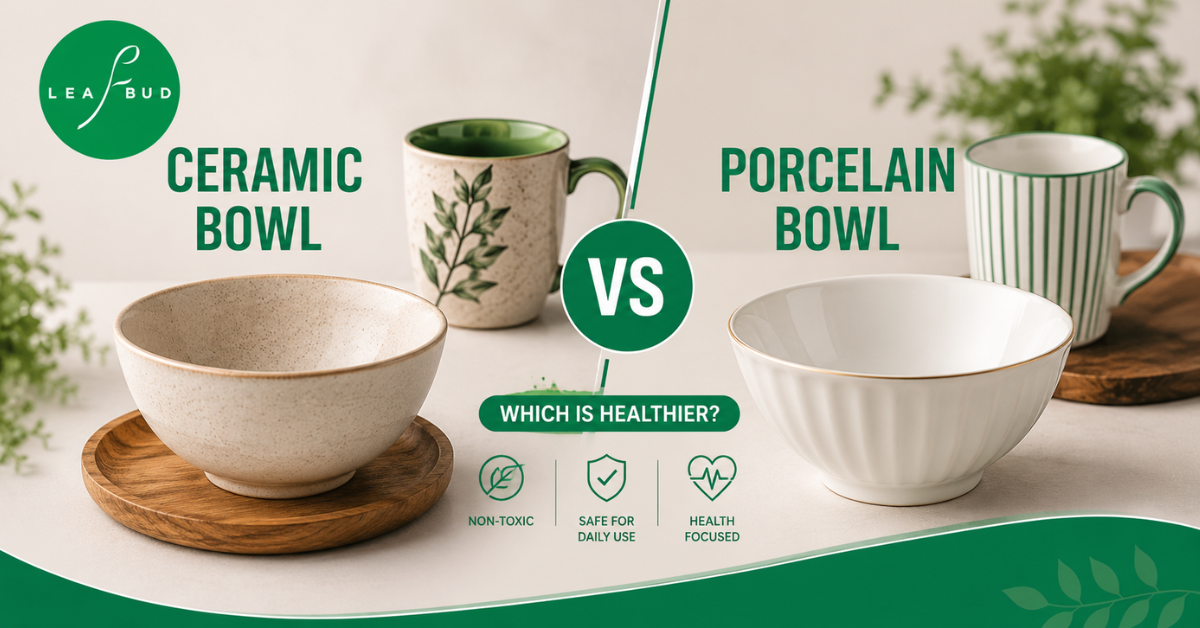
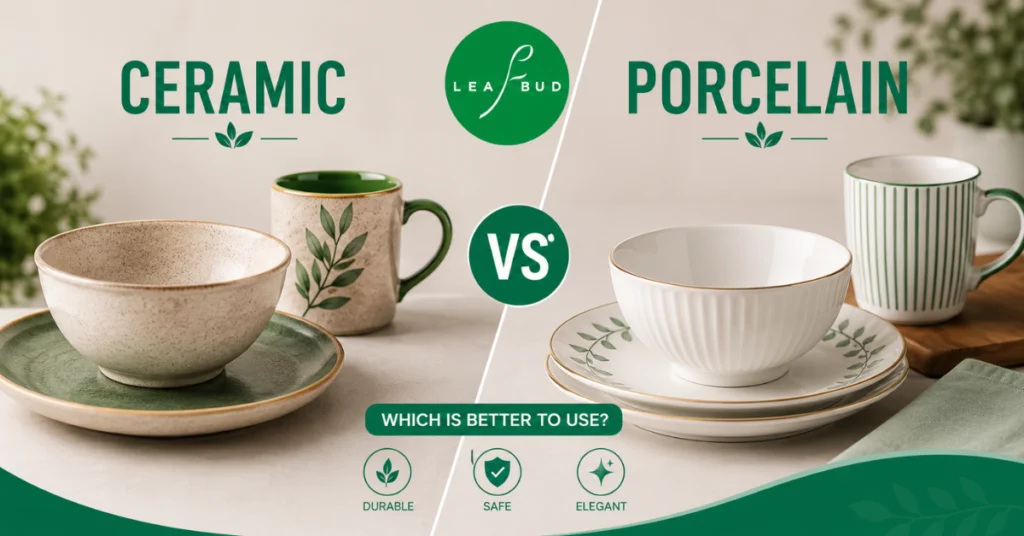
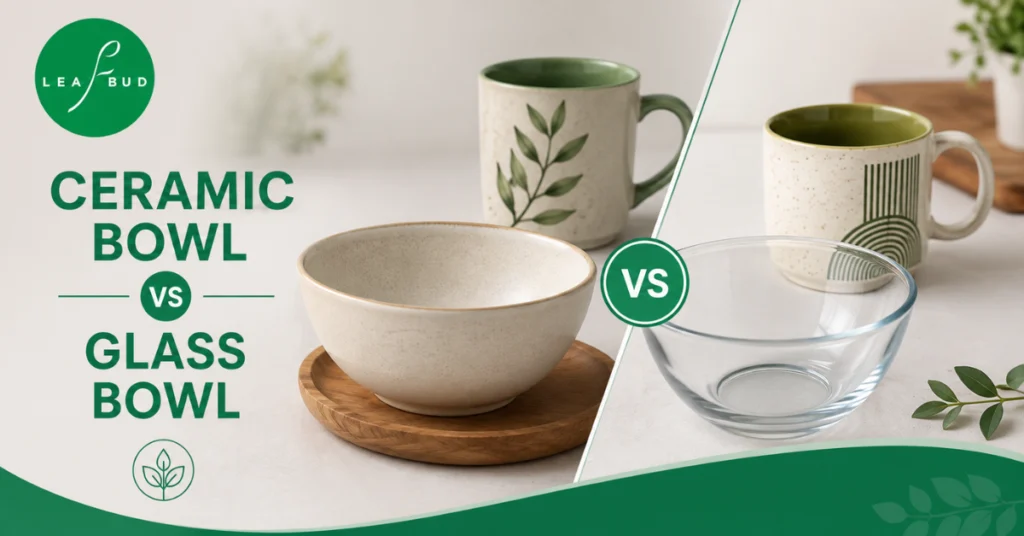
If you have stood in front of a crockery shelf wondering whether to pick up a ceramic bowl or a porcelain one, you are not alone. Both look similar on the surface, both go through a kiln, and both end up on Indian dining tables every day. But when it comes to health, the differences are not just about looks or price. They come down to the clay, the firing temperature, and most importantly, the glaze.
This guide breaks down the Ceramic Bowl Vs Porcelain question in plain terms, so you can pick what actually suits your kitchen and your family’s health, not just what looks good on Instagram.
What Makes Ceramic and Porcelain Different in the First Place
Both ceramic and porcelain start their life as clay. The real difference shows up during firing.
Ceramic bowls are usually made from a mix of clay fired at lower temperatures, roughly between 1,000°C and 1,200°C. Porcelain, on the other hand, is made from a finer, purer clay (often kaolin) combined with feldspar and silica, then fired at much higher temperatures, sometimes crossing 1,300°C. This intense heat causes vitrification, a process where the clay particles fuse tightly and form a dense, glass-like structure with almost no air pockets, according to a comparison published by Ceramic vs Porcelain: What’s the Difference? on Fluent Trends.
Here is why that matters for your kitchen:
- Porosity: Porcelain typically absorbs less than 0.5% water, while ordinary ceramic can absorb anywhere from 3% to 13%, as detailed by Vitrification, a technical resource from Holst Porcelain.
- Density: Porcelain’s tighter structure makes it heavier for its size and less likely to trap liquid or bacteria inside tiny surface pores.
- Strength: The higher firing temperature gives porcelain better resistance to chipping and cracking under daily use.
So on paper, porcelain sounds like the clear winner. But the health story is not that simple.
The Real Health Question: It’s the Glaze, Not the Clay
Here is something most people get wrong. The clay body itself, whether ceramic or porcelain, is not what puts your health at risk. A study on porcelain safety notes that a well-fired porcelain body is chemically stable and has never been the documented source of lead contamination in food safety cases, according to Is Porcelain Lead Free? Porcelain Lead Status Explained by SafeKitchn.
The actual concern is the glaze on top. Glazes give bowls their shine, colour, and smooth finish. For decades, manufacturers used lead and cadmium compounds in glazes because they lowered the melting point and produced bright, glossy colours, especially reds, oranges, and yellows. These heavy metals can leach into food when the dish comes in contact with something acidic, like curd, tomato-based curry, or lemon pickle.
Let’s break it down further:
- Low-fired glazes are more likely to leach heavy metals because the glaze surface does not seal as tightly.
- High-fired glazes, common on genuine porcelain, form a more stable glass layer that locks metals in place, according to a resource on FDA ceramic safety standards from Vancasso Tableware.
- Bright, decorative colours near the rim or inside the bowl carry a higher risk if the manufacturer used older, unregulated pigment formulas.
- Certification matters more than the clay type. A properly tested, lead-free earthenware bowl can be safer than an untested porcelain piece with poor quality decoration.
This means an uncertified, brightly painted porcelain bowl from an unknown seller can actually be riskier than a certified, well-fired stoneware bowl from a trusted maker.
What the Safety Standards Actually Say
You do not need to become a chemist to check this. A few regulatory bodies already do the heavy lifting.
- India: The Bureau of Indian Standards has laid out permissible limits for lead and cadmium release from ceramic and porcelain crockery under IS 9806 and IS 3505, which align with international testing norms for ceramicware in contact with food.
- United States: The FDA issues Compliance Policy Guides, including CPG Sec. 545.450 for lead and CPG Sec. 545.400 for cadmium, which set the maximum permissible leach levels for pottery and dinnerware sold or imported into the country, as outlined by Mayco Colors in its guide on dinnerware and food safety.
- International: ISO 6486 is the global test method used to measure how much lead and cadmium actually migrates out of a glazed surface into a food simulant, referenced by the ANSI Blog’s overview of ISO 6486-1:2019.
A dish can carry a “food safe” label and still release trace amounts of lead, since the label only confirms the levels are below the legal threshold, not that they are zero. So when you are shopping, look past the label and check whether the brand shares actual lab test results.
Ceramic Bowl Vs Porcelain: Quick Comparison
| Factor | Ceramic Bowl | Porcelain |
| Firing temperature | 1,000°C to 1,200°C | 1,280°C to 1,400°C |
| Water absorption | 3% to 13% | Under 0.5% |
| Chip resistance | Moderate | High |
| Weight | Lighter, often rustic | Denser, heavier feel |
| Health risk driver | Glaze quality, not clay | Glaze quality, not clay |
| Everyday Indian kitchen use | Curd, dal, rice, snacks | Fine dining, gifting, formal table settings |
Practical Tips to Pick a Healthier Bowl
Whether you lean toward ceramic or porcelain, a few checks go a long way in keeping your kitchen safe:
- Ask the seller if the glaze has been tested against ISO 6486 or BIS norms for lead and cadmium release.
- Avoid old, chipped, or scratched glazed bowls, since damage exposes the raw clay body underneath and gives liquids a way in.
- Be cautious with very bright reds, oranges, and yellows on vintage or unbranded imported pieces, since these colours historically relied on heavy metal pigments.
- Choose handmade pieces from artisans who work with known clay sources and controlled firing, rather than unmarked bulk imports with no traceability.
- Hand wash decorative or hand-painted bowls instead of running them through a dishwasher repeatedly, since harsh detergents can wear down the glaze faster over years of use.
At Leafbud, every ceramic piece is wheel-thrown and hand-glazed by independent Indian artisans, fired in small batches rather than mass-produced lines. If you are building a kitchen shelf that leans toward earthy, handcrafted serveware rather than factory porcelain, browsing through Leafbud’s collection of curd bowls, wok bowls, and serving bowls gives you a sense of how traditional, small-batch ceramics look and feel on an everyday Indian dining table.
So, Which One Should You Choose?
If your priority is stain resistance, a sleek finish, and a piece that survives years of daily acidic Indian cooking with barely a scratch, porcelain generally has the edge because of its lower porosity and stronger structure.
If you prefer the warmth of handmade pottery, slight variations in texture, and an earthy character on your table, a well-glazed ceramic bowl works just as well, as long as it comes from a maker who tests and controls the glaze properly.
Neither material is inherently unsafe. The real decision point is whether the glaze has been made and tested responsibly, not whether the box says ceramic or porcelain.
Frequently Asked Questions
Is porcelain always safer than ceramic bowls?
Not automatically. Porcelain is less porous and more durable due to higher firing temperatures, but safety depends mainly on the glaze. A certified, lead-free ceramic bowl can be just as safe as porcelain if it passes standard lead and cadmium leach tests.
Can ceramic bowls leach lead into food?
Older or uncertified ceramic bowls with low-fired, brightly coloured glazes can leach small amounts of lead, especially with acidic foods like curd or tomato curry. Certified, lead-free glazed bowls from tested manufacturers do not pose this risk.
How do I know if my bowl is food safe?
Check for BIS marking in India, or FDA and ISO 6486 compliance for imported pieces. Ask the seller for lab test reports on lead and cadmium release rather than relying only on a “food safe” sticker.
Why do some ceramic bowls stain over time while porcelain does not?
Ceramic has higher porosity, so liquids like turmeric, oil, or tea can seep into tiny surface pores once the glaze wears down. Porcelain’s dense, vitrified body absorbs almost no water, which keeps stains from setting in as easily.
Is handmade pottery less safe than factory-made porcelain?
Not inherently. Handmade pottery from artisans who control their clay sourcing and firing can be just as safe as factory porcelain, provided the glaze is tested and lead-free. The safety comes from the process and testing, not from whether it is handmade or machine-made.
Shop Ceramic Bowls