Chat with us
FREE Leafbud Umbrella on Prepaid Orders Above INR 4,500/-
FREE Leafbud Umbrella on Prepaid Orders Above INR 4,500/-
FREE Leafbud Umbrella on Prepaid Orders Above INR 4,500/-
FREE Leafbud Umbrella on Prepaid Orders Above INR 4,500/-
FREE Leafbud Umbrella on Prepaid Orders Above INR 4,500/-
FREE Leafbud Umbrella on Prepaid Orders Above INR 4,500/-
FREE Leafbud Umbrella on Prepaid Orders Above INR 4,500/-
FREE Leafbud Umbrella on Prepaid Orders Above INR 4,500/-



Ceramic Bowl Vs Stainless Steel: Which Is More Useful

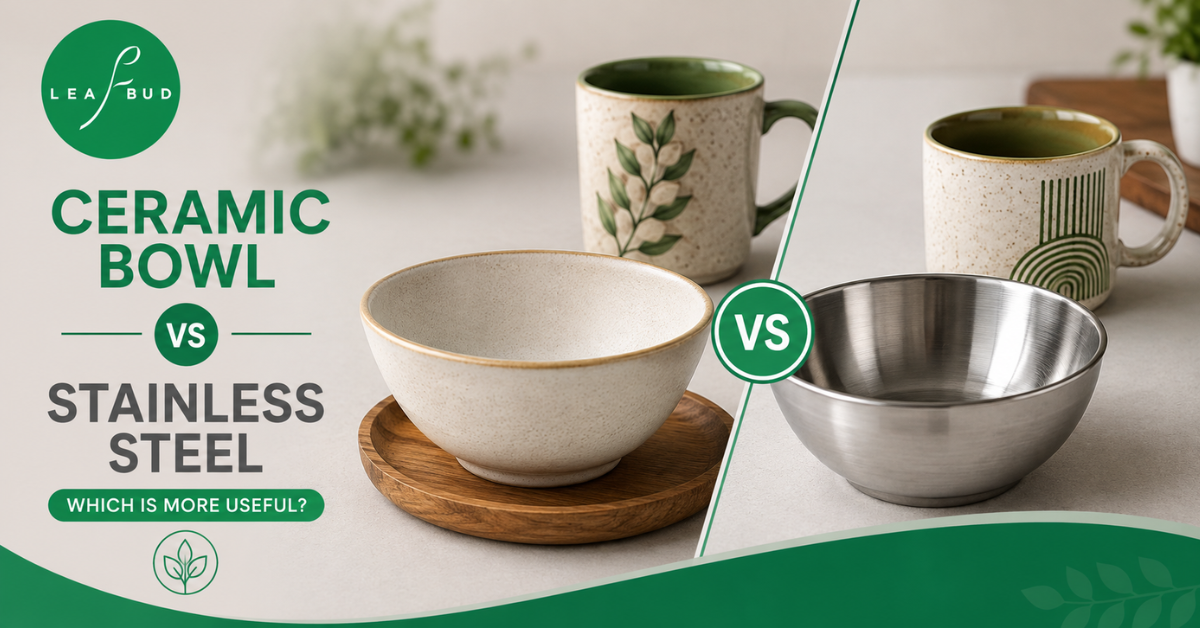
Every Indian kitchen ends up with a mix of both, steel bowls stacked high for daily use, and a few ceramic ones kept aside for when guests come over or the table needs to look a little special. But if you had to actually pick one over the other, which one comes out ahead? Let’s look at the ceramic bowl vs stainless steel question honestly, without picking sides just for the sake of it.
The Basic Difference
Ceramic bowls are made from clay, shaped and fired at high heat until they turn hard and, once glazed, non-porous. This gives them a warm, earthy character that steel simply cannot copy.
Stainless steel bowls are metal, an alloy built for strength, rust resistance, and years of rough handling. They are the workhorse of most Indian kitchens, used for everything from kneading dough to storing leftover sabzi.
Both have earned their place at home. The real question is which one suits which job.
Durability: Where Steel Has a Clear Edge
If durability is your main concern, stainless steel wins without much debate. The average ceramic mug in a home kitchen lasts around three to five years, while stainless steel pieces can easily last for decades with normal use. Steel simply does not chip, crack, or shatter the way ceramic can.
Metal bowls are built to handle daily wear without showing signs of damage, and they won’t shatter even if dropped or knocked around in a busy kitchen. This makes stainless steel the safer, more practical pick for high traffic areas, especially homes with young kids or a lot of daily cooking.
Ceramic, by comparison, needs a bit more care. Chipping, cracking, or breaking after a fall is the main drawback of ceramic dinnerware, so it is not the best fit for rough, everyday handling, particularly outside the home.
Heat Retention: Where Ceramic Pulls Ahead
Here is where ceramic actually beats steel, and it is a genuine practical advantage. A ceramic bowl can hold food at a safe, warm serving temperature for nearly twice as long as a stainless steel bowl of the same size. If you like your dal or curry to stay warm through a slow family dinner, ceramic does that job far better.
Steel, being a strong conductor, loses heat quickly and can also get uncomfortably hot to hold right after serving something piping hot. Ceramic stays pleasant to hold and keeps food at a nicer temperature for longer, which matters more than people realise at the dinner table.
Weight and Everyday Handling
This is a genuine trade off. A ceramic plate of a given size can weigh nearly double a stainless steel plate of the same dimensions, which makes ceramic a little less convenient for children, elderly family members, or anyone juggling multiple dishes at once.
Steel bowls are light, stack easily, and are simple to carry around the kitchen, especially useful during large family meals or gatherings where a lot of serving happens quickly.
Hygiene and Everyday Cleaning
Both materials clean up well, but steel has a slight edge here too. Stainless steel reduces bacterial buildup by a large margin compared to untreated ceramic surfaces, mainly because it has no glaze or surface pores to worry about. A well-glazed ceramic bowl closes this gap significantly, but any chips or cracks in the glaze can become spots where bacteria linger over time.
For everyday cleaning:
- Stainless steel: dishwasher safe, doesn’t stain, resists odours well
- Ceramic: dishwasher safe in most cases, but check the glaze quality, and handle with a bit more care to avoid chips
Cost and Long-Term Value
Steel usually wins on pure longevity for the money. A good stainless steel bowl bought today can genuinely last a couple of decades without needing replacement. Ceramic pieces, while often more affordable individually, may need replacing sooner if they see rough daily handling.
That said, ceramic dinnerware is rarely bought purely for utility. Many households treat it as an investment in how the table looks and feels, which is a different kind of value altogether.
Aesthetic and Table Appeal
This is where ceramic takes a clear lead. Ceramic bowls bring vibrant colours and intricate designs that most metal bowls simply cannot offer, since stainless steel tableware mostly comes in silver-gray finishes with limited decorative options.
For everyday cooking and storage, steel’s plain look is not a problem at all. But for a dinner table, festive spread, or gifting occasion, ceramic brings a personality and warmth that steel struggles to match.
Environmental Considerations
Stainless steel is fully recyclable and can be recycled repeatedly without any loss in quality, while ceramic recycling is comparatively more complex and less efficient. Families who prioritise long-term sustainability in their kitchenware often lean toward steel for this reason, though a well-made ceramic piece that lasts for years and stays in daily use also has a fair sustainability story of its own.
So, Which One Is More Useful?
It genuinely depends on where and how you are using the bowl.
- Choose stainless steel for daily cooking, mixing, storage, travel, and any situation where durability and light weight matter most.
- Choose ceramic for serving at the table, festive meals, and gifting, where heat retention, warmth, and design matter more than raw toughness.
Most Indian households end up using both for exactly these reasons, steel doing the heavy lifting in the kitchen, and ceramic bringing character to the dining table. That combination usually works better than picking just one.
At Leafbud, our focus stays on handcrafted ceramic bowls made for everyday serving and festive dining, pieces meant to bring warmth to your table rather than compete with steel on rough kitchen duty. If you are building your dinnerware collection, browsing the Leafbud range of bowls is a good place to see the kind of glaze quality and design variety ceramic can offer. Do check the specific care instructions on the Leafbud website for each collection before daily use.
Frequently Asked Questions
1. Is ceramic or stainless steel better for everyday use at home?
Stainless steel is generally more practical for daily cooking and handling since it resists chipping and breakage. Ceramic is better suited for serving meals and festive occasions where table appeal matters more.
2. Does ceramic keep food warmer than steel?
Yes, ceramic retains heat noticeably longer than stainless steel of the same size. This makes it a better choice for serving dishes you want to stay warm through a longer meal.
3. Which is safer around children, ceramic or steel bowls?
Stainless steel is generally safer since it does not shatter or chip if dropped. Ceramic can break or chip on impact, so it needs more careful handling around young children.
4. Is stainless steel more hygienic than ceramic?
Stainless steel has a slight edge since it has no glaze or pores to trap bacteria. Well-glazed ceramic is still quite hygienic, though chips in the glaze can become a concern over time.
5. Which one is better for gifting, ceramic or steel bowls?
Ceramic is usually the better gifting choice due to its design variety, colours, and handcrafted appeal. Steel is more functional and rarely chosen for gifting or festive table settings.
Shop Ceramic Bowls