Chat with us
FREE Leafbud Umbrella on Prepaid Orders Above INR 4,500/-
FREE Leafbud Umbrella on Prepaid Orders Above INR 4,500/-
FREE Leafbud Umbrella on Prepaid Orders Above INR 4,500/-
FREE Leafbud Umbrella on Prepaid Orders Above INR 4,500/-
FREE Leafbud Umbrella on Prepaid Orders Above INR 4,500/-
FREE Leafbud Umbrella on Prepaid Orders Above INR 4,500/-
FREE Leafbud Umbrella on Prepaid Orders Above INR 4,500/-
FREE Leafbud Umbrella on Prepaid Orders Above INR 4,500/-



Are Ceramic Plates Better Than Titanium?

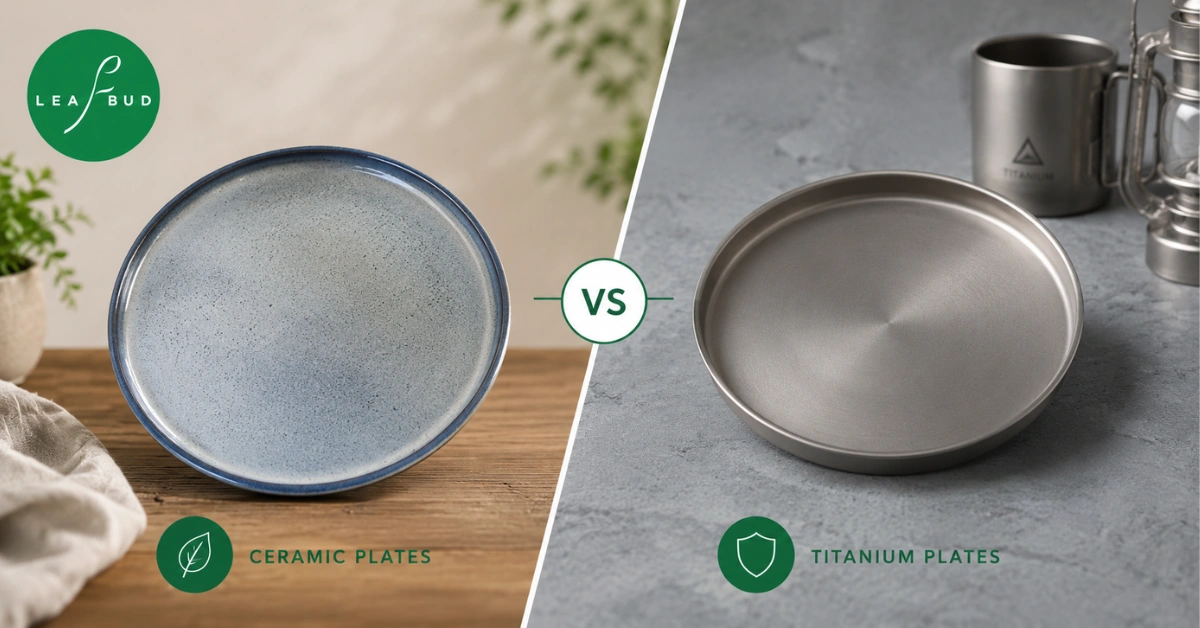
If you’ve done any online dinnerware shopping, you’ve probably come across this question at some point. Ceramic plates vs titanium is a hot topic, especially with the increase of “unbreakable” outdoor gear and minimalist kitchen trends. So who wins? Let’s get into it right, without the marketing fluff.
Each of these materials has its passionate proponents. Ceramics have been a part of Indian dining tables for generations. Titanium is the latest newcomer, originally developed for camping and trekking gear but now being introduced to the home kitchen. But they’re for very different things, and if you know why, the choice is much easier.
What Makes Ceramic and Titanium Plates So Different
Ceramic plates are made from natural clay that is shaped and then fired at very high temperatures. This firing process makes them hard, gives them their glossy finish, and provides a solid feel when you tap them with a spoon. Most ceramic dinnerware is also glazed on the top to add colour, pattern, and a smoother surface.
But titanium plates are metal. They are usually manufactured from titanium alloys with an excellent strength-to-weight ratio, usually medical-grade titanium alloys that combine raw titanium with aluminium and vanadium, with an ultimate tensile strength around 900 MPa. That’s the kind of stuff used in surgical implants and aerospace components, which tells you a lot about why it does so well under stress.
Here’s why this matters in your kitchen. One is a fired earth material, made for warmth and design. The other is a metal that is engineered for strength and portability. Neither is “bad”. “They’re just for different jobs.
Weight and Portability
If you’re judging the two on a scale, titanium wins hands down. A titanium plate is a featherweight compared to its ceramic equivalent, and that is precisely why trekkers and campers choose it. You can carry a whole set of titanium plates in a backpack and hardly feel them.
Ceramic plates have real weight, literally. That heft is not a bug, however. That’s part of what gives a ceramic plate its grounded, premium feel on your dining table. No one wants their dinner setting to be flimsy.
Quick comparison.
- Titanium is light enough for hiking bags and your daily carry.
- Ceramic: heavier, but the weight makes for a premium, steady feel at home
Heat Retention: Where Ceramic Plates Have the Edge
This is one of the largest practical differences, and this is where ceramic plates really excel. Ceramic has a relatively high specific heat, so it keeps hot dishes, soups, and pasta hotter at the table, holding heat longer. Ceramic is your friend if you like to take your time over a meal and don’t want your food going cold in ten minutes.
Titanium is the other way around. It has low specific heat, so it dissipates warmth quickly. This is actually a good thing outdoors, as it cools fast enough not to burn you. But at home, this also means your food gets cold faster, which is not ideal if you like a slow, relaxed dinner.
Durability and Drop Resistance
Now for the bit that titanium fans always mention first. Drop a titanium plate from waist height onto tile, and it will be fine, but a ceramic plate is much more likely to crack or shatter in the same situation. This is a real consideration if you have young kids in the house or if plates tend to slip from hands during a busy dinner.
That said, good-quality ceramic dinnerware isn’t fragile like cheap crockery. Well-fired stoneware and porcelain can take the normal bumps of daily use. The only things that tend to cause trouble are harder drops, tile floors, and sudden temperature shocks. Ceramic can also be sensitive to thermal shock, like running cold water over a hot plate straight out of the oven, so a little care goes a long way.
Scratches and Everyday Wear
Here’s one thing people often miss. Regular use with metal cutlery won’t harm titanium, but the same forks and knives can scratch a ceramic glaze over time. Titanium offers decades of use with no visible wear. Some fine surface marks may appear with ceramic after years of daily use, but most owners hardly notice them under normal glaze finishes.
Interestingly, this “ageing” isn’t necessarily a bad thing. In fact, many passionate collectors of handcrafted ceramic pieces enjoy the nuanced character that develops over the years. It brings a little bit of story to each plate, something a uniform metal surface just can’t.
Safety and Food Contact
Both are considered safe for everyday consumption when they come from a reliable source. Titanium is chemically inert and will not react with food, which is why it is so often used in medical and outdoor equipment. They will fire the ceramic properly and glaze the ceramic, which is equally safe and will not leach anything into your meal. A quality manufacturer.
The only thing you need to watch for in ceramic dinnerware is the quality of the glaze, especially if it’s really cheap or unbranded. A good glaze from a reliable maker will be no problem. That’s one reason it pays to buy from brands that are transparent about their craft and sourcing rather than anonymous marketplace listings.
Aesthetic and Design Options
This is where ceramic plates actually get ahead, and it’s not even close. The titanium plates are mostly finished in plain metallic. Functional, yes, but not something you would serve at a dinner party or festive meal.
Ceramic: a world of design at your disposal. Hand-painted patterns, textured glazes, earthy tones, and artisanal finishes that give a table real character. Between the two, ceramic is truly the only option if you like to set a table that feels personal rather than purely functional.
Price and Value
Titanium plates are more expensive at first because of the material and manufacturing process involved. These are a one-time buy for people who want gear that will last for years with not much thinking.
You’ll find ceramic plates at many price points, from everyday stoneware to high-end handcrafted pieces. This means you can create a complete dining collection, mix and match designs, and replace or add pieces over time without a hefty one-off cost.
Environmental Impact
Sustainability is another reason why many people like ceramics. It is made from natural clay and fired in traditional ways. If you find artisans who use local materials and small-batch production, this is even better. Titanium production is generally a heavier industrial process, as it is a metal extraction and alloying process. But the final product is more durable, so there are fewer replacements over a lifetime.
So, Are Ceramic Plates Better Than Titanium?
Honestly, it depends on what you plan to use them for. If you’re packing for a trek or need something that can withstand any drop, titanium plates are the practical choice. However, for normal home dining where warmth, design, and the pleasure of a well-set table are important, ceramic plates are hard to beat.
This is really the core of the ceramic plates vs titanium debate. One is made for the trail, the other for the table. If your main goal is everyday dishes that feel warm, personal, and beautifully finished, ceramic plates do that job better than titanium. We are exactly in that space at Leafbud, handmade ceramic serveware for everyday meals and real Indian homes, not survival kits for outdoors.
If you’re browsing, Leafbud’s collection of meal plates and side plates will give you a good idea of what quality handcrafted ceramic actually looks and feels like. Just a quick browse through some of the pieces on the Leafbud website is an easy way to see the difference glaze quality and craftsmanship make.
Frequently Asked Questions
1. Are ceramic plates safer than titanium plates for daily use?
Bn Both are safe if they are from a good manufacturer. Ceramic needs a good quality glaze that is fired well. Titanium is naturally non-reactive. Neither is a real safety issue for everyday home dining.
2. Do titanium plates break easily like ceramic ones?
No, titanium plates are much more resistant to drops and impacts than ceramic. If you drop a ceramic on a hard floor, it might shatter or chip. Titanium would normally survive such an experience.
3. Which keeps food warmer, ceramic or titanium plates?
Ceramic wins here. It holds heat longer, so your food stays warmer on the table. Titanium also excels at losing heat quickly, which is great when you’re out and about, but not so great when you’re enjoying a relaxed meal at home.
4. Are ceramic plates a good gifting option?
Yes. The diversity in design and the artisanal appeal make handcrafted ceramic plates thoughtful gifts. Titanium plates are more utilitarian and are rarely found as giftware or festive tableware.
5. Can I use ceramic plates every day without worrying about scratches?
Yes, high-quality ceramic dinnerware is durable for everyday use. After years, it may have some minor surface wear. This is normal and does not affect safety or usability.
Shop Ceramic Plates