Chat with us
FREE Leafbud Umbrella on Prepaid Orders Above INR 4,500/-
FREE Leafbud Umbrella on Prepaid Orders Above INR 4,500/-
FREE Leafbud Umbrella on Prepaid Orders Above INR 4,500/-
FREE Leafbud Umbrella on Prepaid Orders Above INR 4,500/-
FREE Leafbud Umbrella on Prepaid Orders Above INR 4,500/-
FREE Leafbud Umbrella on Prepaid Orders Above INR 4,500/-
FREE Leafbud Umbrella on Prepaid Orders Above INR 4,500/-
FREE Leafbud Umbrella on Prepaid Orders Above INR 4,500/-



What Makes Ceramic Dinner Plates Different? A Complete Guide

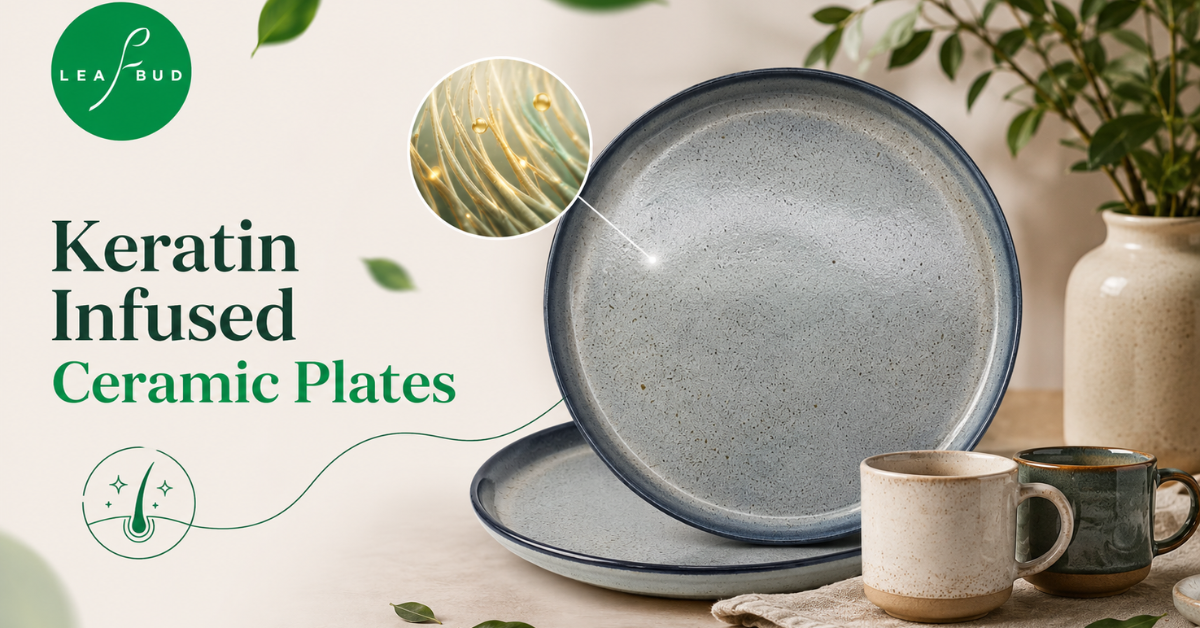
Walk into any Indian kitchen store, and you’ll find steel, melamine, bone china, and ceramic all on the same shelf. Ceramic dinner plates keep getting a place on dining tables anyway, and it’s not only about looks. The material itself behaves differently from steel or plastic when food, heat, and daily washing are involved.
Here’s how ceramic dinner plates are different from the rest, what to look for before buying a set, and how to keep them looking great for years.
What Are Ceramic Dinner Plates Made Of
Dinner plates made of ceramic begin as natural clay that is shaped on a potter’s wheel or in a mould and then fired at a high temperature until the clay hardens into a dense, stone-like material. Then a glaze is applied and fired again, which seals the surface and gives the plate its final colour, shine, or texture.
The two-step process of shaping and firing means that handmade ceramic plates can frequently have little dips, thumbprints, or slight unevenness around the rim. It is not a fault but a proof of a real hand and not a factory mould.
Why Choose Ceramic Over Steel, Melamine, or Bone China
Each material has its place, but ceramic sits at a sweet spot.
- Keeps hot food warm for longer than steel, as a ceramic plate retains heat well.
- They are neutral in taste and smell because a properly glazed surface will not react with food as some metals can over time.
- It holds colour and detail, allowing artisans to paint or glaze intricate patterns that steel simply cannot carry.
- It sits heavy on the table, not light, and a bit hollow like melamine.
- Biodegradable clay base, as opposed to melamine, which is a plastic resin.
The tradeoff, of course, is that ceramic is heavier and more breakable than steel or melamine. That’s rarely an issue for everyday family meals. Steel still wins out for very young children or a household that needs shatterproof plates.
What to Check Before Buying a Ceramic Plate Set
Glaze quality
Run a finger along the surface. A good glaze is smooth and even, without any rough or bare spots. Over repeated use, unglazed bare clay can absorb oils, stains, and odours.
Food safety of the glaze
And this is more important than most buyers realise. The FDA in the US sets specific limits on how much lead or cadmium a ceramic glaze can release into food and describes this as testing the glaze in its final, fired state against thresholds for lead and cadmium release. Good ceramic manufacturers test their glazes to standards like this and label their products as food-safe or lead-free, especially on brightly coloured or patterned plates where pigments are more likely to contain metal oxides.
Weight and thickness
A good plate is substantial without being too heavy. Go pick it up. If it feels thin and light for its size, then the clay body may not have been fired enough, which can affect durability.
Size for your use
Dinner or meal plates are usually 10 to 11 inches for main courses; side plates are about 6 to 8 inches for starters, bread or dessert. A mix of both covers most meal formats without cluttering your cabinet.
How to Care for Ceramic Dinner Plates
Cleaning ceramic plates is easy, and a few simple care habits can go a long way.
- If possible, hand-wash. Even a ceramic that’s dishwasher safe will last longer if you hand-wash it occasionally with a soft sponge.
- Avoid abrupt temperature shifts. Never place a plate straight from the freezer into a hot oven, or the glaze may crack from the shock.
- Carefully stack. When stacking plates, place a soft cloth or paper between them to avoid scratching the glaze.
- Check for chips often. Over time, moisture and bacteria can be trapped in the raw clay under a chipped edge.
- Keep in a dry cabinet. The unglazed foot rings under the plate can be affected by excess humidity over the years.
If you do these, a good ceramic plate will easily last for a decade or more of regular use.
Handmade Ceramic Plates vs Factory-Made
Mass production of ceramic plates is achieved by casting them in identical molds, firing them in bulk, and pricing accordingly. They’re all the same, but they’re uniform.
Our ceramic plates are handmade by a potter who creates each piece individually. Therefore, two plates made in the same batch will have slight differences in the pooling of the glaze, the shape of the rim, or the thickness. This idea is central to Leafbud’s collection of plates, which includes meal plates, side plates, and snack plates. Each one carries the visible mark of the artisan who made it, so what you are buying is not a plate but a small individual work of art.
If you’re not buying single loose pieces and are building a full table setting, Leafbud’s serving sets combine matching plates with bowls and platters, so the whole table looks coherent rather than like it was assembled from different sources.
Where to Buy Ceramic Dinner Plates in India
You can find ceramic plates everywhere, from your local pottery market to large home décor chains and increasingly online. Large retail brands are very good at delivering mass-produced consistency. If you prefer to buy plates from independent Indian artisans with real texture and individual character, that’s the space brands like Leafbud are built to fill, sourcing directly from potters and not large factory production lines.
Either way, the checklist is the same: check the glaze, confirm food safety, judge the weight in hand, and pick a size that actually matches how you eat.
FAQs
Are ceramic dinner plates safe for daily use?
Yes, if the glaze has been properly fired and tested for lead and cadmium release. Reputable manufacturers mark food-safe plates. Stay away from plates that have rough, unglazed areas or visible cracks, as these can harbour bacteria over time.
Can ceramic plates go in the microwave?
Most plain-glazed ceramic plates can be put in the microwave. Avoid plates with metallic paint, gold rims, or decorative metal trim, as they could spark or damage the microwave.
How do I know if a ceramic plate is handmade or machine-made?
Because they are handmade, plates will vary slightly in shape and glaze pooling/rim thickness from piece to piece, even in the same set. Moulded machine-made plates look identical and have no visible unevenness.
Do ceramic plates chip easily?
Ceramic is more likely to chip than steel or melamine, particularly at the edges. This risk can be greatly reduced with careful stacking and no sudden temperature changes over the years of regular use.
What’s the difference between ceramic and stoneware dinner plates?
Stoneware is a type of ceramic that is fired at a higher temperature, making it denser, more durable, and chip-resistant. Standard ceramic is more fragile but allows for more delicate glaze detail and lighter designs.
Shop Ceramic Plates