 Chat with us
FREE Leafbud Umbrella on Prepaid Orders Above INR 4,500/-
FREE Leafbud Umbrella on Prepaid Orders Above INR 4,500/-
FREE Leafbud Umbrella on Prepaid Orders Above INR 4,500/-
FREE Leafbud Umbrella on Prepaid Orders Above INR 4,500/-
FREE Leafbud Umbrella on Prepaid Orders Above INR 4,500/-
FREE Leafbud Umbrella on Prepaid Orders Above INR 4,500/-
FREE Leafbud Umbrella on Prepaid Orders Above INR 4,500/-
FREE Leafbud Umbrella on Prepaid Orders Above INR 4,500/-



Ceramic Planters for Indian Homes: Which Plants Work, and How to Water Without Drainage


A ceramic planter may catch your eye for its looks, but three weeks after planting, yellowing leaves and a sour-smelling soil can quickly change your mind.
Almost every time, the cause is water going in with nowhere to go. It is a solvable problem, and it does not mean giving up on ceramic pots.
The short answer
A ceramic planter without a drainage hole works fine if you do one of two things.
Keep the plant in its nursery pot and drop that inside the ceramic planter. Lift it out to water, let it drain in the sink, put it back. This is the cachepot method, and it is what most people with good-looking indoor plants are quietly doing.
Or plant directly, choose a plant that tolerates damp roots, and water by measured quantity instead of by feel.
The first is far more forgiving. If you are unsure, start there.
Which plants work
These tolerate moist soil and recover well from the occasional overwatering.
- Money plant (pothos) – the most forgiving houseplant in India, and it grows in plain water too
- Peace lily – actually likes damp soil, and droops when thirsty so it tells you when to water
- ZZ plant – stores water in its rhizomes and copes with irregular watering either way
- Syngonium and aglaonema – handle both moisture and low light, which suits flats with limited window access
- Snake plant – survives neglect, though it prefers to dry out between waterings
- Lucky bamboo – grows in water alone, so there is no drainage question at all
Keep out of an undrained pot: succulents and cacti, which rot from the base before you see anything on the surface. Also tulsi, mint, coriander and curry leaf. All of them need real drainage, so use the cachepot method if you want them in a ceramic pot.
How much water to give
Water by volume, not by instinct. This is the whole technique.
Give roughly a quarter to a third of the pot’s volume, then stop. A one-litre planter takes about 250 to 300 ml. Use a measuring cup for the first few weeks.
Then wait until the top two inches of soil are dry before watering again. Push a finger in and check every single time. In a pot without drainage, watering a day late costs nothing. Watering a day early accumulates.
One myth worth clearing up: a layer of pebbles at the bottom does not improve drainage. Water does not move easily from fine soil into coarse gravel, so the wet layer ends up sitting higher in the pot, not lower. What genuinely helps is a lighter mix. Add perlite or coco peat to regular potting soil so air can still reach the roots when the soil is damp.
The Leafbud planters
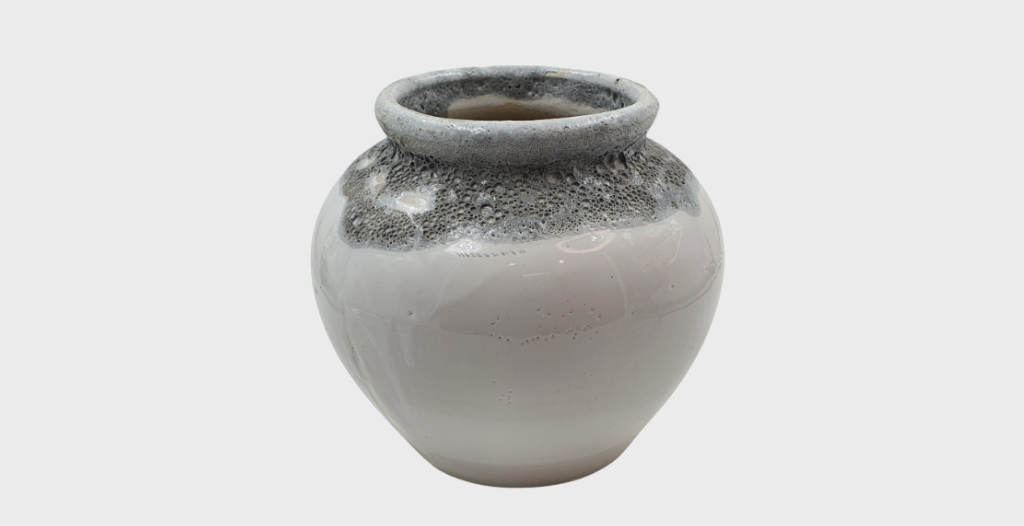
A classic tapered pot in grey. The shape is the most useful one here, because a standard plastic nursery pot drops straight into it. That makes it the easiest piece in the range to use as a cachepot. Good for a money plant, a syngonium or a small peace lily.
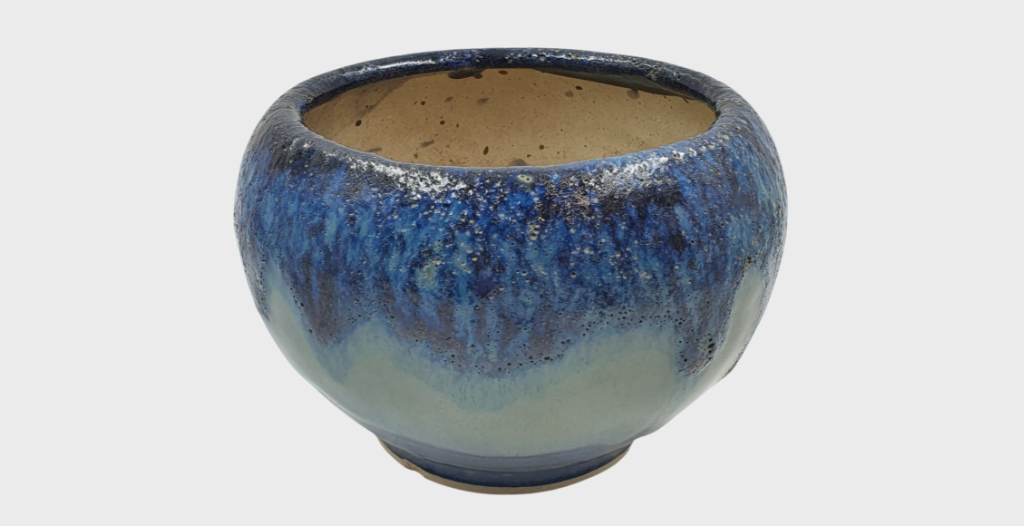
A wider, more open form in muted blue. The broad mouth suits plants that spread outward rather than upward, so aglaonema and spider plants sit well in it. The wider surface also means the top layer of soil dries faster, which helps in a pot without drainage.
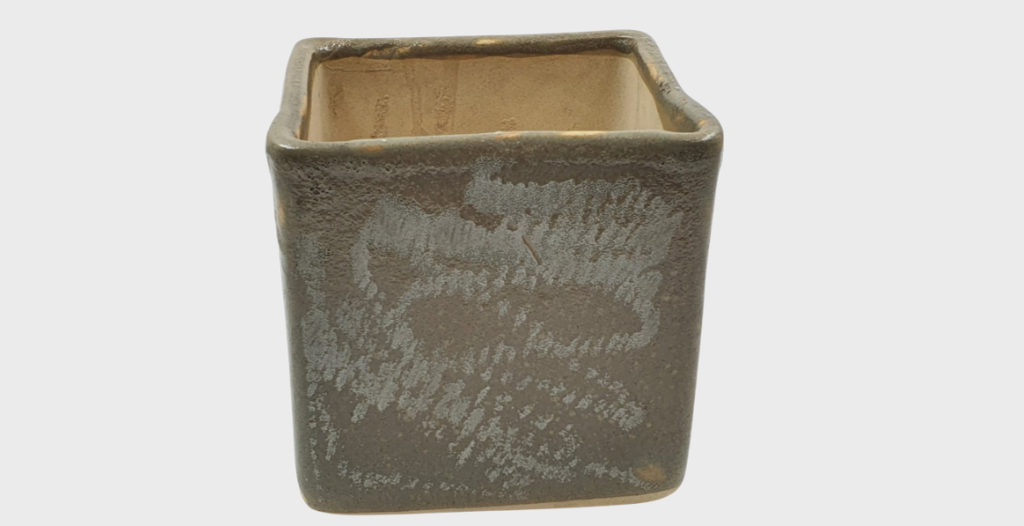
The smallest and least expensive piece, in brown, and part of the Gifts Under ₹500 range. Sized for a desk or windowsill rather than the floor. Because the soil volume is small, measure carefully here: 100 to 150 ml is usually plenty.
If you would rather grow in water than soil, a money plant cutting or lucky bamboo needs a watertight vessel rather than a planter. The Leafbud ceramic vases work well for this. Change the water every seven to ten days and keep it out of direct sun to slow algae.
Watering through the Indian year
Frequency is not a fixed schedule, and the swing between seasons here is large.
Summer. Soil dries fastest, so a small pot may need water every four or five days. Rooms with air conditioning running all day dry out quicker than the temperature suggests, because AC pulls humidity out of the air.
Monsoon. This is when most plants in undrained pots are lost. Humidity is high and evaporation slows sharply. Soil that took five days to dry in April can take two weeks in July. Halve your watering and check before every single one.
Winter. Growth slows and water use drops. A north Indian home in December may need to water only every ten to fourteen days.
The plant is not on a schedule. The soil is.
Keeping a ceramic planter looking new
White crusty deposits on the rim are mineral salts from hard water, which is common across much of India. Wipe with a cloth dipped in diluted white vinegar, then rinse. Never scrape with anything metal.
Never let a saucer stay full. Empty it fifteen minutes after watering. Standing water in the saucer defeats whatever drainage the pot does have.
Do not leave a glazed pot outdoors through a north Indian winter. Water trapped in the clay body can freeze and crack the piece.
Where to start
If you are unsure, buy the plant separately from the pot. Bring the plant home in its nursery pot, choose a ceramic planter one size larger, and drop one inside the other. It takes the risk out of the decision, and you can change the plant later without repotting anything.
Browse the range: Planters | Ceramic Vases | Decor | Gifts Under ₹500
Related reading: Terracotta vs Ceramic: Key Differences and Applications