Chat with us
Unlock big saving, 10% off on orders above INR 4000/-
Unlock big saving, 10% off on orders above INR 4000/-
Unlock big saving, 10% off on orders above INR 4000/-
Unlock big saving, 10% off on orders above INR 4000/-
Unlock big saving, 10% off on orders above INR 4000/-
Unlock big saving, 10% off on orders above INR 4000/-
Unlock big saving, 10% off on orders above INR 4000/-
Unlock big saving, 10% off on orders above INR 4000/-



How Ancient Pottery Shapes Contemporary Ceramic Art

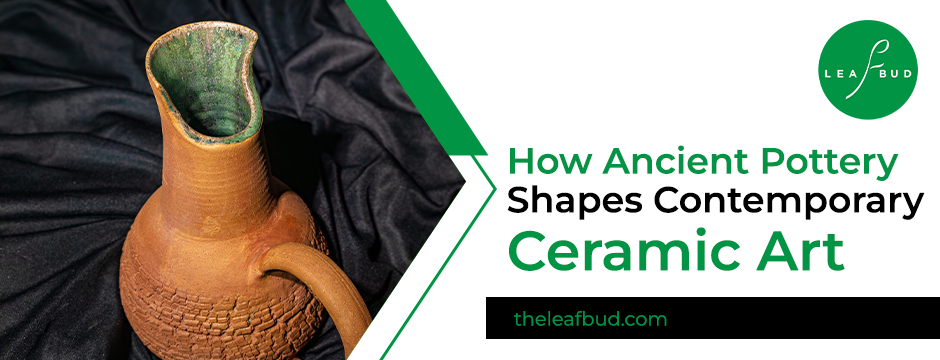
Walk into any thoughtfully designed home today and you are likely to find a ceramic piece that feels grounding. A bowl with uneven edges. A mug that carries the thumbprint of its maker. A vase that looks as if it belongs to another time, yet fits perfectly into a modern space. This is not accidental. Contemporary ceramic art is deeply rooted in ancient pottery traditions, and the connection is stronger now than it has been in decades.
At Leafbud, we believe that handcrafted pottery is not simply an object of use. It is a continuation of human history, shaped slowly by hands, culture, and purpose. To understand why handcrafted ceramic pieces feel so relevant today, you need to look backward, to the earliest potters who worked with clay long before galleries, brands, or trends existed.
The Origins of Pottery as Human Expression
Pottery is one of humanity’s oldest creative acts. Long before written language, people used clay to store food, carry water, cook meals, and perform rituals. Ancient civilizations in Mesopotamia, the Indus Valley, Egypt, China, and Mesoamerica all developed pottery styles that reflected their environment, beliefs, and daily needs.
These early vessels were not made for decoration alone. They were built to last, to serve, and to connect people to the land they lived on. The clay came from nearby soil. The firing methods relied on open pits or wood kilns. The shapes were guided by function rather than fashion.
This sense of purpose still influences handcrafted ceramic work today. Modern ceramic artists are not just making objects that look good on shelves. They are creating pieces meant to be used, touched, and lived with.
Why Ancient Pottery Matters in a Modern World
In an age dominated by mass production and digital design, consumers are seeking meaning. They want products with a story, materials with honesty, and craftsmanship they can trust. This shift is not a coincidence. It mirrors the values that ancient potters lived by.
Ancient pottery teaches us three essential principles that shape contemporary ceramic art:
First, materials matter. Clay carries memory. Its texture, color, and behavior change based on where it comes from. Modern artisans often source natural clay bodies or replicate traditional blends to preserve this connection to place.
Second, imperfection is natural. Ancient vessels were rarely symmetrical. Finger marks, firing scars, and subtle warping were accepted as part of the process. Today, handcrafted pottery celebrates these variations as proof of authenticity.
Third, function gives meaning. A pot was valuable because it was used daily. Contemporary handcrafted ceramic artists continue this philosophy by designing mugs, bowls, plates, and planters that feel intuitive in the hand.
These ideas resonate deeply with modern buyers who are tired of disposable goods and surface level design.
Traditional Techniques That Still Shape Ceramic Art
Many of the techniques used by contemporary ceramic artists are direct descendants of ancient practices. Hand building methods like coiling and pinching date back thousands of years. These techniques allow artists to create organic forms that feel alive rather than engineered.
Wheel throwing, first developed in Mesopotamia, remains central to handcrafted ceramic production today. While modern wheels are electric, the movement of clay under the potter’s hands remains unchanged. The rhythm is timeless.
Firing techniques also carry ancient influence. Wood firing, pit firing, and soda firing produce unpredictable surfaces and natural glaze effects. These methods are labor intensive, which is precisely why they are valued. Each piece becomes unrepeatable.
At Leafbud, we honor these traditions by embracing slow processes and limited runs. Our handcrafted pottery reflects time invested, not rushed output.
The Visual Language of Ancient Pottery in Modern Design
Look closely at contemporary ceramic collections and you will notice recurring elements that trace directly back to ancient pottery.
Earth toned palettes inspired by natural minerals and ash glazes. Simple silhouettes that prioritize balance over ornamentation. Textured surfaces created by carving, brushing, or natural firing effects. Symbolic patterns rooted in ancient storytelling.
These visual cues feel familiar because they tap into shared human memory. Even without knowing the history, people instinctively respond to these forms.
This is one reason handcrafted ceramic pieces photograph so beautifully in modern interiors. They bring warmth and grounding to clean spaces filled with glass, metal, and concrete.
The Emotional Value of Handcrafted Pottery
Ancient pottery was often made for specific moments. Births, marriages, harvests, rituals, daily meals. These objects carried emotional weight because they were part of lived experience.
Contemporary ceramic art continues this emotional role. A handcrafted mug becomes part of a morning routine. A ceramic bowl holds family recipes. A planter grows alongside its owner.
When customers invest in handcrafted pottery, they are not just purchasing a product. They are choosing an object that will age with them.
From a sales perspective, this emotional connection matters more than price. People are willing to pay for pieces that feel personal, meaningful, and lasting.
Why Handcrafted Ceramic Is Replacing Mass Production
Mass produced ceramics prioritize uniformity and speed. Handcrafted ceramic values individuality and time. As consumer awareness grows, so does appreciation for handmade work.
Customers today ask important questions. Who made this? Where did it come from? How was it created?
Ancient pottery provides the answers modern buyers seek. It reminds us that value comes from process, not volume.
Brands like Leafbud are responding by offering transparent stories, limited collections, and pieces that highlight the maker’s hand. This approach builds trust and long term loyalty.
Cultural Preservation Through Contemporary Ceramic Art
When modern ceramic artists study ancient pottery, they are also preserving cultural heritage. Indigenous techniques, regional styles, and ancestral knowledge risk disappearing without continued practice.
By adapting ancient forms into modern handcrafted ceramic collections, artists keep these traditions alive in a way that feels relevant rather than museum bound.
This is especially important for niche audiences who value ethical production and cultural respect. Supporting handcrafted pottery becomes a way to support living traditions.

How Leafbud Brings Ancient Influence Into Modern Craft
At Leafbud, every collection begins with research and respect. We study traditional pottery forms, firing methods, and material choices, then reinterpret them for modern living.
Our handcrafted pottery is designed to fit contemporary homes while carrying the soul of ancient ceramic art. Each handcrafted ceramic piece reflects patience, intentionality, and connection to craft.
We believe that good design does not need excess. It needs honesty.
This philosophy shapes not only our products but also how we communicate with our customers. We invite them into the story, the process, and the care behind every piece.
What This Means for Buyers and Collectors
Understanding the link between ancient pottery and contemporary ceramic art empowers buyers to make informed choices. Instead of purchasing decor that follows fleeting trends, they can invest in pieces rooted in centuries of craftsmanship.
Handcrafted pottery becomes timeless because it is built on human experience rather than seasonal aesthetics.
For collectors, this knowledge adds depth. A ceramic bowl is no longer just an object. It is part of a long lineage of makers who shaped clay with purpose.
The Future of Ceramic Art Is Ancient at Its Core
As technology advances, the desire for tangible, handmade objects grows stronger. Ancient pottery holds the blueprint for what people crave today authenticity, durability, and emotional resonance.
Contemporary ceramic art will continue to evolve, but its foundation remains unchanged. Clay, fire, hand, and time.
At Leafbud, we see the future of handcrafted ceramic not as a departure from the past, but as a continuation of it. When you bring one of our pieces into your home, you are participating in a story that began thousands of years ago and is still being shaped today.
That is the power of handcrafted pottery.