 Chat with us
FREE Leafbud Umbrella on Prepaid Orders Above INR 4,500/-
FREE Leafbud Umbrella on Prepaid Orders Above INR 4,500/-
FREE Leafbud Umbrella on Prepaid Orders Above INR 4,500/-
FREE Leafbud Umbrella on Prepaid Orders Above INR 4,500/-
FREE Leafbud Umbrella on Prepaid Orders Above INR 4,500/-
FREE Leafbud Umbrella on Prepaid Orders Above INR 4,500/-
FREE Leafbud Umbrella on Prepaid Orders Above INR 4,500/-
FREE Leafbud Umbrella on Prepaid Orders Above INR 4,500/-



Snack Plates vs Side Plates: What’s the Difference, and Which Do You Need?

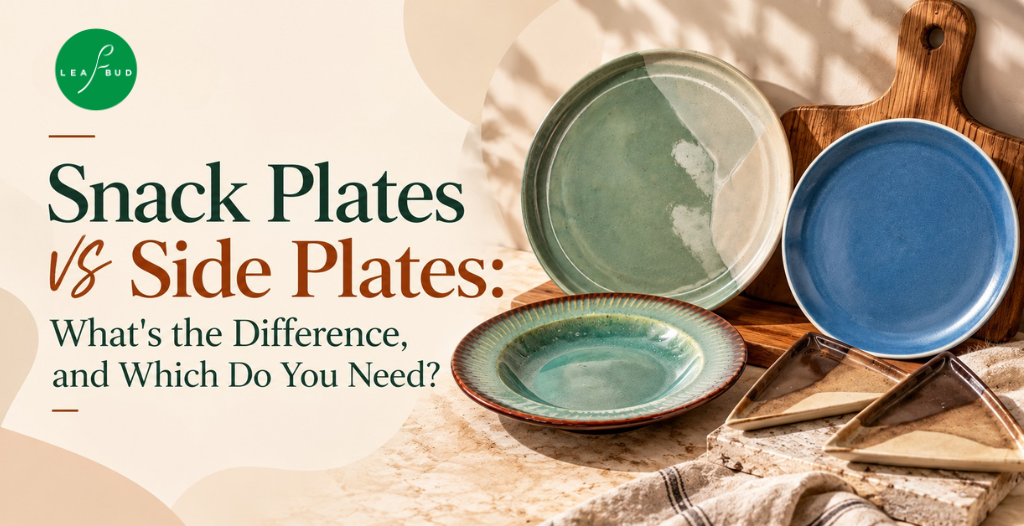
Most Indian households own a stack of small plates and call all of them quarter plates. Which works fine until you try to buy some, and the listings are suddenly full of side plates, snack plates, dessert plates and quarter plates at four different prices.
The good news is that the difference is simpler than the naming suggests.
The short answer
A side plate accompanies something. It sits to the left of a main plate in a place setting and holds roti, bread, salad or a portion that would otherwise crowd the thali.
A snack plate stands alone. It is the whole serving: evening snacks with chai, biscuits, a couple of samosas, dessert after dinner.
The sizes overlap heavily. Both usually sit between 15 and 20 cm across, and Leafbud lists its own side plates as roughly 6 to 8 inches. So if you are comparing two listings and the dimensions look almost identical, that is not an error. The difference is the job, not the diameter.
That has a practical consequence worth knowing: a good snack plate can serve as a side plate, and often does. The reverse is less reliable, because side plates are sometimes made without a raised rim, and anything with chutney or oil on it will find the edge.
What each name actually means in India
Name | Typical size | What it does |
Meal or dinner plate | 26 to 28 cm | The main plate, full meal |
Half plate | around 23 cm | A smaller main, common in restaurants |
Quarter plate | 15 to 20 cm | The everyday Indian catch-all for a small plate |
Side plate | 15 to 20 cm | Accompanies a main plate in a setting |
Snack plate | 15 to 20 cm | A standalone light serving |
Dessert plate | 18 to 20 cm | Sweets after a meal |
Bread plate | around 15 cm | The smallest of the group |
Quarter plate is the useful word here, because it is what most Indian households actually say, and it covers everything in the 15 to 20 cm band regardless of what a listing calls it. Leafbud’s own catalogue reflects this: the Slice of Life snack plates are filed internally as quarter plates.
If you are shopping and feeling confused, ignore the name and look at the number in centimetres. It tells you more than the label does.
Which one do you need?
If you eat thali-style at home, you want quarter plates in the 15 to 18 cm range, and you want several. They take the roti, the papad, the sweet, whatever does not belong on the main plate. Buy four or six rather than two.
If people come over for chai, you want snack plates, ideally with a slight rim. Samosas, kachoris, biscuits and anything fried benefits from an edge.
If you are building a proper dinner setting, you want side plates that coordinate with your meal plates. Here matching matters more than it usually does, because the two sit next to each other on the table.
If it is mostly dessert, go to the larger end, 18 to 20 cm. Dessert needs room around it to look like dessert rather than a portion.
If you live alone or eat solo often, one good meal plate and two quarter plates covers almost everything. There is no need to buy a set.
The Leafbud plates
All pieces are handmade, so glaze and form vary slightly between them. Check the product page for current pricing and dimensions.
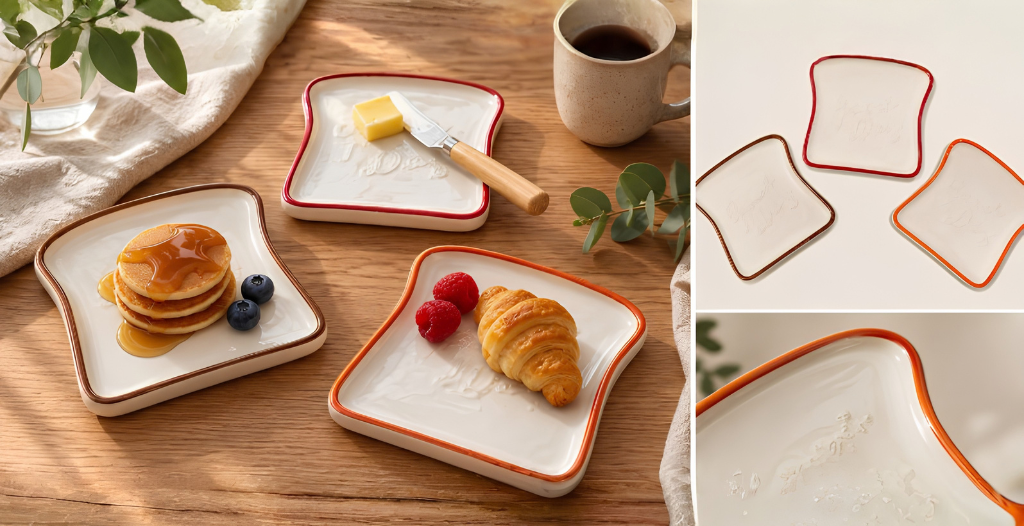
Shaped like a slice of bread, with “good day” worked into the design, at roughly 6.5 inches. The most characterful small plate in the range and the one that works best as a gift, because it is immediately recognisable as a choice rather than a default. A set of three is a sensible quantity for a household that snacks more than it entertains.
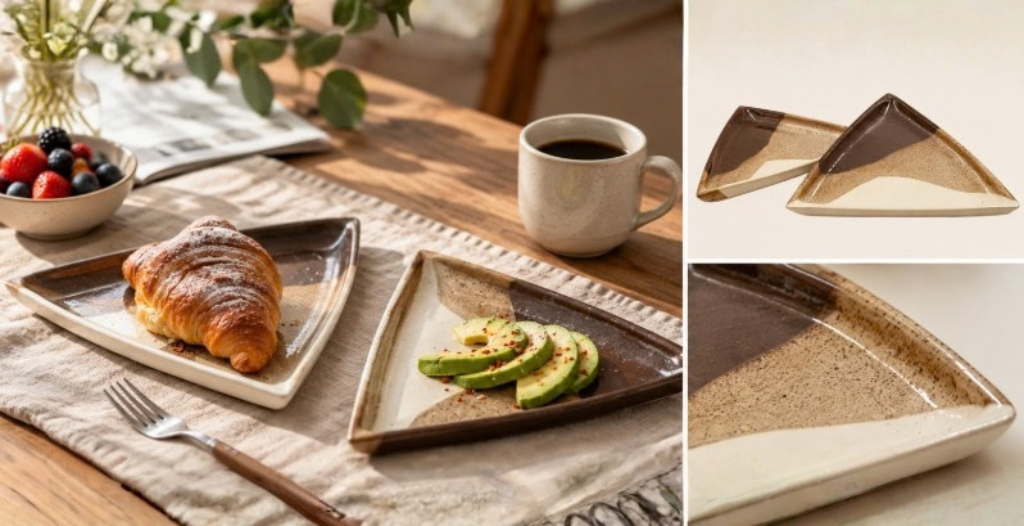
A distinctive form in a beige earth glaze, intended to sit beside a main plate. This is the one to pick if you are assembling a place setting rather than buying a standalone snack plate, since the shape reads as part of a table rather than as a single object.
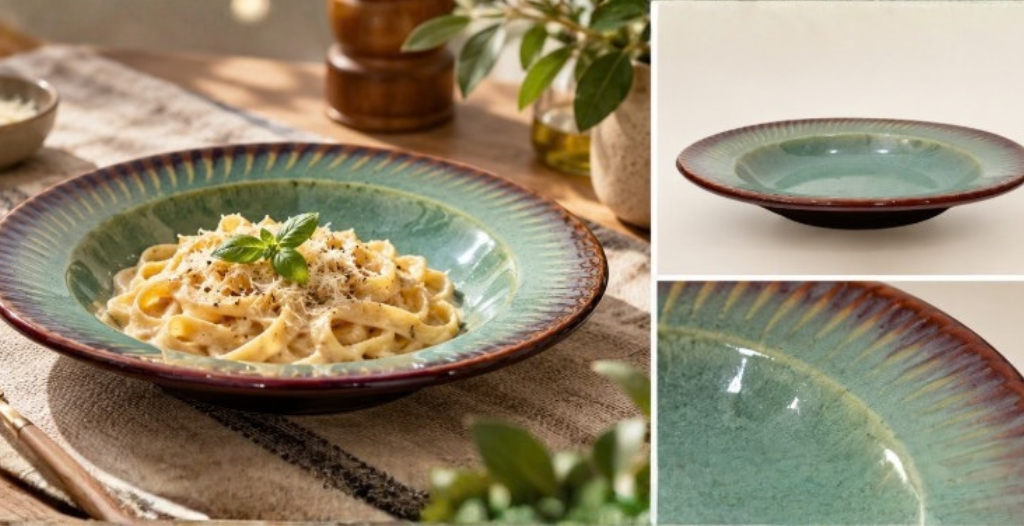
Bring restaurant-style elegance to your table with the Leafbud Blue-Green Ribbed Pasta Plate. Its sculpted rim, deep centre and artisanal glaze make every serving beautifully distinctive.
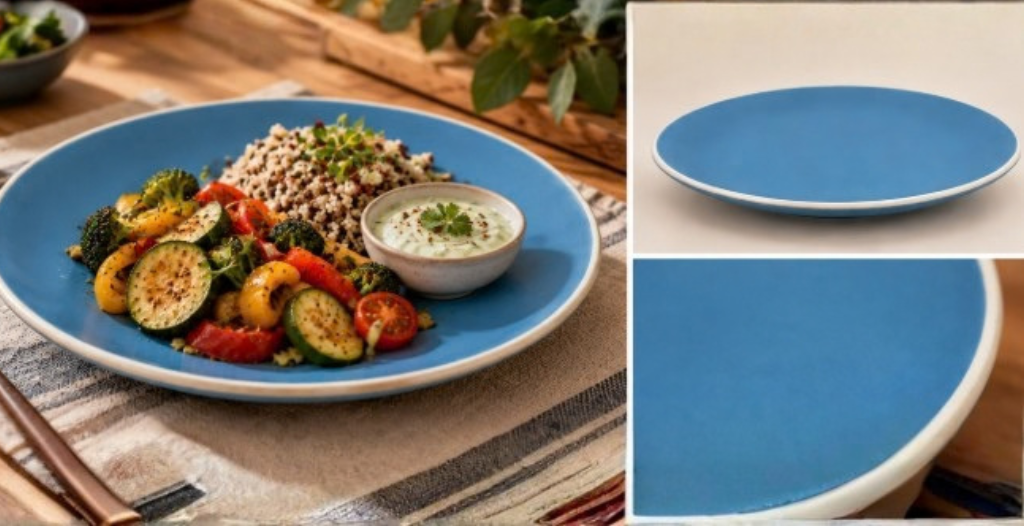
Not a small plate, but worth including because it is what your quarter plates sit next to. A limited edition piece designed around solo dining, which is a genuinely underserved case in Indian tableware, where almost everything is sold in fours and sixes.
Browse the full ranges: Snack Plates | Side Plates | Meal Plates | Plates
If you are serving snacks in quantity rather than per person, look at Snack Sets and Serving Platters instead. A platter plus small plates is usually a better hosting setup than a stack of plates alone.
What actually fits on a small plate
Sizes are abstract until you put food on them. Roughly:
15 cm: two samosas, or four to five biscuits, or one slice of cake. Comfortable for chai accompaniments, tight for anything else.
18 cm: three or four pieces of most fried snacks, a modest dessert portion, two rotis folded. This is the most useful single size for an Indian household.
20 cm: a light meal in its own right. Poha, upma, a small portion of rice. Also the right size for a plated dessert.
If you are buying only one size, buy 18 cm. It is the one that stretches furthest in both directions.
Two things worth checking before you buy
The rim. A flat plate with no lip looks cleaner and is harder to use. Anything with chutney, chaat or oil needs a slightly raised edge. Check the side profile photograph, not just the overhead shot, because overhead photography hides rim depth completely.
Stacking height. Handmade plates are thicker than factory ones, so a stack of six takes more cupboard space than you expect. If your kitchen shelves are tight, this matters more than the diameter does.
One more practical note, from Leafbud’s own care guidance: refrigerated ceramic should not go straight into a hot microwave. Small plates get moved between fridge and microwave more often than any other piece, so let them come up to room temperature first.
Frequently asked questions
What is the difference between a snack plate and a side plate?
A side plate accompanies a main plate in a place setting and holds bread, roti or a side portion. A snack plate stands alone as the whole serving. The sizes overlap, usually 15 to 20 cm, so the difference is the role rather than the dimension.
What size is a quarter plate in India?
Usually 15 to 20 cm, roughly 6 to 8 inches. Quarter plate is the common Indian term for any small plate in that range, and it covers what listings may call a side plate, snack plate or dessert plate.
What is a side plate used for?
Serving bread, roti, salad or a small side portion alongside a main meal. It is also useful for desserts and light snacks.
How big is a snack plate?
Most snack plates are 15 to 20 cm across. An 18 cm plate holds three or four pieces of a typical fried snack and is the most versatile single size for an Indian household.
Do I need both snack plates and side plates?
Usually not. A good snack plate with a slight rim will serve as a side plate too. The case for owning both is when you want side plates that coordinate with a particular set of meal plates.
How many small plates should I buy?
Four to six if you eat thali-style or have people over regularly. Two is enough for a single person or a couple who mainly use them for chai and dessert.
Browse the range: Snack Plates | Side Plates | Meal Plates | Serve Ware | Snack Sets | Meal Sets